• Totally useless as an officer

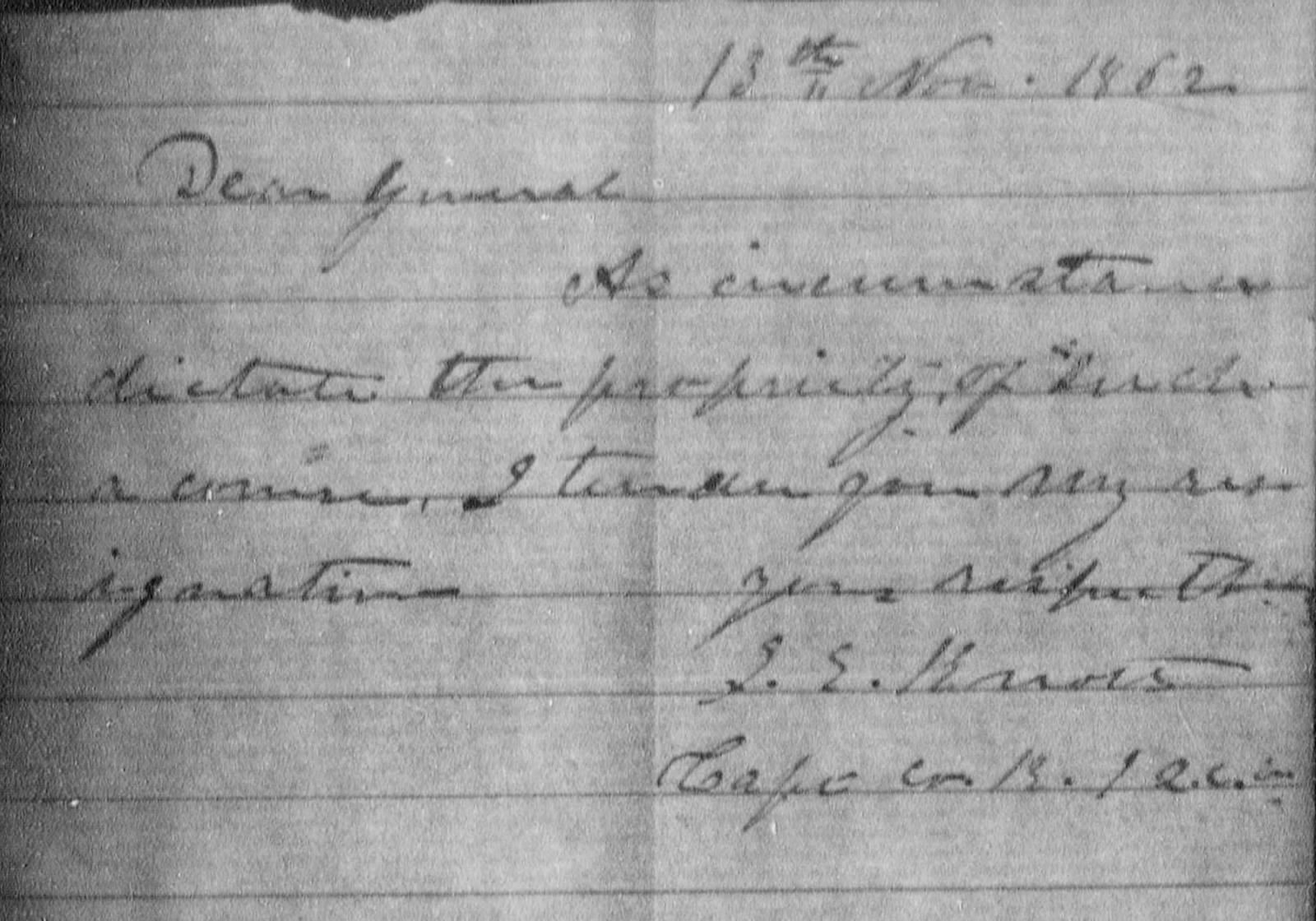
    Bold language is rare in military communications, so I thought I’d share this instance so both of my readers can enjoy it with me. It’s a clipping from the back of Captain Joseph E Knotts‘ letter of resignation of 14 November 1862. Knotts was Captain of Company K of the First (Hagood’s) South Carolina Infantry.
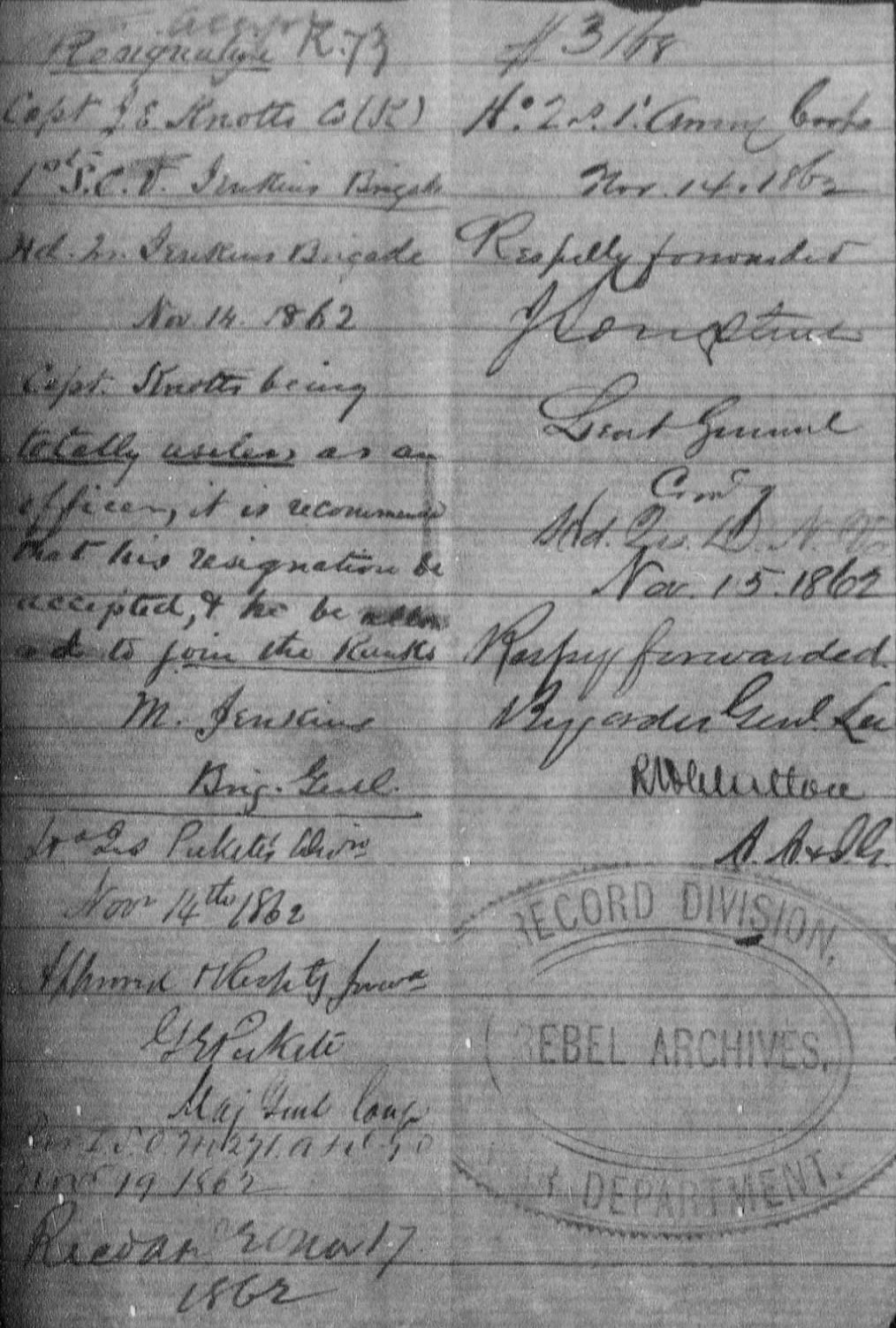

    [touch the image to see the whole sheet]

    The back of the letter includes the signatures of Knott’s higher chain of command – brigade commander Micah Jenkins (excerpted above); George Pickett, division; James Longstreet, army corps; and (I think) Robert Chilton, AA&IG on behalf of Robert E Lee, commanding the Army of Northern Virginia.

    General Jenkins’ comment here hints at poor leadership in the regiment more generally during and after the Maryland Campaign – that of all three field officers (Col. Duncan, Lt. Col. Livingston, Maj. Grimes) and at least two of the senior Captains (Knotts and Stafford, Co. I).

    Jenkins was not in Maryland on the Campaign, he’d been wounded at 2nd Manassas in August, and his brigade was commanded by senior colonel Joseph Walker of the Palmetto Sharpshooters. In his after-action report of 24 October 1862, Walker noted:

    I regret, however, to be called upon again to refer to the conduct of a large portion of the officers and privates of the First Regiment South Carolina Volunteers in this battle in terms of censure. The commanding officer reports that the regiment entered the fight with 106 men, rank and file, lost 40 men killed and wounded, and at the close of the day but 15 enlisted men and 1 commissioned officer answered to their names. Such officers are a disgrace to the service and unworthy to wear a sword …

    For more, see the regiment’s page and officers’ capsule bios over on AotW.

    For a deeper dive, I recommend James R Hagood’s Memoirs of the First South Carolina Regiment of Volunteer Infantry … an unpublished manuscript he wrote shortly before his death in 1870. It’s online and downloadable [17MB pdf] from the University of South Carolina. JR Hagood was Sergeant Major and acting Adjutant of the regiment at Sharpsburg in 1862 and was appointed Colonel in November 1863 over half a dozen officers senior to him.


    Notes

    Knotts’ resignation letter is from his Compiled Service Records; I found it online from fold3 (subscription service). Here’s the useful part of the front of the page:

    [touch to enlarge]

    Brig. Gen. Jenkins’ comments transcribed:

    Nov. 14, 1862
    Capt. Knotts being totally useless as an officer, it is recommended that his resignation be accepted, & he be allowed to join the Ranks.
    M. Jenkins
    Brig. Genl.

    Thanks to Jim Smith for locating Hagood’s manuscript, an excellent resource with details about the regiment, its officers, and individual casualties.
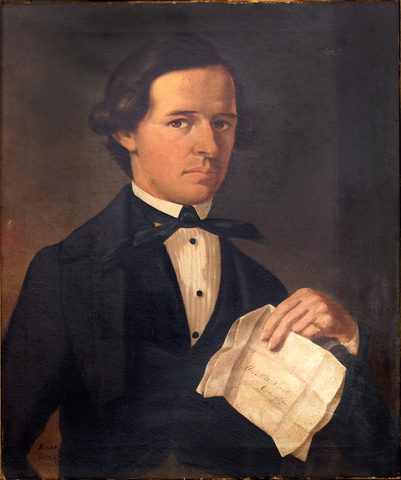

  • Nathan Andrew Feaster (1844)

    Nathan Andrew Feaster was from a prominent family in the Fairfield District, SC; his father Andrew was a wealthy planter, his grandfather John reached Fairfield from Lancaster, PA sometime before 1810.

    In 1844 an itinerant portrait artist named George Williamson Livermore Ladd painted several members of the Feaster family, including Nathan. He was then about 23 years old and a retail merchant in Columbia, SC, the state capital.

    18 years later in May 1862, then 41, he enlisted in the First South Carolina Infantry and was appointed First Sergeant of Company F. He was wounded at Sharpsburg on 17 September 1862 and was killed by enemy fire while going to the rear for treatment.


    Notes

    Portrait of Nathaniel Andrew Feaster (1820–1862) by George W. L. Ladd, c. 1844. Oil on canvas; HOA: 28-3/8″, WOA: 24-1/4″. Collection of the Fairfield County Museum, Winnsboro, SC.

    There’s much more about George Ladd and those Feaster portraits online from the Journal of the Museum of Early Southern Decorative Arts in Winston-Salem, NC.

  • A gambler’s wild career


    (touch for full article)

    23 year old Lieutenant Colonel William H Betts, a former farmer from Tuskegee, AL, led the 13th Alabama Infantry in combat at Sharpsburg, MD on 17 September 1862 and was wounded there. His brigade and division commanders, Col. A.H. Colquitt and Maj.Gen. D.H. Hill respectively, spoke highly of him and his men.

    Betts had quite a different life in peacetime after the war. He was accused of murdering at least three men in his lifetime, and acknowledged killing them. He was excused in each case as “justified.”

    The first murder, according to the New York Times piece above, was of a soldier of his regiment who had somehow insulted his wife in camp at Pensacola, FL. Betts was said to have shot him on the spot (or to have stabbed him with a knife when the soldier pulled a gun). The story has at least one problem – I can find no point at which Betts and his regiment were ever in Pensacola. Perhaps it’s a mis-translation of an event at another camp in another place.

    In any case, if this New York Times article is to be believed, Betts had quite an adventure in the years after the war and before his death in 1884 of kidney disease, at the relatively young age of 45 years.


    Notes

    See also the San Jose (CA) Daily Morning Times of 14 April 1882 and the Albany (GA) Weekly News and Advertiser of 8 April 1882, in which Betts, while testifying in someone else’s murder trial, acknowledged killing 3 men, and briefly describes the circumstances. These accounts bears only passing resemblance to the NYT story.

    His death notice in the Columbus (GA) Daily Times of 1 August 1884 has him killing 6 men in his lifetime, but does have a good description of his death.

  • Melissa R, Eugene A, and DeWitt C Smith (1861)

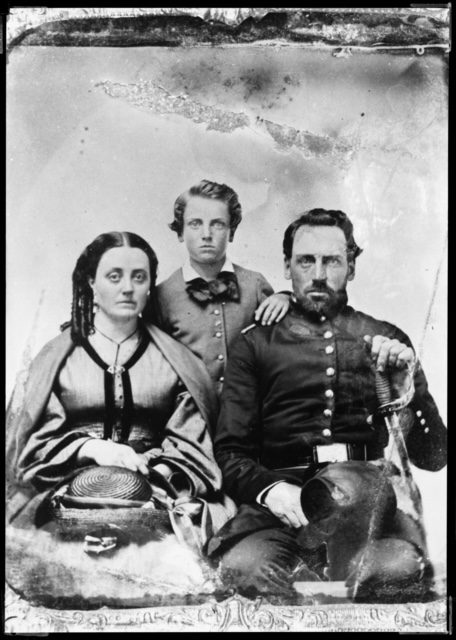
    Here are DeWitt Clinton Smith and his family in an ambrotype photograph probably taken as he prepared to leave his home in Minnesota for the war in the east.

    He’d married Melissa R. Shepard (1827-1905) in Michigan in 1847 – they were both from his hometown of Barre, NY – and their son Eugene Adelbert Smith (1850-1914) was born in Somerset, MI, where DeWitt was a Daguerrean photographer. They moved to Hennepin County, MN in 1857 and by the time the war came in 1861 he had worked as a farmer, newspaperman, shoe salesman, county land registrar, and school teacher, and was concurrently a county commissioner and postmaster.

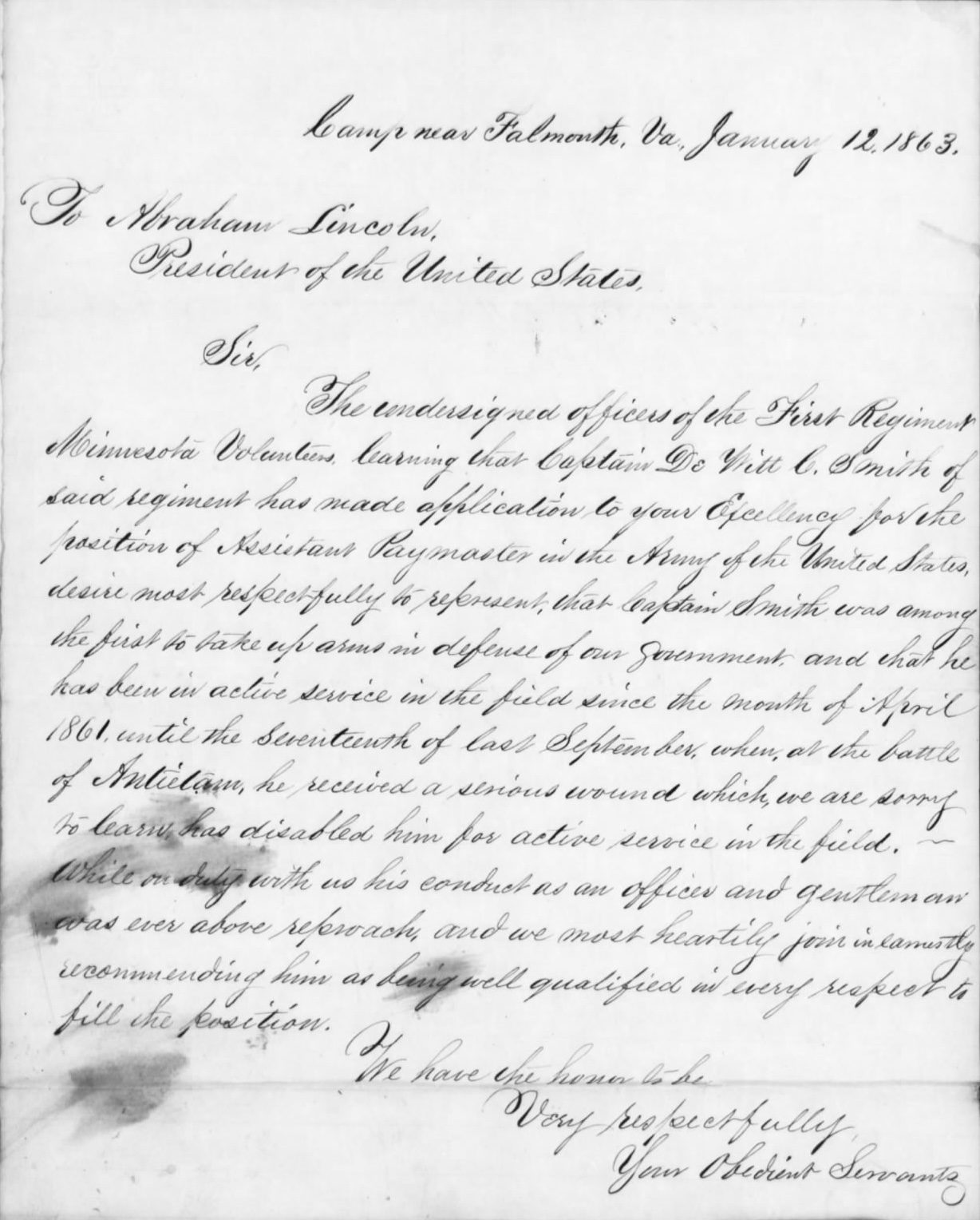
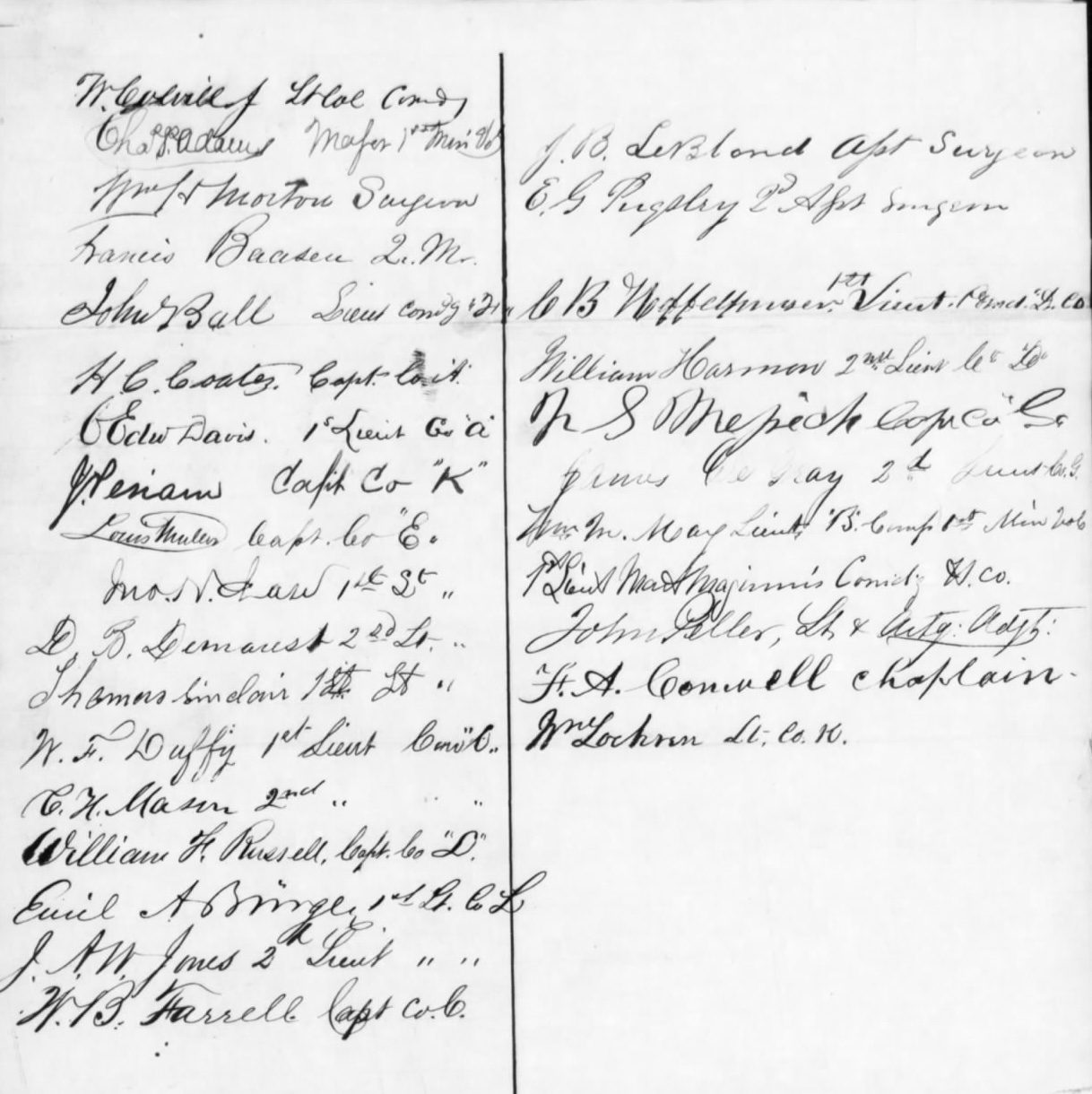
    He was commissioned 2nd Lieutenant of Company D, First Minnesota Infantry in April 1861, and was Captain of his Company when he was seriously wounded in the hip at Antietam in September 1862. The bullet lodged in his pelvis and was never removed. Disabled for further service in the field, he sought appointment as an army paymaster, a largely clerical, non-combat job. He had the support of nearly all the officers of his regiment, who sent an impressive petition to President Lincoln on his behalf in January 1863:

    Nothing happened quickly, though, so in October 1863 Smith resigned his commission and returned to Minnesota.

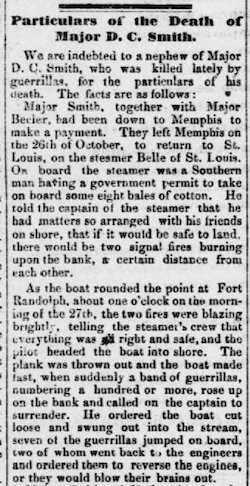
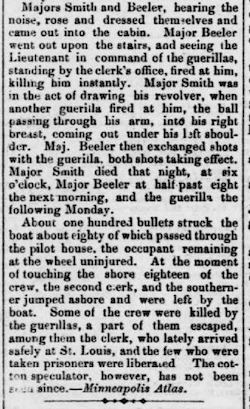
    Finally, in April 1864, an appointment as Additional Paymaster and Major, US Volunteers came through for Smith, and he went to St Louis, MO. Unfortunately, 6 months later he was killed by Confederate “guerrillas” while returning by steamboat from making Army payments in Memphis in October 1864:


    Notes

    The picture at the top, as Melissa R. Smith, Eugene Adelbert Smith and DeWitt Clinton Smith, family portrait, copyprint of ambrotype, may be found online from the Minnesota Historical Society.

    Melissa re-married 20 years later in Minnesota – a dentist named Lent Bristol Bradley (1820-1900) who had 3 grown children of his own.

    The Lincoln petition is among the Letters Received by the Adjutant General, 1861-1870 at the National Archives, online from fold3. Among the signers was Captain William F. Russell of Company L, who commanded the 2nd Company of Minnesota Sharpshooters at Antietam.

    The story about his death on the Mississippi is from the St. Paul Daily Press of 10 December 1864, also online from the Minnesota Historical Society.

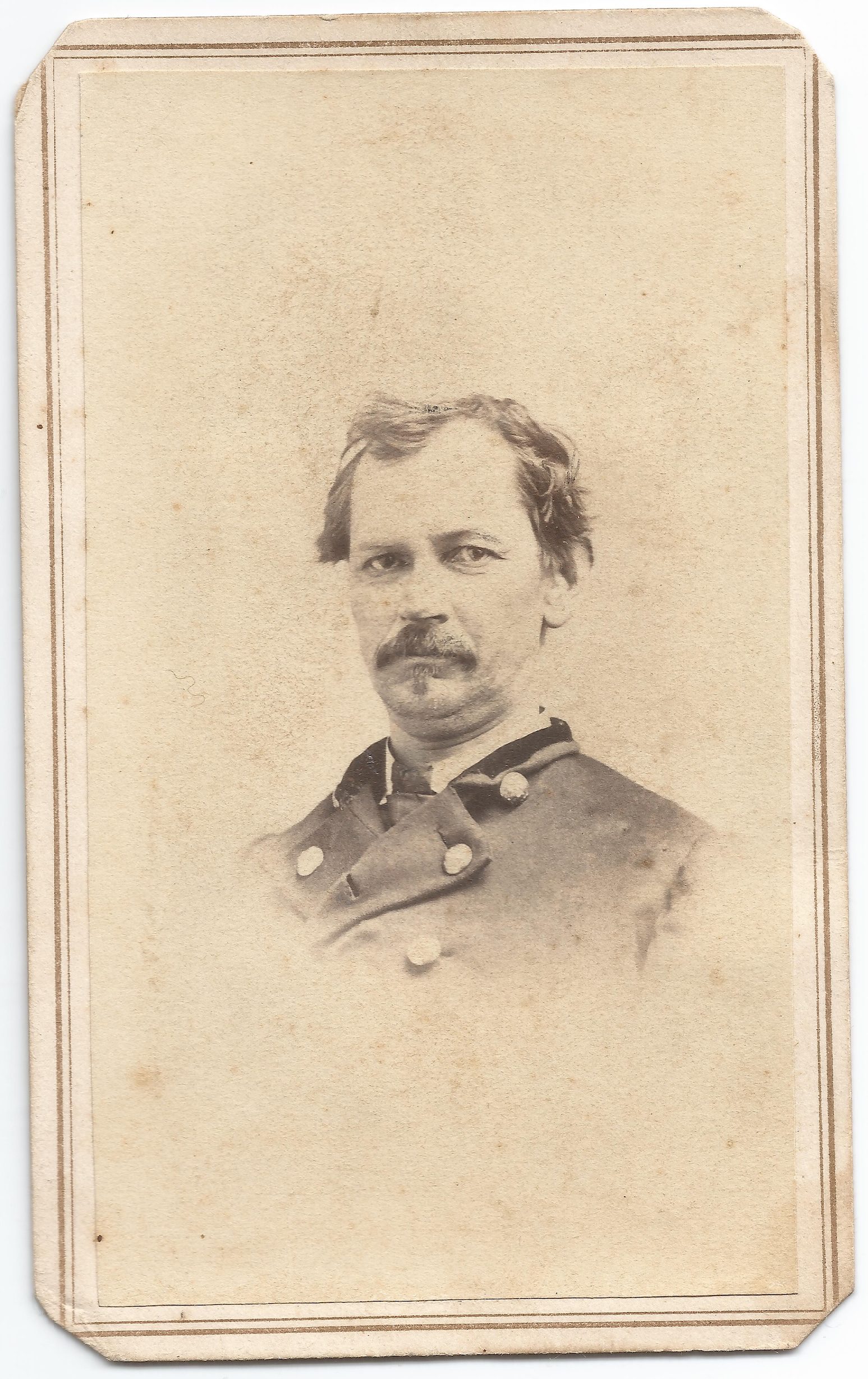
    The other officer with Smith on the Belle was Abraham Beeler (born MD, 1822) of Illinois. He’d been First Lieutenant and Quartermaster of the 38th Illinois Infantry from August 1861 to March 1863 and was appointed Additional Paymaster and Major, US Volunteers in March 1864. There’s a fine photograph of him on his memorial; thanks to Tony Fazzini for the pointer to that.

  • Col William H Blair (c. 1863)

    This serious face belongs to William H Blair, a lawyer from Bellefonte, Pennsylvania. He was Captain of Company G, 51st Pennsylvania Infantry and led them with “great gallantry in storming and taking Antietam Bridge 17 September 1862 under Maj. Gen. Burnside.”

    He was afterward Colonel of the 6-month 179th Pennsylvania Infantry regiment to mid-1863 and was brevetted Brigadier General of Volunteers by President Johnson in 1866.

    This excellent photograph is in the Scott D Hann Collection. Thanks to Scott for sharing it to the General’s memorial page at Findagrave.