• Private Wheeler’s stump (1862)

    Specimen 2746. A cast of the left leg, after amputation, as if by the posterior flap, in the upper third. The cicatrices resemble those following a circular amputation. The integument appears tightly drawn over the bone on the anterior surface. Private J. W., “A,” 8th Connecticut: Antietam, 17th September, 1862.
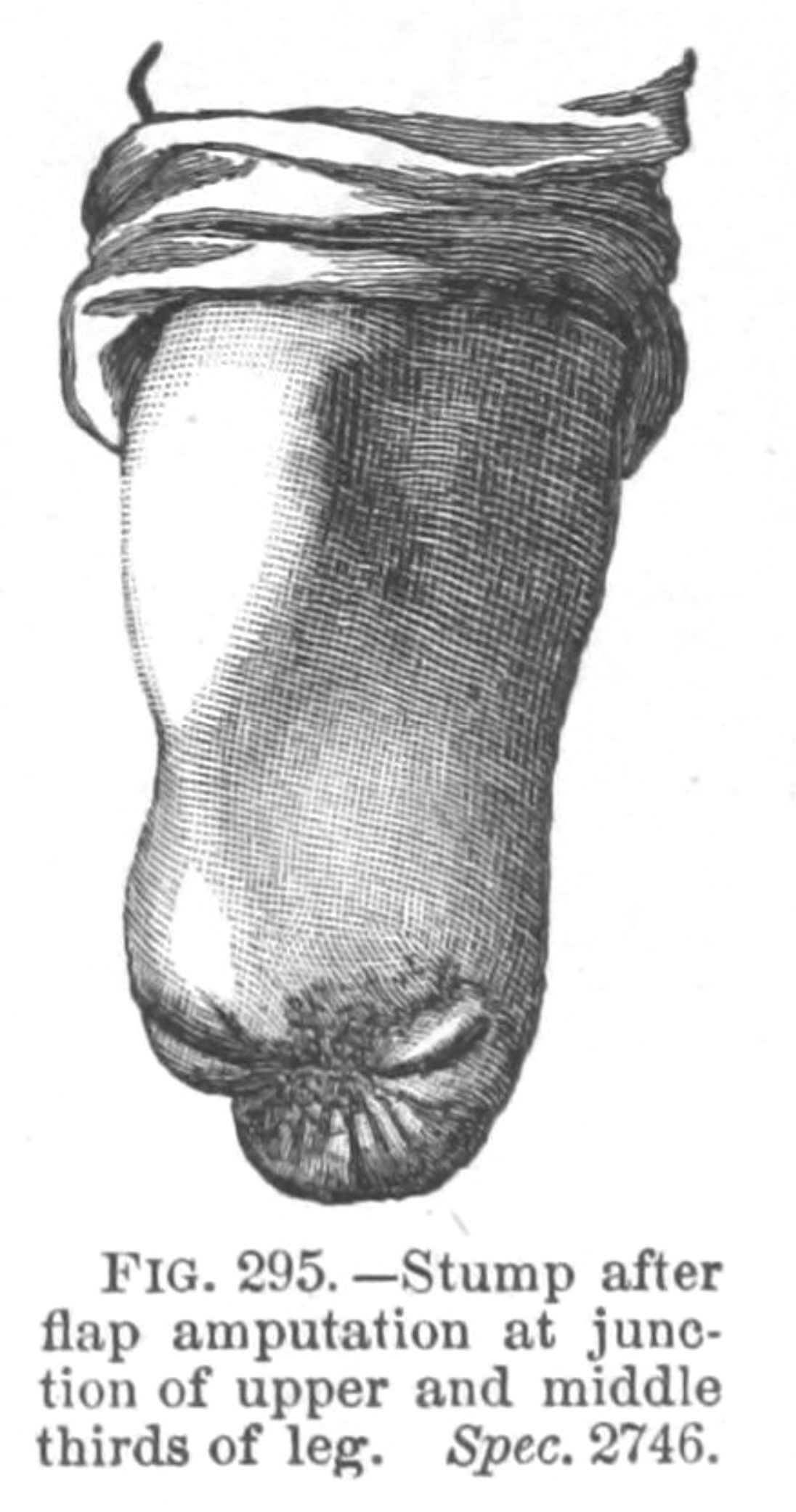
    “Private J. W.” was Jared Wheeler. His commanding officer at Antietam, Major John Ward thought his wound “slight” in his report of 22 September, but a week after the battle it was obviously much worse, and his leg was amputated. After more than a year in hospitals in Maryland, Connecticut, and New York, he went home with an artificial leg in November 1863.


    Notes

    The description of his stump from the Catalogue of the United States Army Medical Museum (1866). It’s image (and the details about his medical case) are from the The Medical and Surgical History of the War of the Rebellion (1870)
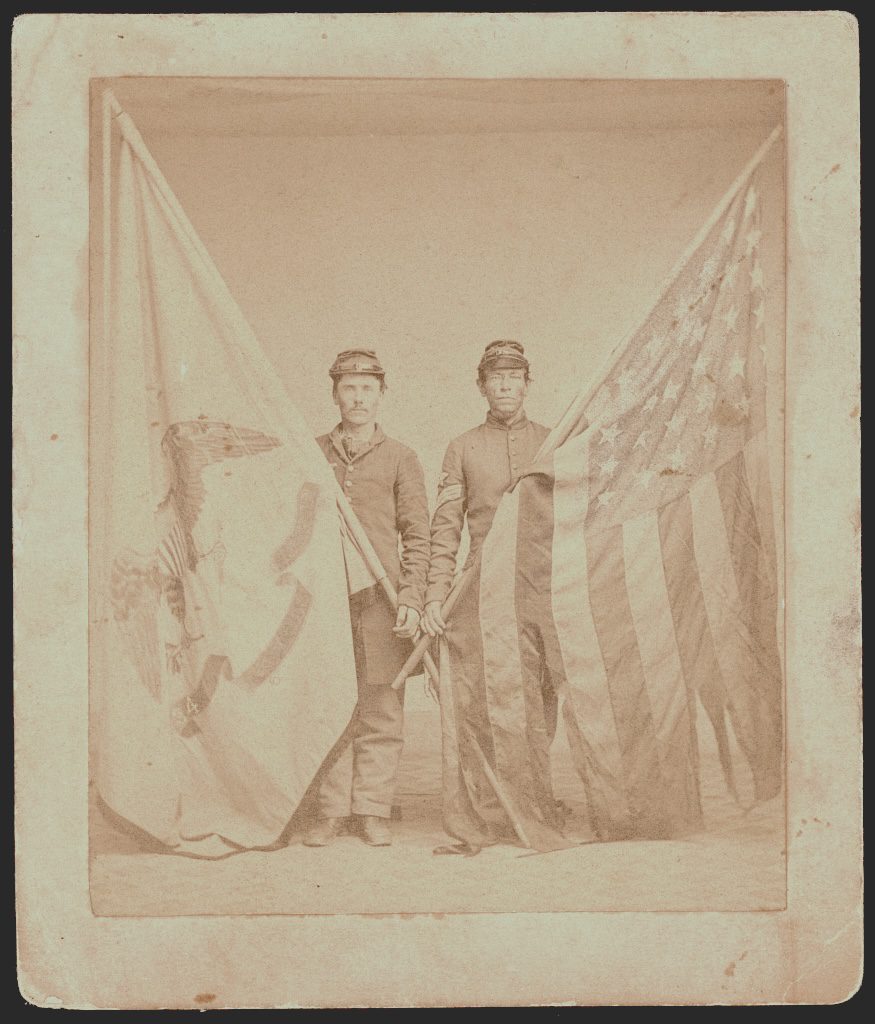
  • Pvt Rhoades & Sgt Barton with the colors of the 34th New York Infantry (1862)


    (touch to enlarge)

    Here are Private Chester S. Rhoades (left) of Company H, 34th New York Infantry holding the state flag and Sergeant Charles B. Barton of Company C with the national colors. Both were in action at Antietam on 17 September 1862, at the head of their regiment at the front left of Major General John Sedgwick’s Division of the Union 2nd Army Corps as they crashed into the Confederates of Major General Lafayette McLaw’s Division in the West Woods that morning [map].

    Colonel Suiter’s [34th New York] regiment was detached from the brigade and moved directly to the front, together with a new regiment [125th Pennsylvania] of nine months men. This support was almost fatal to the 34th, for when in the thickest of the fight, the new lines broke and ran, leaving Suiter’s command to take care of themselves. The rebels were about taking advantage of the situation by surrounding them when Sedgwick came to the rescue, and gave the order to fall back. As Sedgwick gave the order he was shot in the neck and wrist and badly wounded. This regiment barely escaped destruction.

    Sometime on that fateful day Private Rhoades was killed and Sergeant Barton was shot as many as 7 times; he survived, but never fought again.

    ——————–

    Judging by the ragged condition of the national flag, at least, that photograph was probably taken following the Peninsula Campaign of Spring/Summer 1862. It is now in the Liljenquist Family Collection of Civil War Photographs at the Library of Congress.

    The quote above is from Beers’ History of Herkimer County, New York (1879).

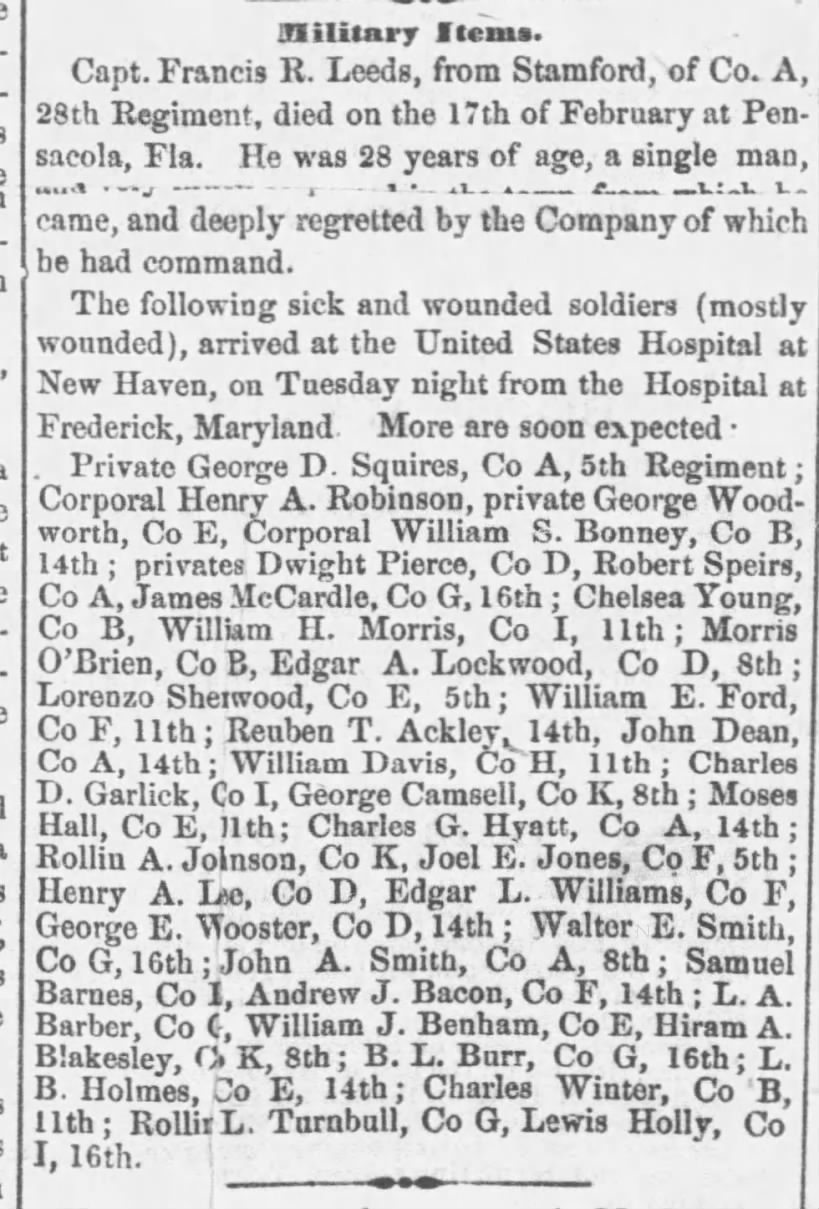
  • Arrivals at US hospital, New Haven on 3 March 1863

    This is a clip from the Hartford Courant of Friday 6 March 1863. Another great pile of information that I will need to go through, name by name. Eventually.

    I’ve already found this useful for tracking at least two members of the 8th Connecticut Infantry wounded at Antietam on 17 September 1862 – Privates Hiram A. Blakeslee (Co. K) and Charles D Garlick (Co. I).

  • Galligans of Kalamazoo County, MI (c. 1862)

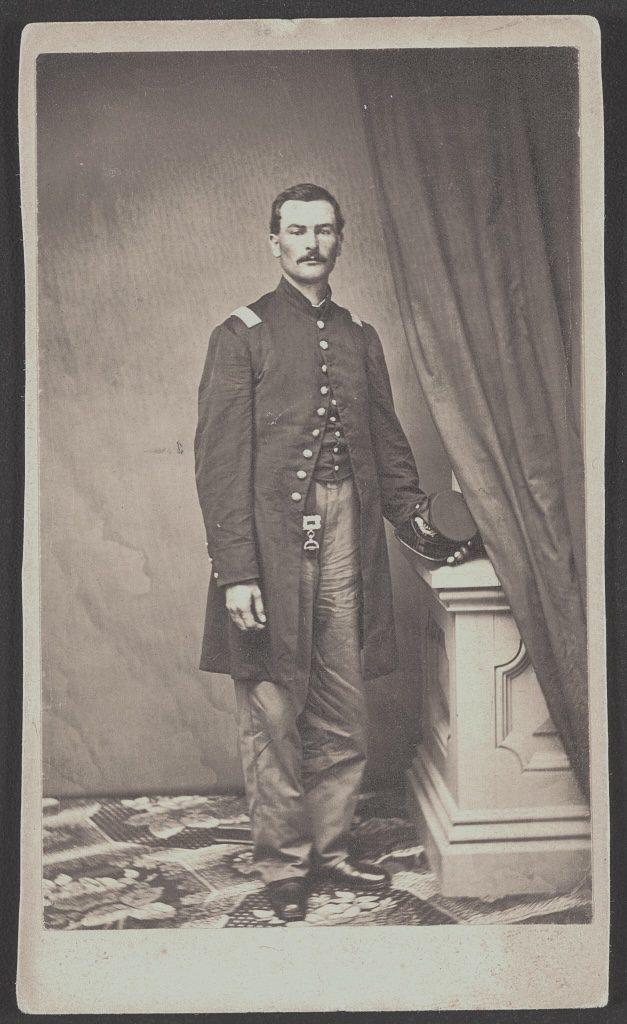
    25 year old 2nd Lieutenant George A Galligan, Company I, 17th Michigan Infantry was mortally wounded in combat at Fox’s Gap on South Mountain on the evening of 14 September 1862 and died 9 or 10 days later, probably in a field hospital in Middletown, MD.

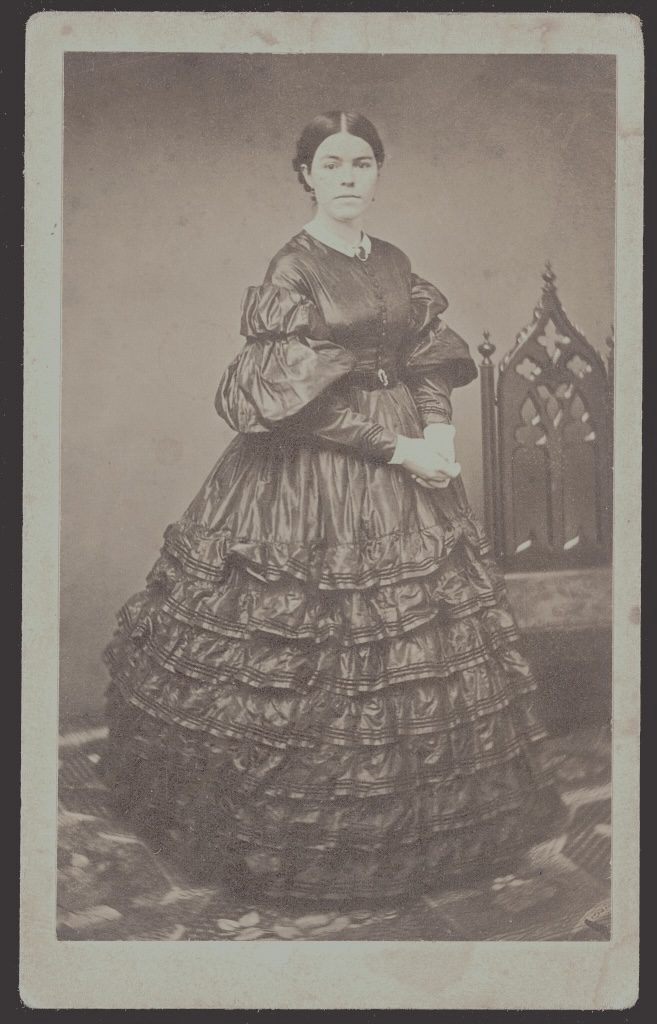
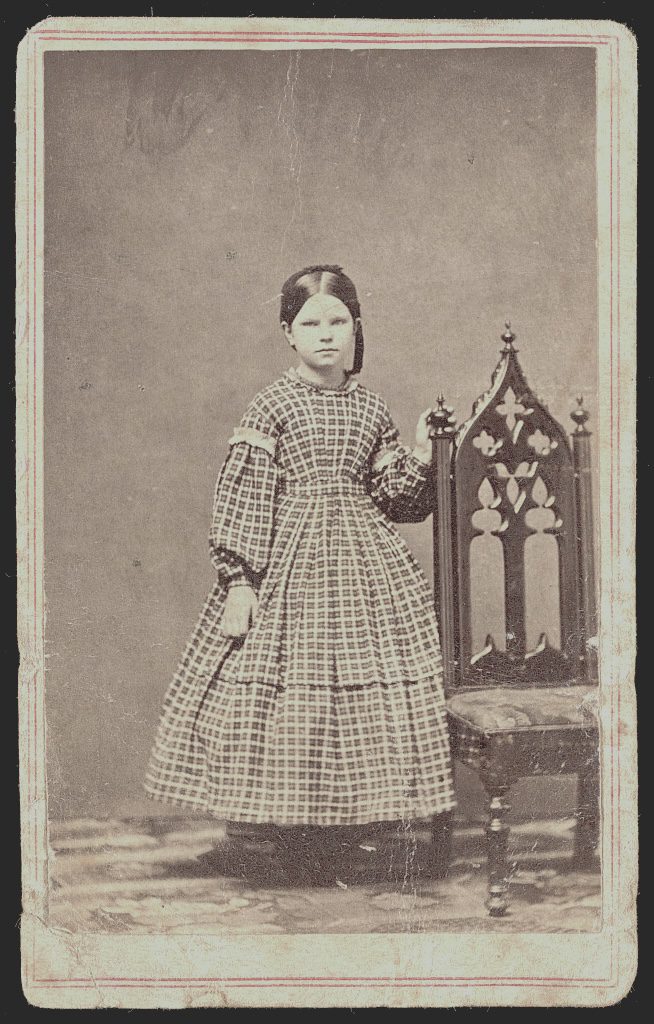
    Other than basic military service information, I’ve not found much about George after 1850, when he lived on his parent’s Michigan farm, except to find a pair of intriguing photographs accompanying his (above) in the Liljenquist Family Collection of Civil War Photographs at the Library of Congress:

    The archivist has titled them, respectively, as Relative of Second Lieutenant George Galligan of Co. I, 17th Michigan Infantry Regiment, probably his wife and … probably his daughter. I’ve not been able to find their names.

    If you look closely, you’ll see the carpet pattern is the same in all three photographs. The photographer is not identified for George’s portrait, but the mother and daughter’s pictures have the photographer on the back: E.A. Boughton’s Photograph Rooms, Kalamazoo, Michigan.

    I’m guessing the freshly commissioned Lieutenant and his family had these taken together before he left Kalamazoo for war in August 1862.

  • Sgt L.E. Forrest Spofford, 8th Connecticut (c. 1862)

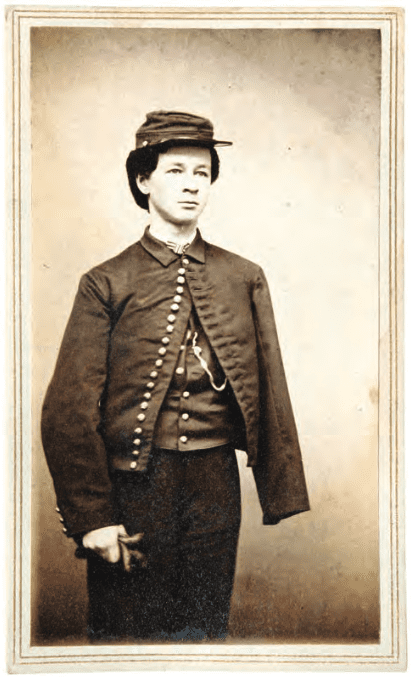
    Here’s Sergeant Lester Edwin Forrest Spofford after he lost his left arm to a wound and resulting amputation at Antietam on 17 September 1862.

    You’d have thought that would have been enough of war for 18 year old Forrest, but it wasn’t. He was appointed Sergeant Major of the 8th Connecticut Infantry in January 1863 and he returned to serve with them to May of 1864, when he was wounded again. In the other arm.

    After recovering from that wound he attempted to reenlist, but was turned away by a medical board and discharged at the end of his original term of enlistment on 20 September 1864.

    This fine photograph is from the Buck Zaidel Collection, and was published in Military Images in Spring 2015 and featured in Longley & Zaidel’s Heroes for All Time: Connecticut Civil War Soldiers Tell Their Stories (2015).