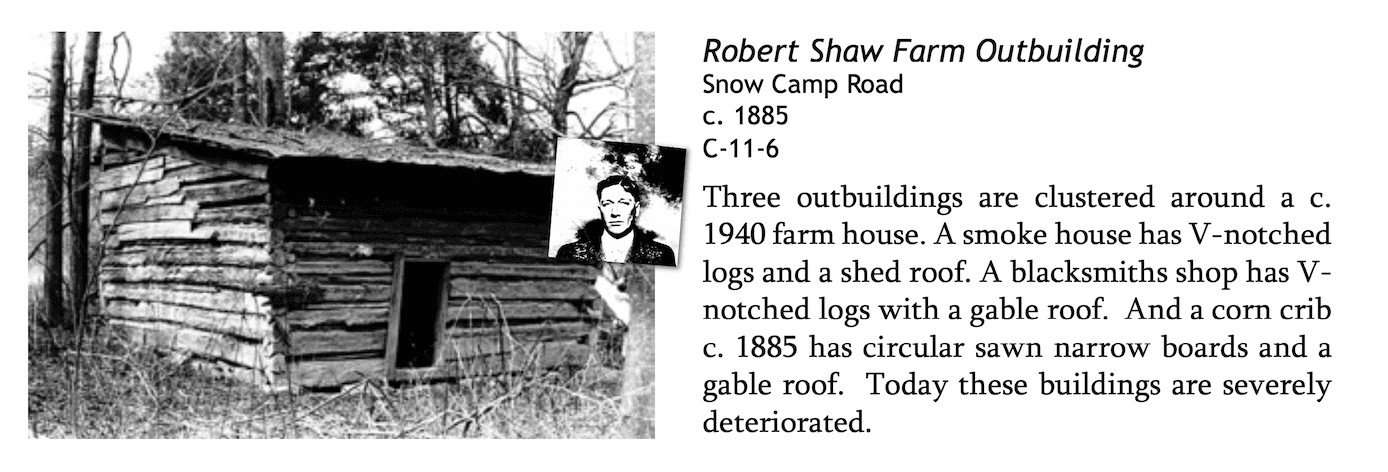
34 year old farmer Robert Shaw was conscripted into the Confederate Army at Raleigh in July 1862 and assigned to Company B of the First North Carolina Infantry. He was seriously wounded at Sharpsburg on 17 September 1862 and captured there. He returned to duty by January 1863, was captured again, at Spotsylvania Court House, VA in May 1864, and survived the prisons at Point Lookout, MD and Elmira, NY to return to his farm in Newlin, Alamance County, NC in June 1865.
He’s seen here in an undated post-war passport photograph contributed to his Findagrave memorial by user Roy K in December 2020. His smokehouse and much more about his community are found in the Alamance County Architectural Inventory (pdf, 2014) online from the County Historical Properties Commission.
USS Despatch, the third US Navy ship of the name, was formerly the screw steamer America, purchased by the Navy in 1873.
She sailed 20 April 1877 for the eastern Mediterranean and a special assignment with the U.S. Embassy at Constantinople, Turkey. Arriving there 14 June, Despatch carried dispatches and transported the American minister to Turkey, in turmoil because of war with Russia and internal political unrest. She was detached early in 1879, and returned to her home port [of Washington, DC], where she was placed out of commission 9 July 1879.
Aboard for that cruise was a sailor named James Henry Bratton, late Private in the First North Carolina Infantry. James was wounded at Sharpsburg in September 1862 at age 17 but got through the rest of the war unharmed. Afterward he moved to Baltimore and was a marine fireman and engineer. He enlisted in the US Navy for four years in 1876, by then 31 years old.
Family lore says he told his wife he’d given four years to the Confederacy and four years to the United States (after his US Navy enlistment of 1876-1880). Maybe he figured that made him even.
The quote here from Despatch’s page in the Dictionary of American Naval Fighting Ships, online from the Naval History and Heritage Command. As is her photograph.
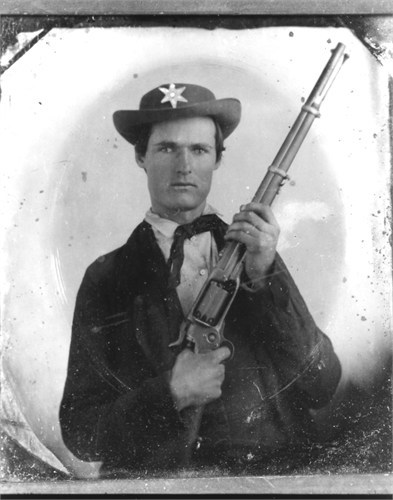
William Rufus Barlow was conscripted into Confederate service in August 1862 and assigned as a Private to Company B of the 18th North Carolina Infantry. He was slightly wounded in his first action, at Sharpsburg in September 1862, and was afterward with his Company until captured at Spotsylvania Court House, VA in May 1864. He ended up in the prison at Elmira, NY and died there of pneumonia in January 1865.
This fine photograph of him is from a family researcher, shared online on WikiTree.
There’s a superb discussion about Barlow’s family and a collection of his wartime letters in Company Front (Issue 2, 2013) [pdf], the journal of The Society for the Preservation of the 26th Regiment North Carolina Troops, from Locke W. “Skip” Smith, Jr.
Mr Smith described the photo above:
The firearm held by Private Barlow in this image is a rapid-fire “sidehammer†Colt Model 1855 Revolving Carbine, in a rare variant known as the “Artillery Model.†This .56 caliber weapon never gained wide acceptance due to its propensity to “chain fire,†or discharge all five chambers of its firing cylinder in one dangerous explosion. This problem may have in part prompted the Federal government to transfer sixty of these long arms to the State of North Carolina on May 7, 1859, and Barlow’s carbine may be one of that number. Other images of North Carolina Confederate soldiers armed with this weapon can be seen in Mast’s State Troops and Volunteers, images 2.67, 4.2.12, and 5.4.11. A saber type bayonet could be fixed to this “Artillery Model†carbine. In this typical early war image Barlow appears in civilian clothing with a 6-pointed “secession star†device affixed to his low-crown bowler hat.
I’ve seen a number of these rifles in soldiers’ photographs. Perhaps they just made good photographers’ studio props, not that they had wide use.
I’ve also recently seen a large number of Sharpsburg veterans who died at Elmira. All of them said to have died of pneumonia. I wonder if that was really the case, or was it lazy medicine or lazy medical record-keeping? Pneumonia wasn’t the most common cause of death at other prison camps.
Private John Henry Libben did not impress his commanding officer at Antietam.
Lieutenant Peter C Hains later wrote of his battery, “M” of the 2nd United States Artillery:
All the men of the company behaved with their accustomed coolness and courage with one exception, Private Litten [sic], who was not at all remarkable for coolness or courage.
Language not often found in an officer’s after-action report.
Libben served with the battery until discharged at the end of his enlistment in March 1864 and he enlisted in the US Marine Corps immediately afterward, in April. He was promoted to Sergeant and spent the last part of his enlistment (c. 1866-68) aboard the beauty above – USS Vanderbilt. I expect he gathered some coolness and courage by then.
This photograph of USS Vanderbilt is online from the US Naval History and Heritage Command.
Here’s an unusual view: the enlisted men of Battery M, 2nd United States Artillery at Culpeper, VA in September 1863. One of these men is probably Corporal Michael Frain, who was wounded at Antietam the year before. Corporal Frain had first enlisted back in 1854 and he served in Battery M to November 1873.
I found that great photograph while looking into an officer of the battery who was a Sergeant when they were in action at Antietam.
He was Terrence M. Reilly of Glasgow, Scotland. He enlisted in 1857 and was commissioned 2nd Lieutenant, 2nd US Artillery in March 1863. That’s him without a hat in the front row in the picture below, also taken at Culpeper in 1863. Both photographs are online from the Library of Congress.
Thanks to Jim Rosebrock for the pointer to Reilly in a bio sketch he posted to the Antietam Guides Facebook page.