or, yes, there is at least one Confederate in the cemetery
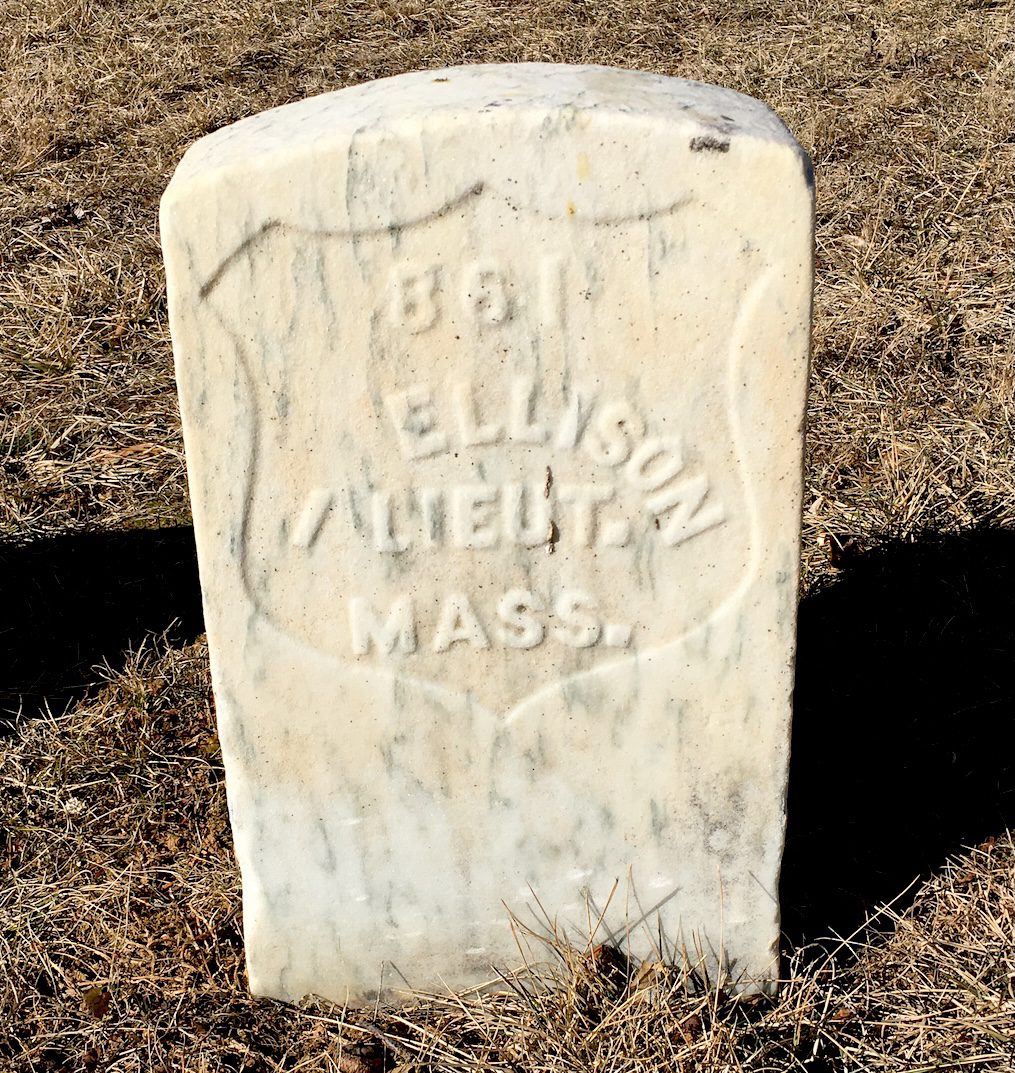
On my recent visit to Sharpsburg I took photographs of several headstones in the Antietam National Cemetery, as is my habit, intending to look into the men under them when I got home. The very first was this one:
The 1869 cemetery History and the current Park Service grave database both list him as Lt. __ Ellison (first name unknown) of the 18th Massachusetts Infantry, and note he was originally buried on the battlefield and later removed to the cemetery.
There were no Ellisons in the 18th Massachusetts. Nor were any other Federal officers named Ellison killed or mortally wounded at Antietam. Or enlisted men, for that matter.
But I did find a good match: he’s Lieutenant William Ellison of the 18th Mississippi Infantry. So, Miss not Mass.
Lt. Ellison was about 21 years old when he was mortally wounded in or near the West Woods at Sharpsburg on 17 September 1862, and he died within a very few days in a field hospital on the Lavenia Grove Farm just west of those woods.
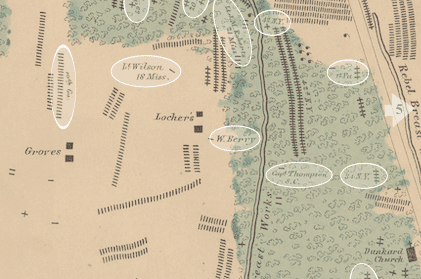
His original burial spot is identified on the 1864 Elliot burial map of the battlefield – as Lt. Wilson (probably a mis-read of W. Ellison) of the 18th Mississippi – just where you’d expect him to be.
I hope I’m not the first person since 1867 to figure out who is under that stone. I’ve not seen mention of it anywhere, though.
Walter David McAdoo came from a long line of successful merchants and entrepreneurs in Greensboro, Guilford County, NC. He left Dickinson College in Pennsylvania at the start of the Civil War and enlisted as a Private soldier in the Guilford Greys – soon afterward Company B of the 27th North Carolina Infantry.
He was wounded in the battle at Sharpsburg in September 1862 and while home in Greensboro on a wounded furlough, in February 1863, transferred to the 57th North Carolina Infantry. He was seriously wounded in action with them at Gettysburg in July and did not recover enough to serve again in the field.
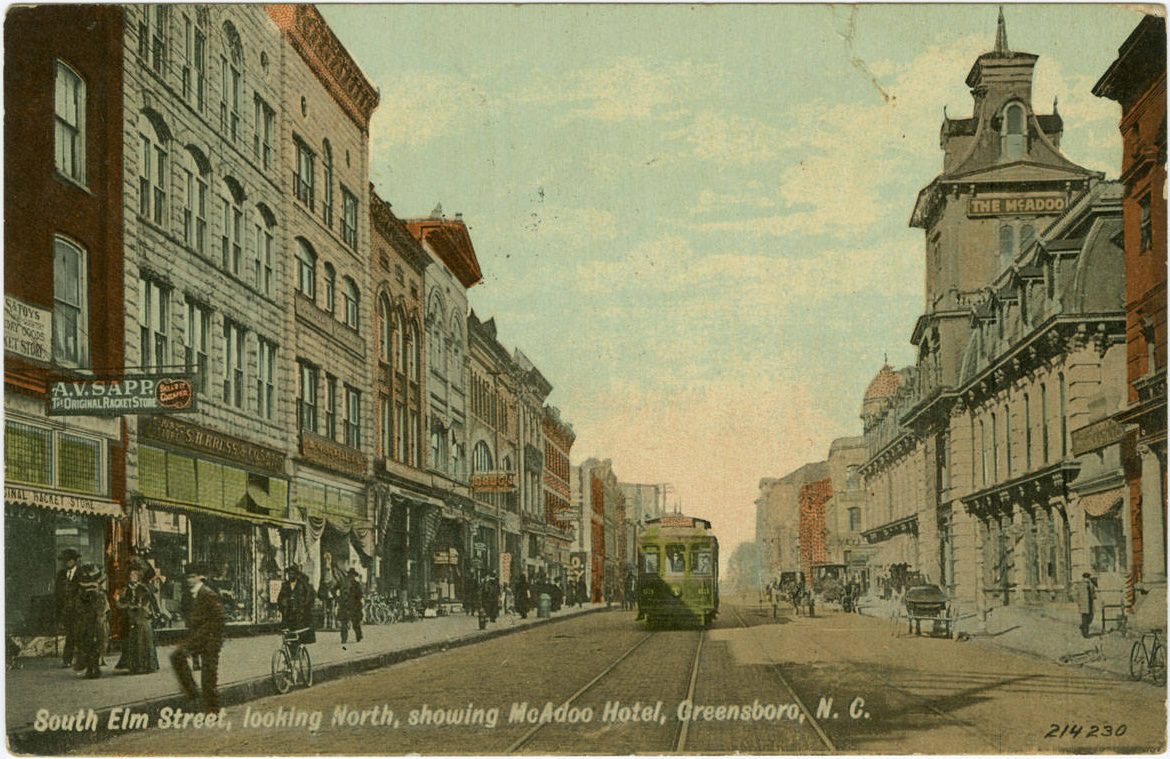
After the war he was a merchant, banker, and real estate developer – and he made a packet – but his most enduring legacy was that of hotel proprietor. This postcard shows his block-long grand hotel, “The McAdoo,” on South Elm Street in Greensboro in about 1912.
He built it in 1871 and ran it until about 1891, and it continued to be a local landmark and luxury destination until it was destroyed by fire in 1916, 8 years after W.D. McAdoo’s death.
Notes
This postcard is online from the North Carolina Postcards collection at the University of North Carolina, Chapel Hill.
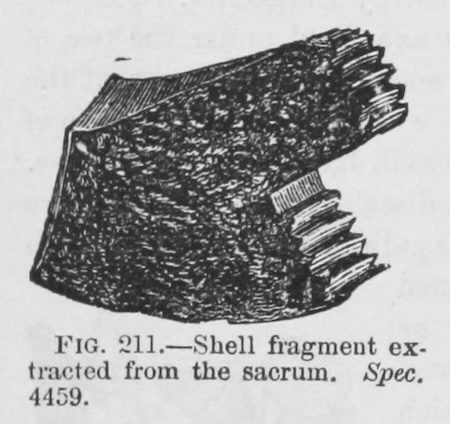
22 year old Private Charles A Trask of the 13th Massachusetts Infantry was mortally wounded in the lower abdomen by this chunk of iron at Antietam on 17 September 1862, and died about two weeks later in a hospital in Chambersburg, PA.
His record in the Medical and Surgical History of the War of the Rebellion [Volume 2, Part 2, p. 250] identifies this as from a spherical case shot, and notes
The missile (Fig. 211), showing a section of the orifice for the fuze, and weighing two and two-thirds ounces, was contributed to the Museum by Surgeon E. McDonnell, U.S.V.
The original piece of shell taken from Private Trask and many other artifacts of Civil War medicine are now in the Anatomical Collections at the National Museum of Health and Medicine in Silver Spring, MD.
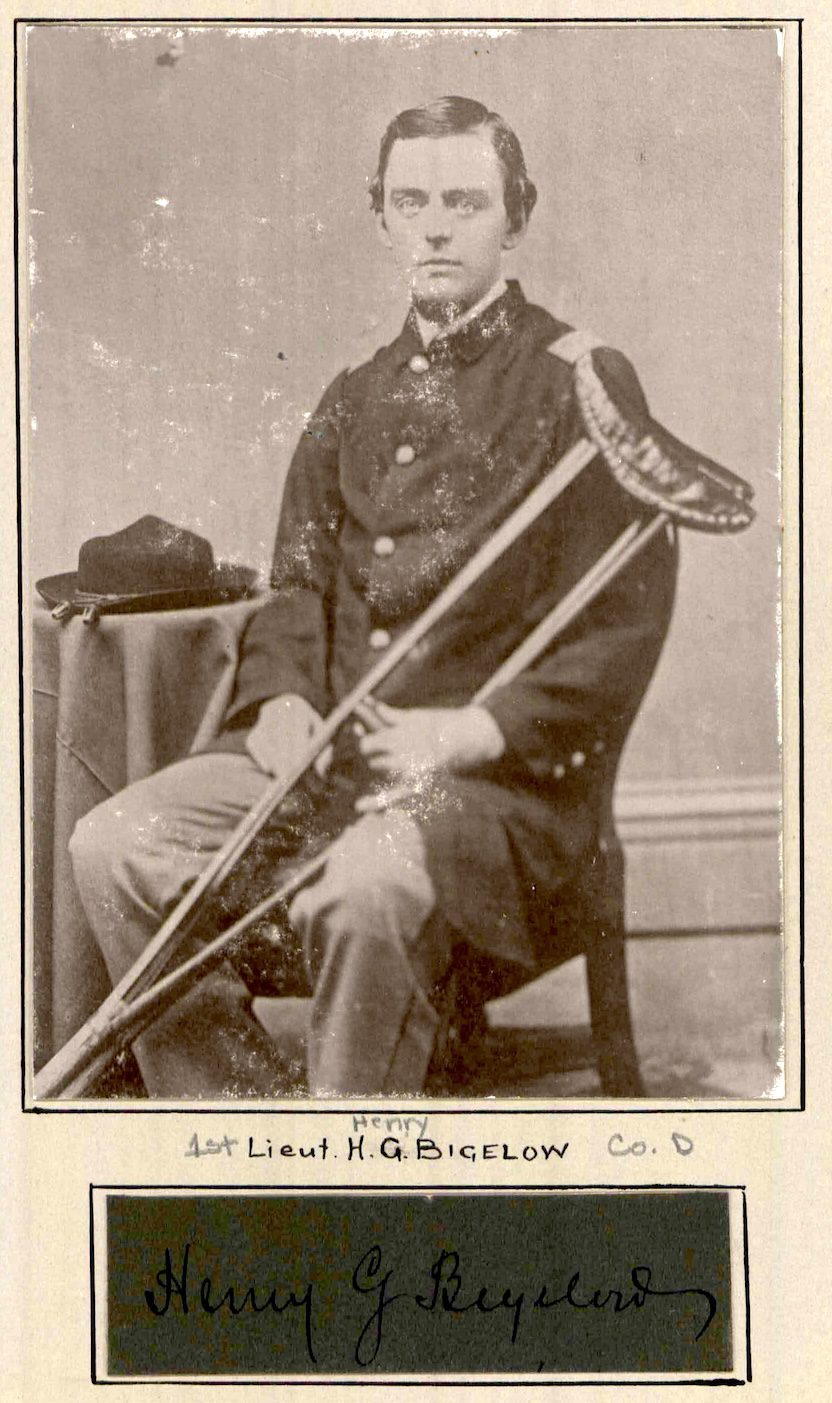
Henry Grove Bigelow was the 20 year old Sergeant Major of the 15th Massachusetts Infantry when he was seriously wounded at Antietam in September 1862, by a gunshot through his hip which shattered part of his pelvis.
He was at home recovering when he was appointed 2nd Lieutenant in October 1862 and still there when he was promoted to First Lieutenant in March 1863. He resigned his commission in August 1863, not yet able to walk well enough to keep up with his men.
This photograph is one of the thousands of images in the Military Order of the Loyal Legion of the United States (MOLLUS), Massachusetts Commandery photo albums. These are now at the US Army Heritage & Education Center in Carlisle, PA. This picture is from page 4930 of album 96.
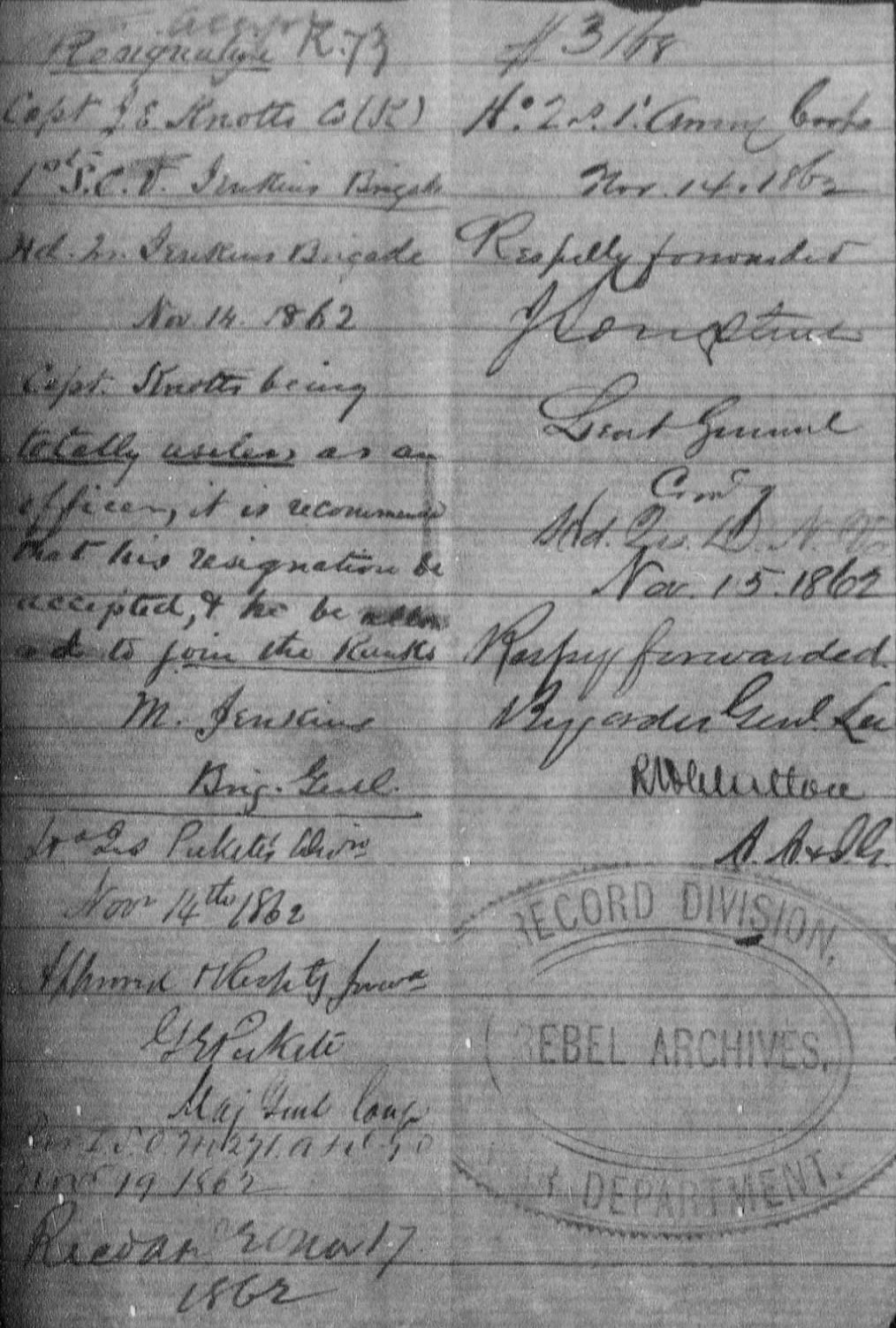
Bold language is rare in military communications, so I thought I’d share this instance so both of my readers can enjoy it with me. It’s a clipping from the back of Captain Joseph E Knotts‘ letter of resignation of 14 November 1862. Knotts was Captain of Company K of the First (Hagood’s) South Carolina Infantry.
[touch the image to see the whole sheet]
The back of the letter includes the signatures of Knott’s higher chain of command – brigade commander Micah Jenkins (excerpted above); George Pickett, division; James Longstreet, army corps; and (I think) Robert Chilton, AA&IG on behalf of Robert E Lee, commanding the Army of Northern Virginia.
General Jenkins’ comment here hints at poor leadership in the regiment more generally during and after the Maryland Campaign – that of all three field officers (Col. Duncan, Lt. Col. Livingston, Maj. Grimes) and at least two of the senior Captains (Knotts and Stafford, Co. I).
Jenkins was not in Maryland on the Campaign, he’d been wounded at 2nd Manassas in August, and his brigade was commanded by senior colonel Joseph Walker of the Palmetto Sharpshooters. In his after-action report of 24 October 1862, Walker noted:
I regret, however, to be called upon again to refer to the conduct of a large portion of the officers and privates of the First Regiment South Carolina Volunteers in this battle in terms of censure. The commanding officer reports that the regiment entered the fight with 106 men, rank and file, lost 40 men killed and wounded, and at the close of the day but 15 enlisted men and 1 commissioned officer answered to their names. Such officers are a disgrace to the service and unworthy to wear a sword …
For more, see the regiment’s page and officers’ capsule bios over on AotW.
For a deeper dive, I recommend James R Hagood’s Memoirs of the First South Carolina Regiment of Volunteer Infantry … an unpublished manuscript he wrote shortly before his death in 1870. It’s online and downloadable [17MB pdf] from the University of South Carolina. JR Hagood was Sergeant Major and acting Adjutant of the regiment at Sharpsburg in 1862 and was appointed Colonel in November 1863 over half a dozen officers senior to him.
Notes
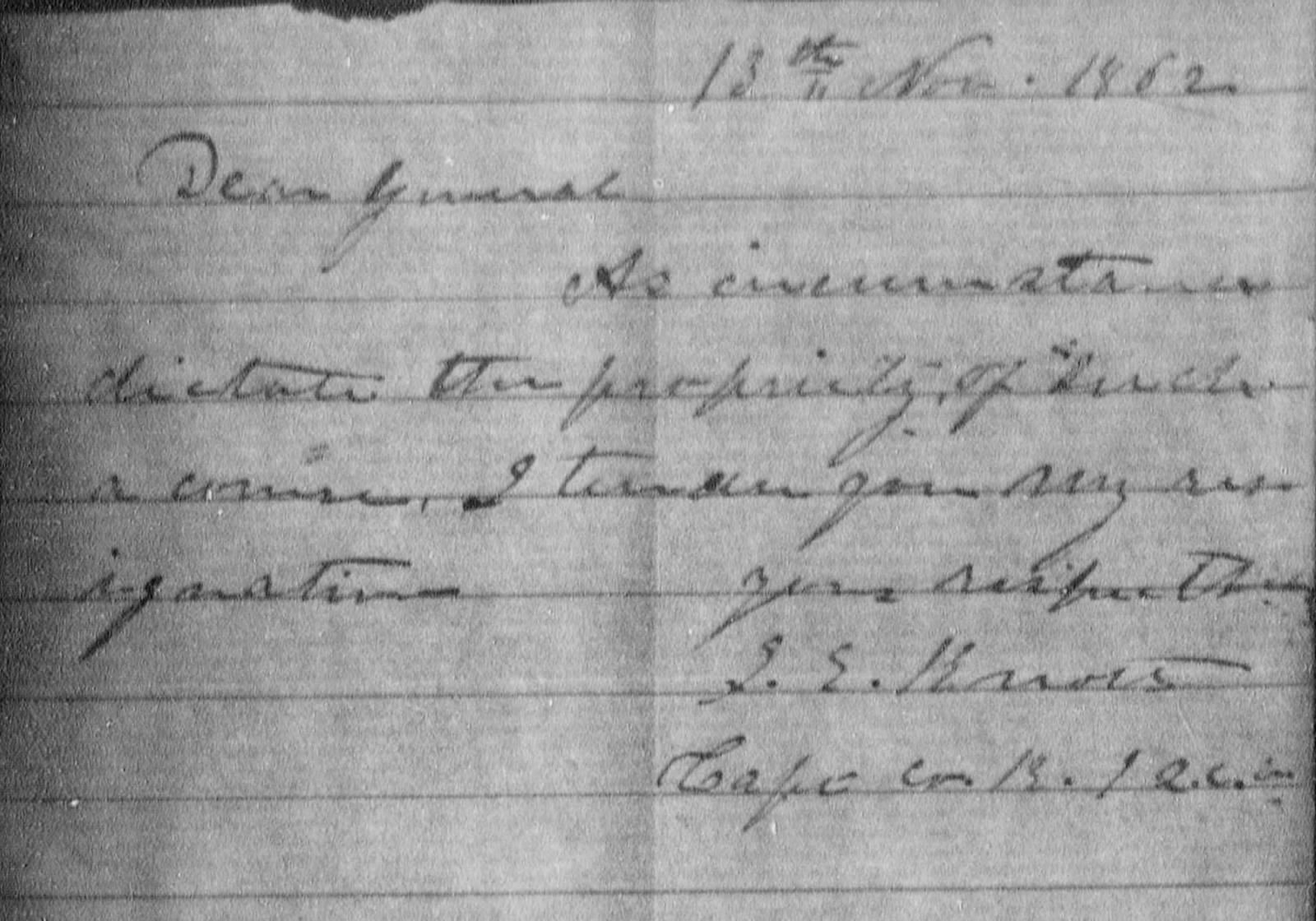
Knotts’ resignation letter is from his Compiled Service Records; I found it online from fold3 (subscription service). Here’s the useful part of the front of the page:
[touch to enlarge]
Brig. Gen. Jenkins’ comments transcribed:
Nov. 14, 1862
Capt. Knotts being totally useless as an officer, it is recommended that his resignation be accepted, & he be allowed to join the Ranks.
M. Jenkins
Brig. Genl.
Thanks to Jim Smith for locating Hagood’s manuscript, an excellent resource with details about the regiment, its officers, and individual casualties.