Category: quickPost/Pix

side notes

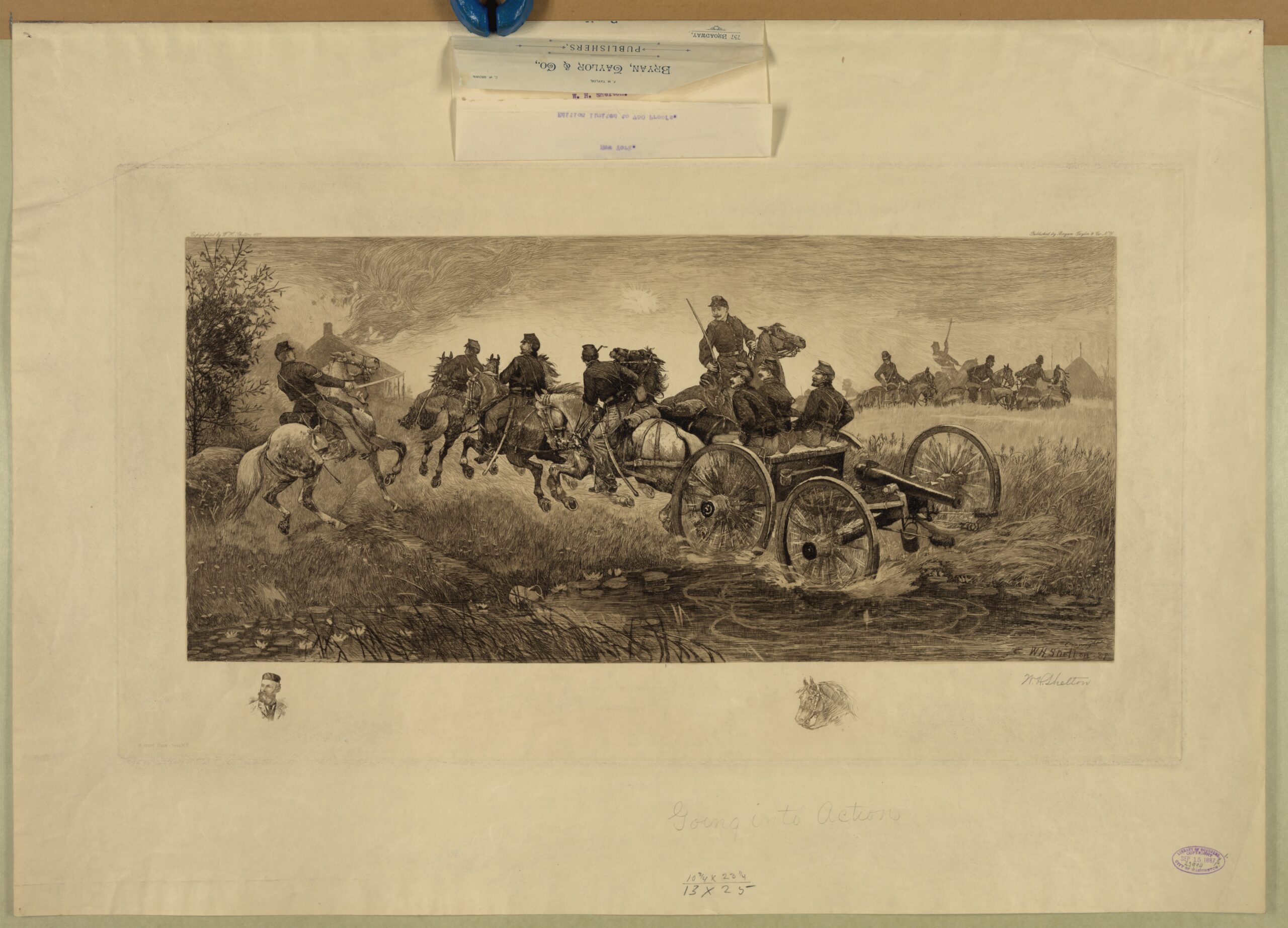
  • Going into Action (1887)

    This evocative piece is from an etching by New York artist William Henry Shelton (1840-1932). He depicted horse artillery troops at Chancellorsville in May 1863, and had a run of 750 copies printed by Bryan, Taylor & Company in New York City in 1887.

    He deposited this copy with the Library of Congress in September 1877 to protect his copyright (touch to enlarge).
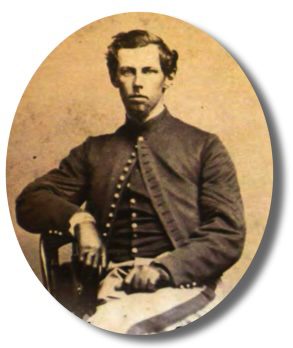
    Shelton was himself an artilleryman – a Private in a New York battery at Antietam and Chancellorsville, later First Sergeant, 2nd Lieutenant, and lastly First Lieutenant near the end of the war – so he had some idea about the subject matter.

    Here he is in enlisted uniform.
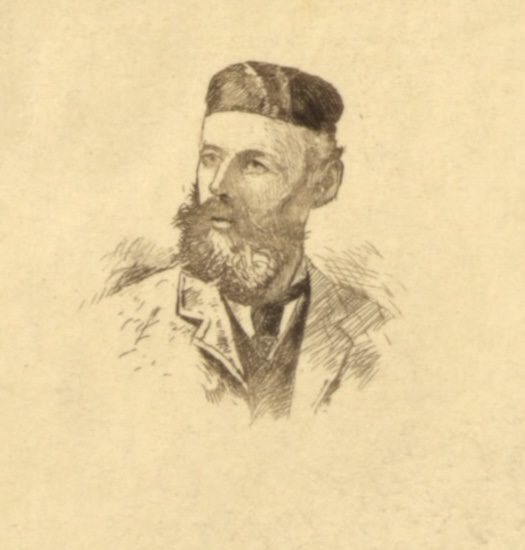
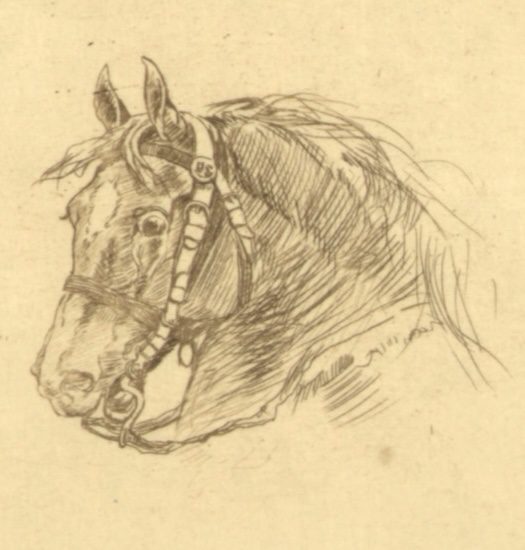
    Two intriguing details about this particular print of Going into Action are the small sketches William made in the margin below the main picture. At the left, a self-portrait of the artist, and on the right, a horse head.
    Notes

    This print is still in the collection of the Library of Congress, and is now online.

    His wartime photograph hosted by William “Griff” Griffing on Spared & Shared accompanying a Shelton letter of 19 October 1862.
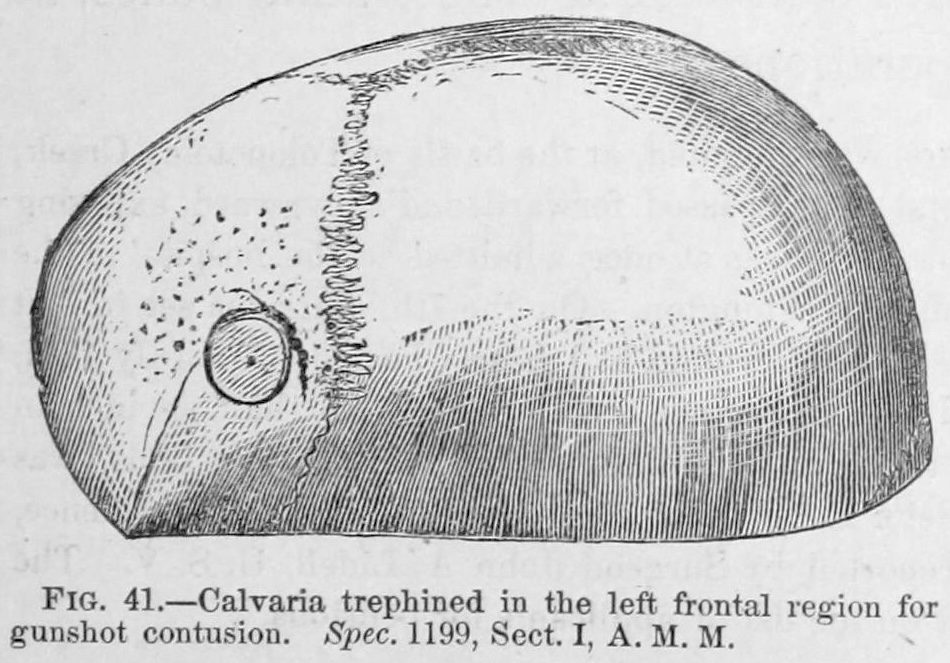
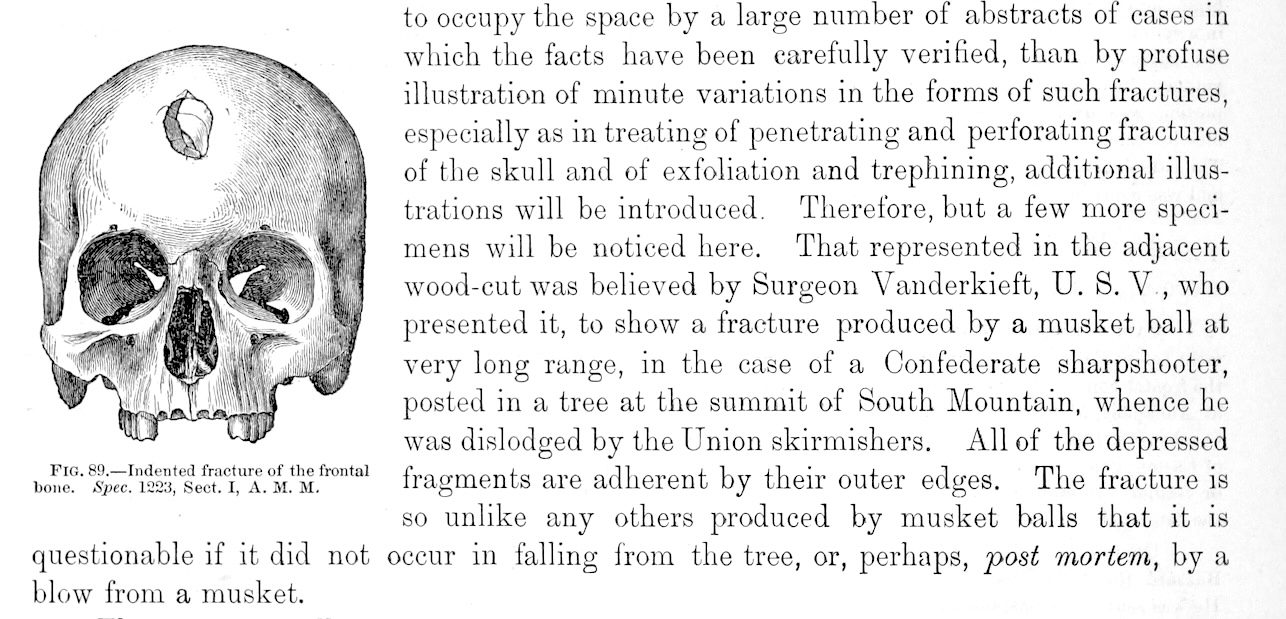
  • Calvaria trephined in the left frontal region (1862)

    I’ve gone to Army Surgeon-General Joseph K Barnes’ Medical and Surgical History of the War of the Rebellion (1870-1883) many times over the years chasing Antietam casualties, but never done a systematic scrub through it. I’m underway on that now.

    Among the first cases I found was that of Private Samuel Altman of the 50th Georgia Infantry, who was wounded by a gunshot to his head at Fox’s Gap on South Mountain on 14 September 1862. He was captured there and treated by US Army surgeons on the field and in hospitals in Frederick, MD and Philadelphia, PA. Despite their efforts, including trephining – boring a hole in his skull to relive pressure – he succumbed to the effects of his wound on 11 October 1862.

    Here’s an illustration of part of his skull, post-mortem, which was kept in the collection of the Army Medical Museum as an aid to education of future combat surgeons.

    A little later in that volume I found the fine illustration below, purported by Surgeon Bernard A Vanderkieft to be the skull of an unnamed Confederate sharpshooter knocked from a tree atop South Mountain at long range by Union skirmishers, presumably on 14 September 1862. Touch the image to read the accompanying text.


    Notes

    A fine presentation of all 6 volumes of the MSHWR is online from the National Library of Medicine.

    Altman’s skull is found in Volume 2, Part 1 on page 123. The sharpshooter’s is on page 170.

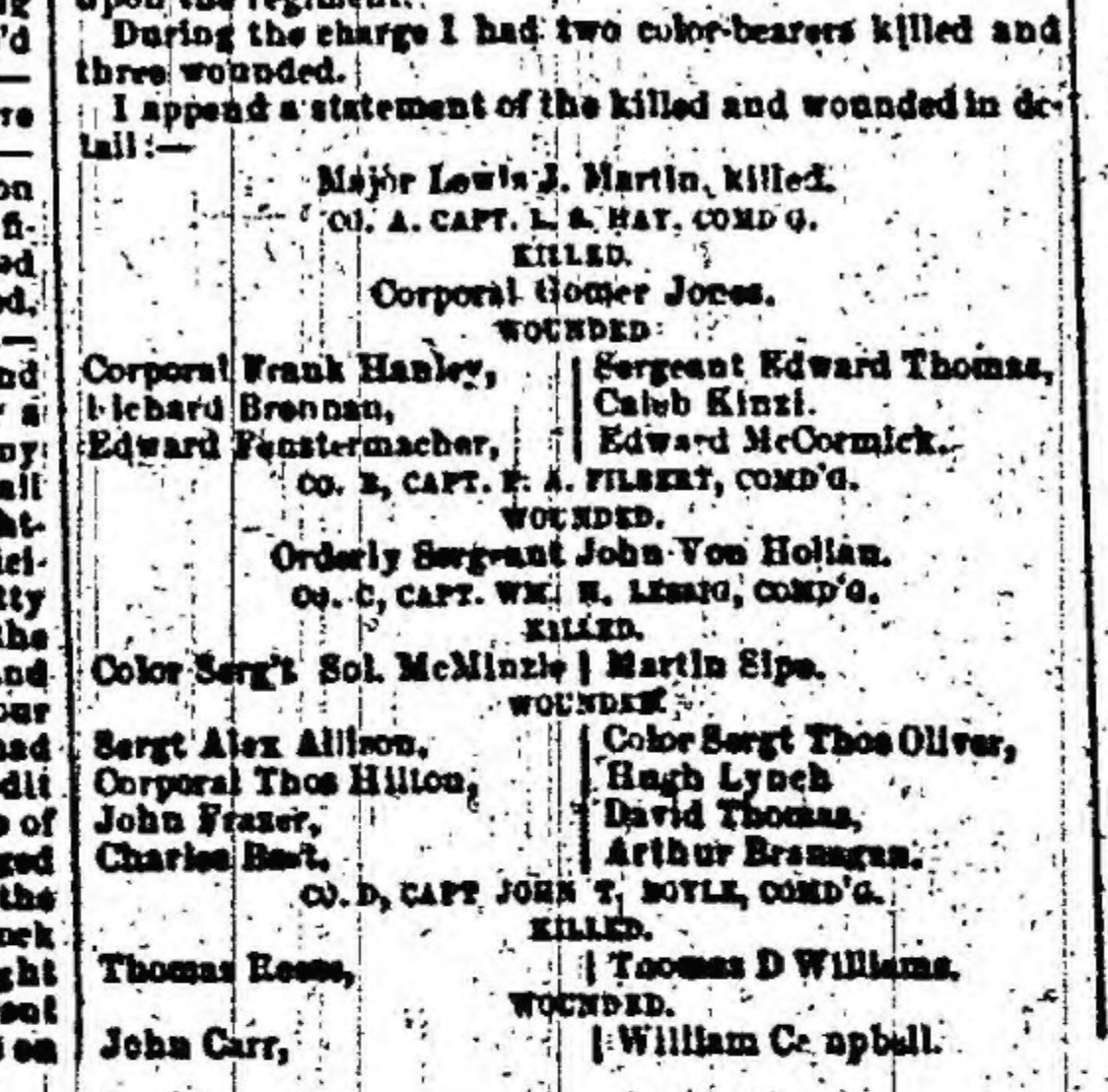
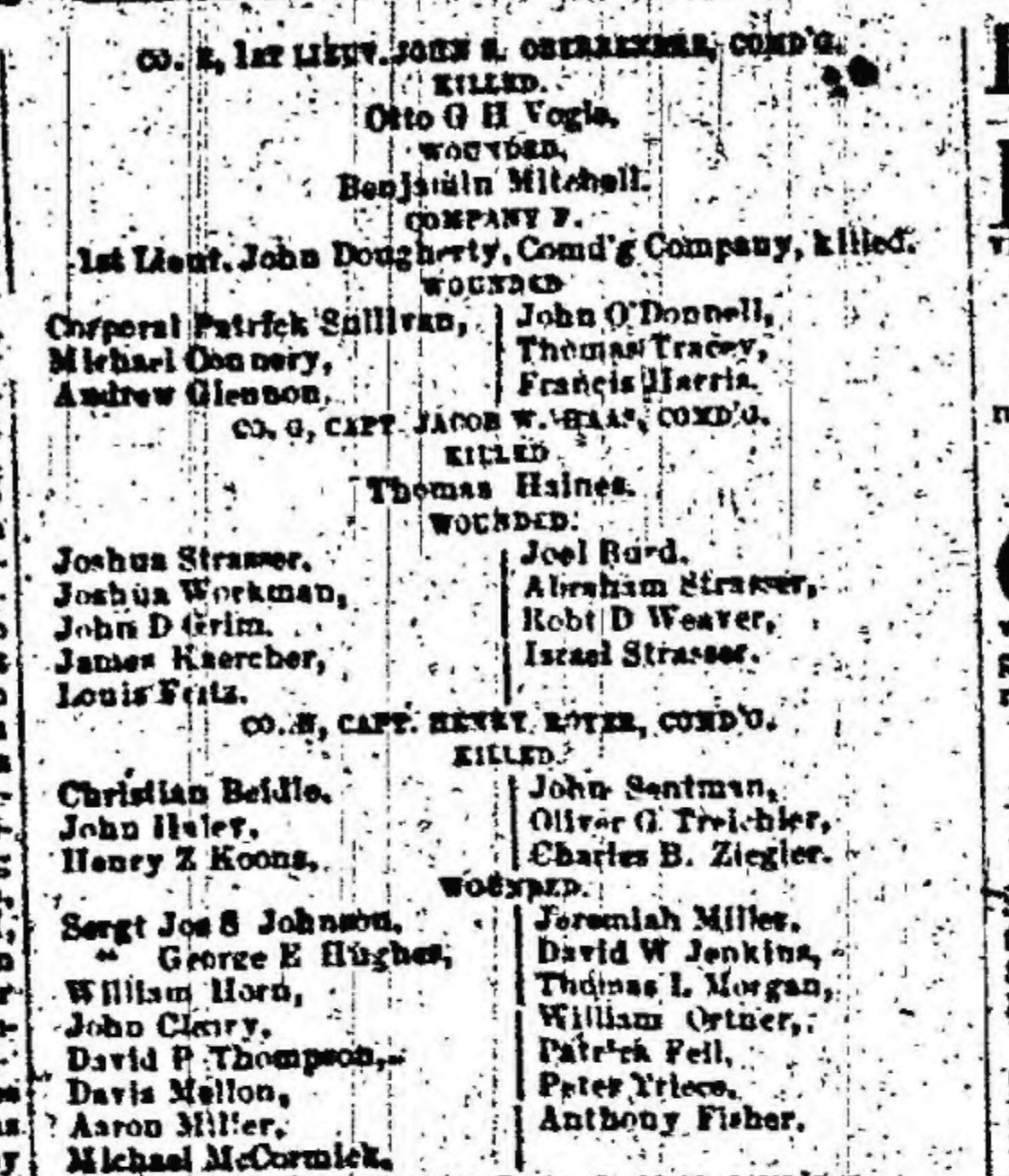
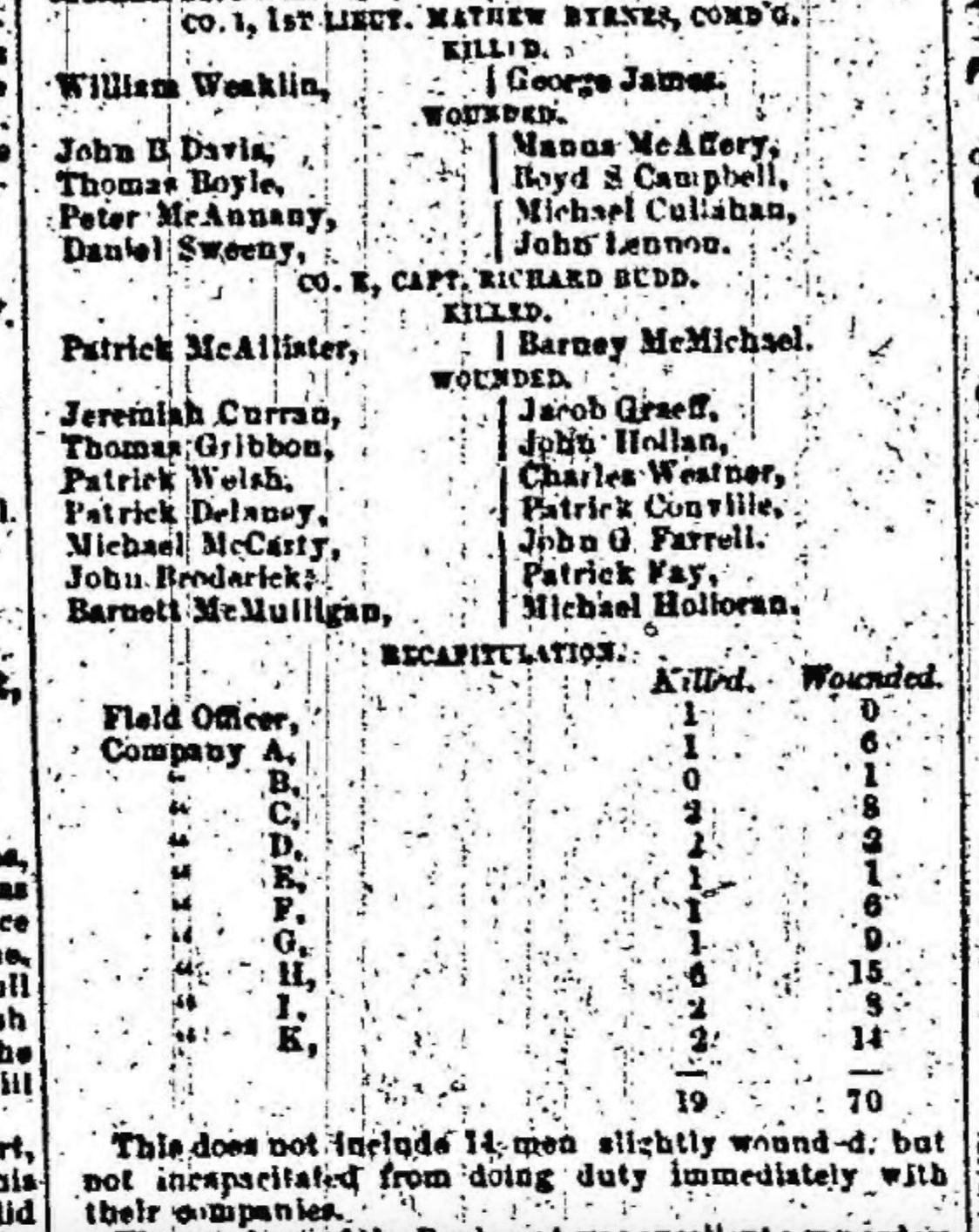
  • Crampton’s Gap casualty list, 96th Pennsylvania Infantry

    Appended to Colonel Cake’s official report as printed on page 2 of the Pottsville (PA) Miner’s Journal of Saturday, 4 October 1862, is his list of the men of his 96th Pennsylvania Infantry who were killed or wounded in the fight at Crampton’s Gap on South Mountain on 14 September 1862. It’s not found in the Official Records in company with the Colonel’s report.


    (touch to enlarge)

    My transcription of the text and links to the individual soldiers’ pages on AotW, after the jump … (more…)

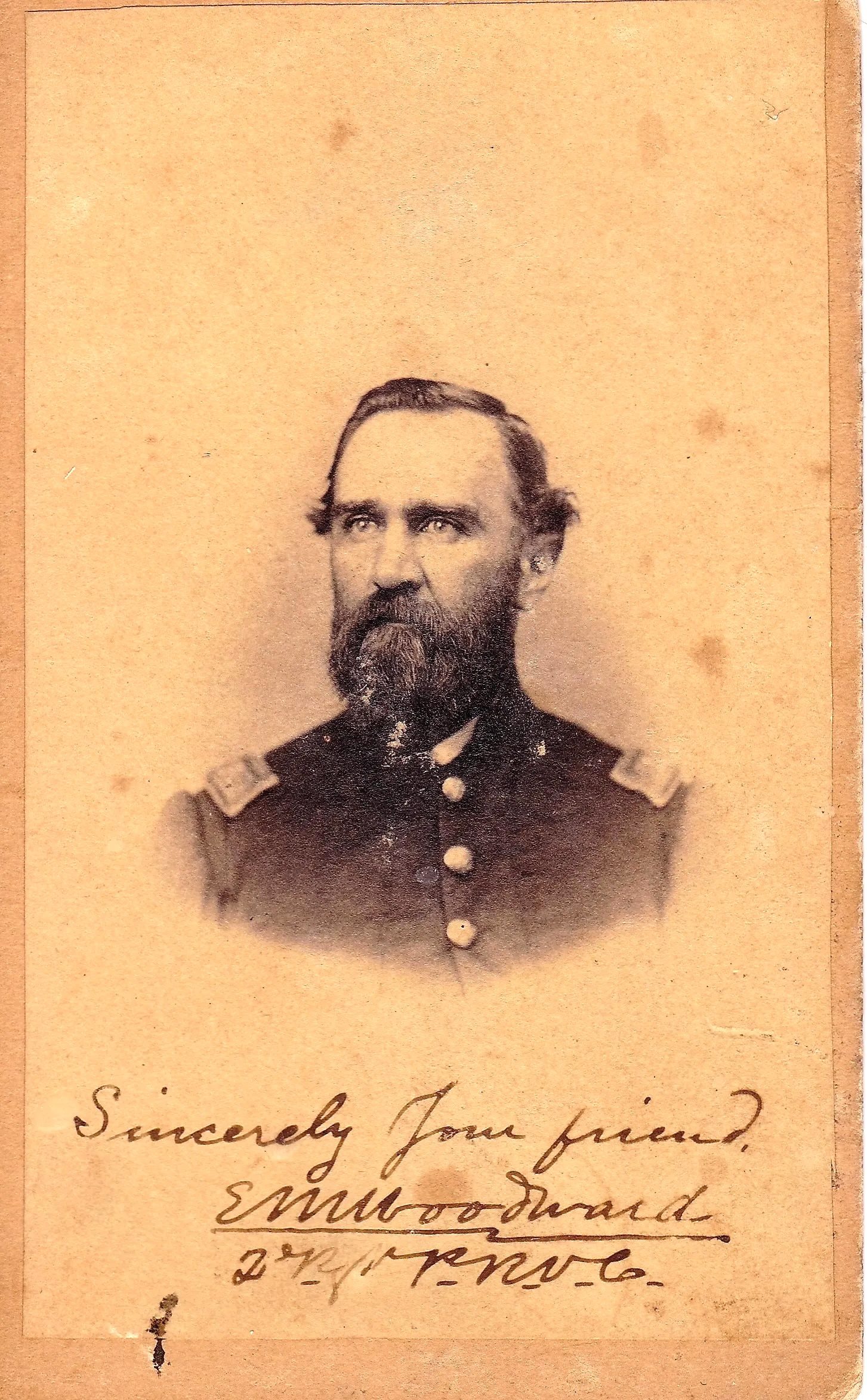
  • Lt Evan Morrison Woodward (c. 1862)

    A 34 year old clerk from Philadelphia, Morrison Woodward was Sergeant Major of the 2nd Pennsylvania Reserves when they fought in the Maryland Campaign of September 1862.

    He wrote of his experiences there in his 1865 regimental history, describing the scene at Turner’s Gap on the 14th and the terrible fighting on the evening of the 16th and morning of the 17th at Antietam. He also included this almost comic incident:

    When we broke and were driven across the field, a chicken was scared up, which displayed equal alacrity with the men in its flight to the rear, and a most animated race for life or death took place between them, but the Sergeant-major seizing a favorable opportunity threw himself upon the ground and captured the prize, which furnished a most sumptuous repast.

    He was appointed First Lieutenant and Regimental Adjutant after the battle and (much) later was award the Medal of Honor for his work in capturing enemy troops and their flag at Fredericksburg that December.

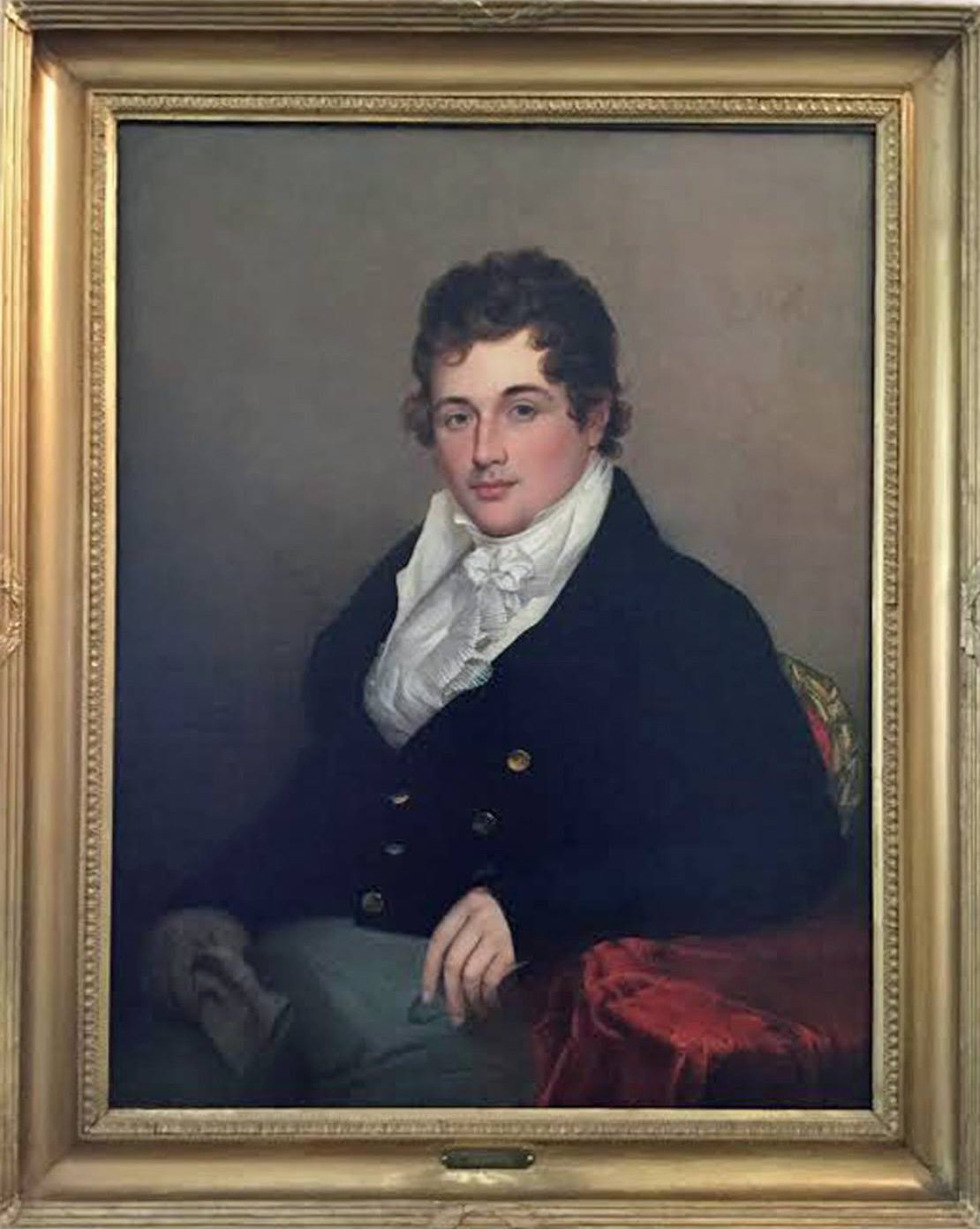
    Morrison’s father James Searles Woodward (November 1790-October 1862) was a prosperous merchant in Philadelphia. Just for fun, here’s his c.1820 portrait as a young man, now in the Naomi Wood Collection, hanging in the dining room of the Woodford Mansion, Philadelphia.


    Notes

    Evan Morrison Woodward’s photograph, which looks to have been hand-retouched, was sold by the Union Drummer Boy in Gettysburg.

    Woodward’s history of the 2nd Reserves – Our Campaigns or, The Marches, Bivouacs, Battles, Incidents of Camp Life and History of our Regiment during its Three Years Term of Serviceis online from the Internet Archive.

  • Augustus Columbus and Mary Arline Randolph Thompson (c. 1861, 1850s)

    Colonel H.L. Cake of the 96th Pennsylvania Infantry, in reporting his regiment’s part in the combat at Crampton’s Gap on 14 September 1862, included this detail:

    It was a most exhausting charge. By the time we had ascended half way the cannon had ceased firing on our left, and the enemy seldom replied to our fire with their muskets. We made captures at every step. After passing the crest of the mountain a lieutenant [which?] of the Fifteenth North Carolina delivered himself up, I sent during the charge, 42 prisoners to the rear, including the captain of Company G, Sixteenth Georgia, wounded, and other officers and men most of them unhurt.

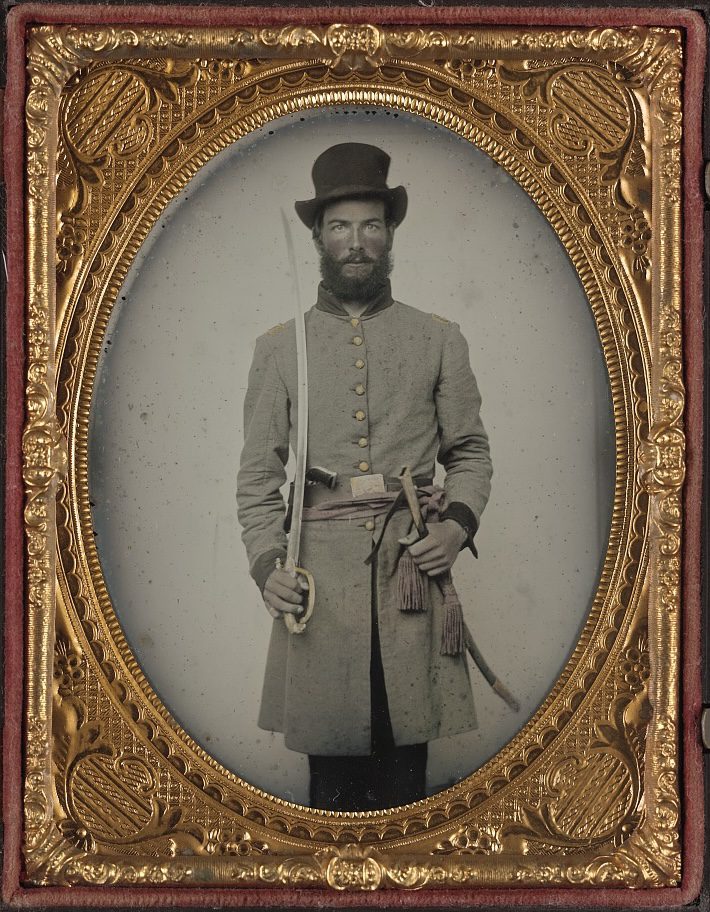
    That Georgia Captain was Augustus C Thompson, of Jackson County, who had been shot in the left thigh before he was captured. He survived, but was disabled for further service and went home.

    This superb photograph of him was donated to the Library of Congress by Tom Liljenquist in 2012. I’d guess it was taken as he first entered service in July 1861.

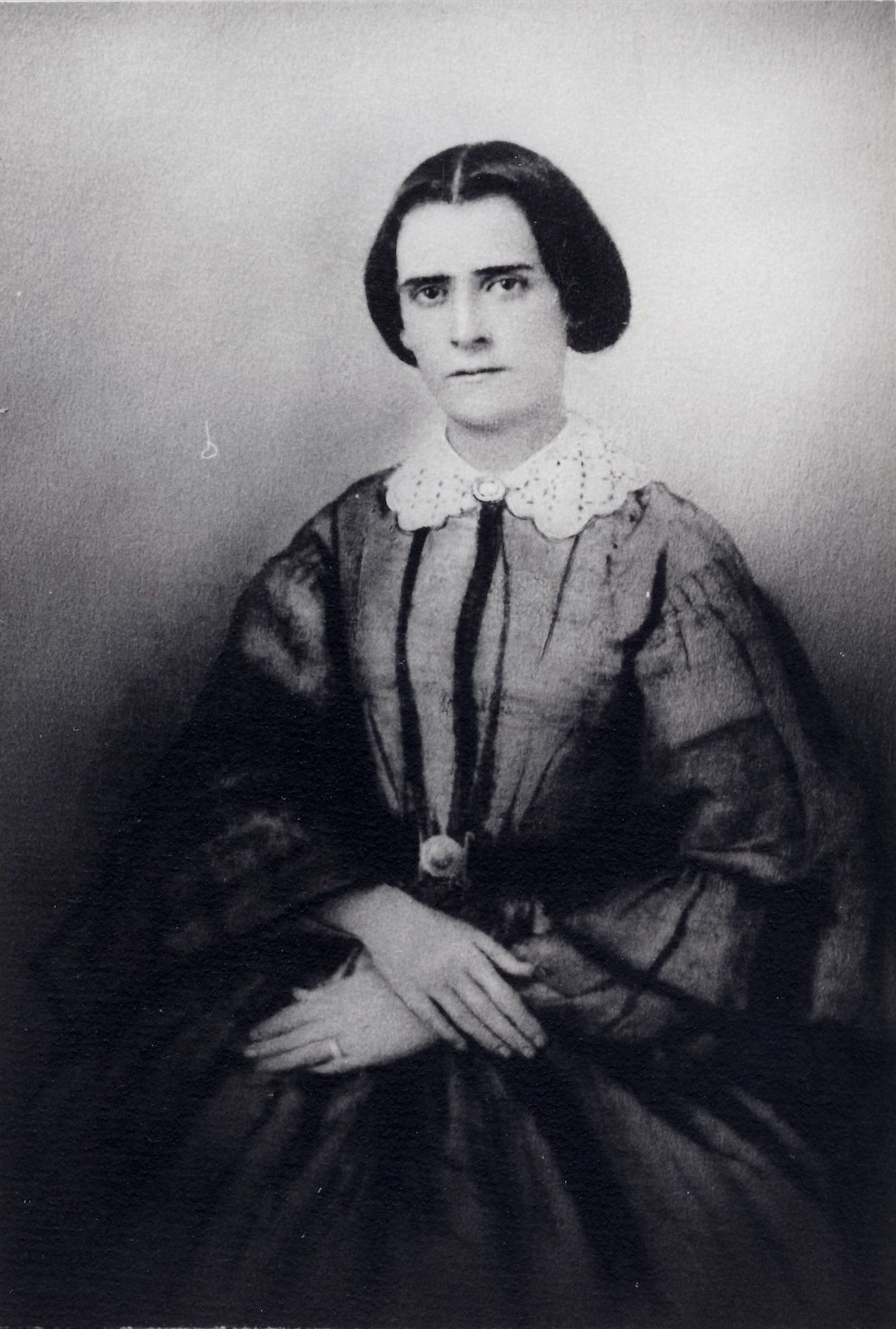
    While looking further into Captain Thompson today I found that picture of his wife, Mary Arline Randolph, shared to the Mormon genealogical database by Julie Kinkaid in 2022. I do not know when it was taken, but she looks very young – in her twenties, perhaps? She was 17 when she married 22 year old Augustus in 1850.

    They had a daughter, Nancy, and both lived into their 70s, for the last 20 years in Lakeland, FL, where Augustus ran the county poor house. Mary Arline only outlived him by about 8 months.