Category: the history

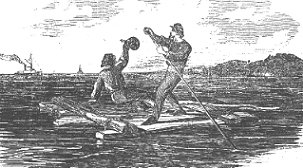
  • Rorty and Kelly making their escape.

    County Donegal native Lieutenant James McKay Rorty was Ordnance Officer of the First Division, 2nd Army Corps (Brigadier General Israel B. Richardson) at Antietam. He was heroically and famously killed at Gettysburg in July 1862 while in command of Battery B, 1st New York Light Artillery – a remnant of the old Irish Brigade/2nd Artillery Battalion in which he’d originally been commissioned in 1861.

    Equally famously, as a Private in the 69th New York Militia he’d been wounded and captured at First Bull Run on 21 July 1861 and held in a warehouse in Richmond, VA. On 18 September he and two other men, 1Sgt. William O’Donohue and Pvt. Peter Kelly, disguised themselves in civilian clothes and escaped. A week later they made it to the Potomac River and rafted out to Federal gunboats.

    That’s the scene in the illustration above, from Frank Leslie’s Pictorial History of The War of 1861, posted online in company with a piece about Rorty from The Wild Geese.

    The escapees are (probably) seen in the photograph below – left to right, Kelly, Rorty, O’Donohue – taken later, after all three were commissioned officers. It’s from owner Matt Regan and is online from Harry Smeltzer.

    [updated February 2021]
  • Walcott’s 21st Massachusetts

    Captain Charles F Walcott is a hero to those who study Massachusetts soldiers in the Civil War (or at least to me) because he wrote the Regimental History of the 21st Massachusetts Infantry (1882). In the preface he apologized for taking more than 15 years to complete the book while raising children and running a law practice in Boston.

    A Harvard man, he’d adventured West during a “gap year” in 1857 before law school. He had travelled to Minnesota, “living with the Sioux and Winnebago”, went down the Mississippi to New Orleans and returned home by ship by way of Cuba.

    Walcott was the original Captain of Company B of the 21st, commissioned in August 1861, and he commanded it on the Maryland Campaign of 1862 – at Fox’s Gap on South Mountain and right behind the 51st PA & 51st NY over Burnside’s Bridge at Antietam.

    He left the 21st Massachusetts in April 1863 and married Anna Morrill Wyman in October.

    He did a 90-day stint commanding a local militia unit in the Summer of 1864 then was appointed Lt Colonel (soon Colonel) of the new 61st Mass in September. He mustered out in June 1865.

    In 1866 he was honored by brevet to Brigadier General of Volunteers.

    He was a lawyer in Boston for the next 20 years and died at age 50 in 1887.

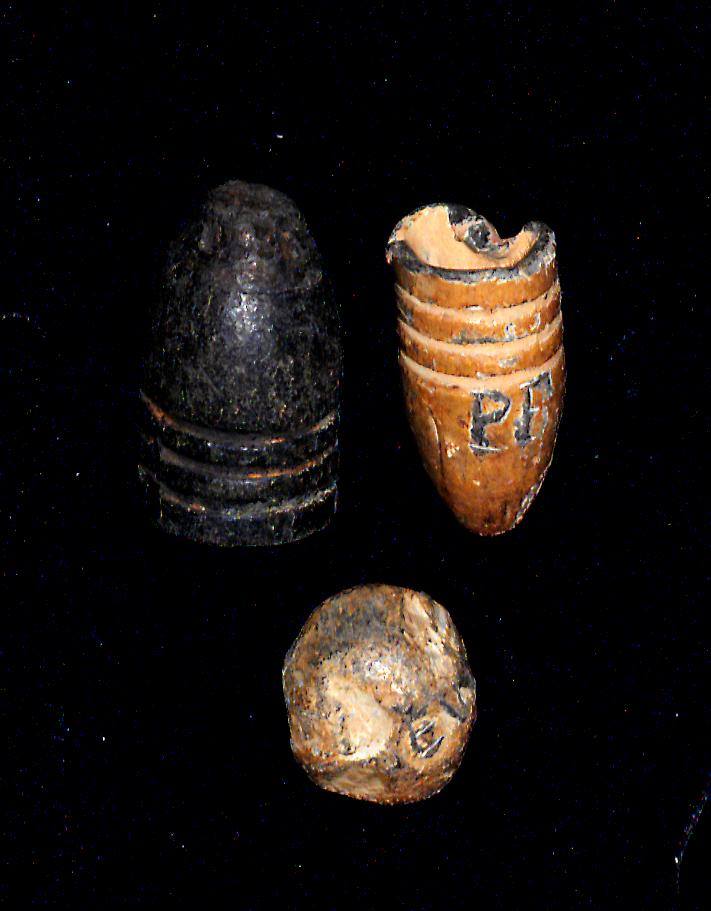
    In about 1980 his grandson Dr. Charles F. Walcott (Harvard, Harvard Medical School) donated a box of Indian artifacts to the Cambridge (MA) Library, a few of which are identified as local to Massachusetts, collected by Dr. Walcott. The rest are apparently of unknown provenance. That collection is pictured online via Flickr.

    “The only outlier to the Native American objects in the collection is a box containing two bullets and a minie ball from the Battle of Antietam” – actually 2 minie bullets and a musket ball or cannister shot, I think.

    Although not documented, I can guess who first collected some of these objects, can’t you?

    ________

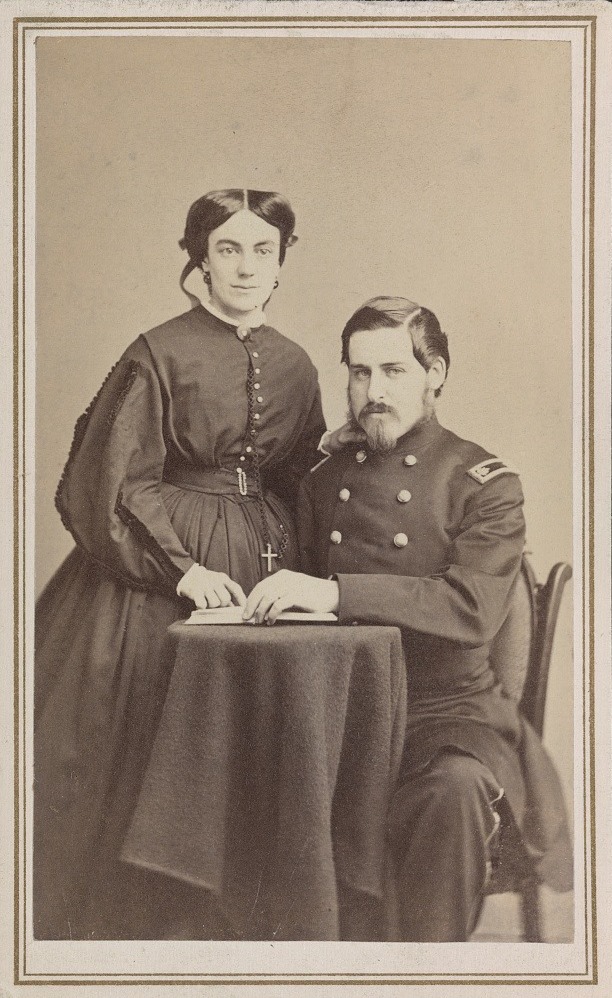
    The late-1864 photo with his wife is at the Library of Congress (part of the Liljenquist Family Collection of Civil War Photographs).

  • Dead List update

    I’ve been pushing hard the last few months to get more soldiers into the database on AotW, focusing particularly on those who died on the Campaign.

    As a result I’ve posted an update to the list of The Dead of the Maryland Campaign of 1862. It’s now up to just over 6,300 people out of the more than 7,600 who died.

    There’s so much more to do, but this is a good jump from the previous edition.

    Pages for those individuals and thousands more are available on AotW, of course, if you want to see more about them …

  • Smoketown Hospital, January 1863

    I’ve found a fascinating description of the Smoketown Hospital as it was in January 1863 in a letter to an Indiana newspaper. I came upon it while looking into one of the many soldiers of the 27th Indiana Infantry wounded at Antietam, Private Thomas Mitchell Gaskins. 

    The writer lists some of the patients, like Gaskins, and their status, which is immediately useful, but his description of the hospital facilities and staff are the most interesting pieces to me.

    Here’s my transcription of the complete letter as published:

    U.S. Hospital at Smoketown,
    or Antietam, Jan. 15, 1863

    Editors Sentinel: As the people of Indiana take a deep interest in the condition and treatment of our sick and wounded soldiers, enclosed I send you a short statement of what came under my own personal observation. (more…)

  • J.F. Downey with HQ, AEF in France, 1918

    At the eleventh hour on the eleventh day of the eleventh month in the year 1918, the Great War ended under the terms of an armistice, a cease-fire agreement, signed at 5 o’clock that morning.

    The most immediate requirement of the Armistice was the withdrawal of all German forces to the line of the Rhine River, which, along with “beachheads” on the east bank, was the part of Germany to be occupied by Allied troops. French, British, Belgian, and American.

    One of about two million Americans of the American Expeditionary Forces (AEF) in France that day was 23 year old Joseph F. Downey from Scranton, Pennsylvania, my grandfather.

    That lovely hand colored map, Territorial Terms of the Armistice, is among a stunning cache of papers he left us. They’ll help me remember him and those millions of others on this centennial of the end of the First World War. (more…)