Category: the history

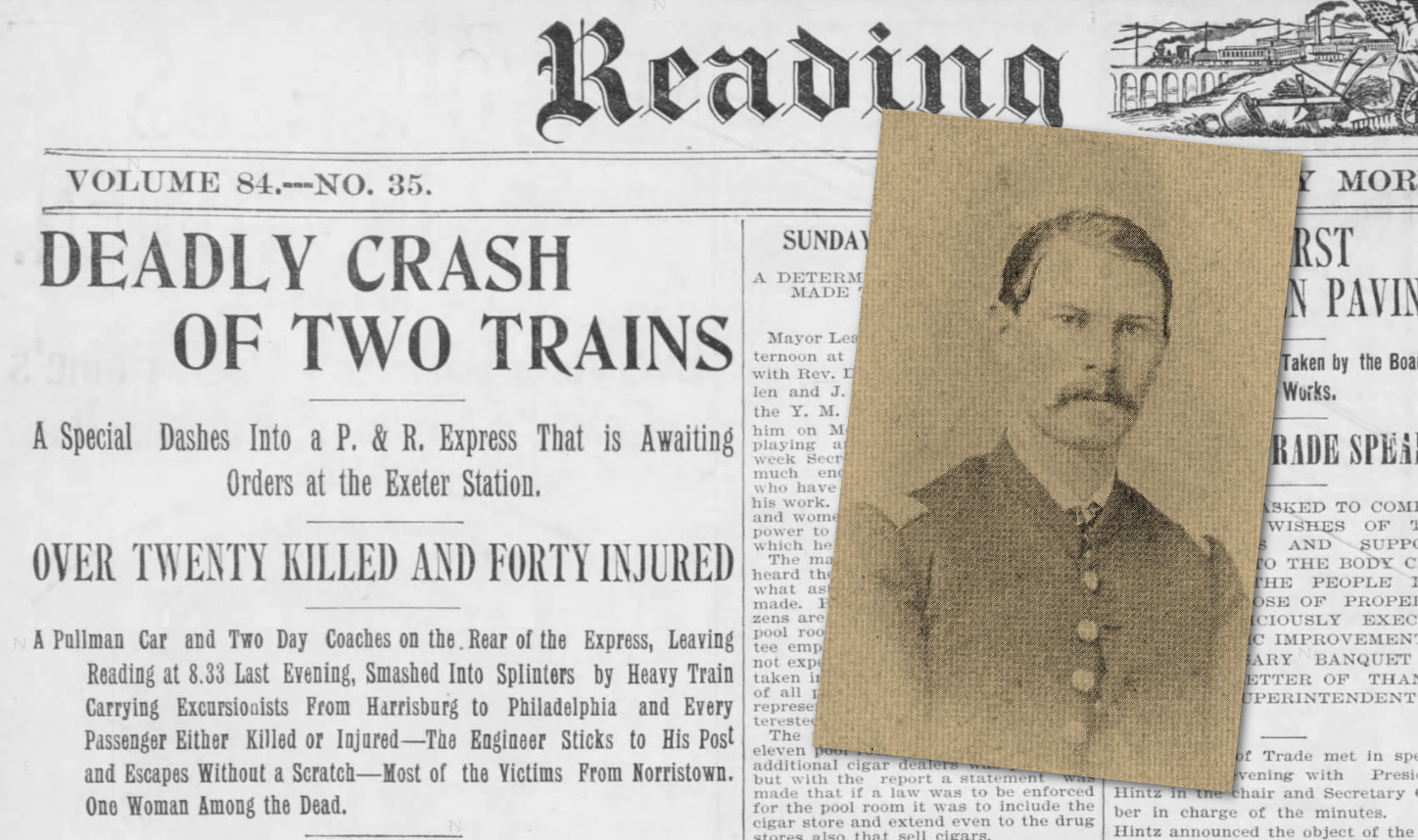
  • Deadly crash of two trains

    Corporal John H “Highly” Coulston, Company A, 51st Pennsylvania Infantry was wounded at Fox’s Gap on South Mountain in September 1862. He was Captain by January 1865 and mustered out in July.

    Tragically, he was severely injured in a train crash – known afterwards as the Exeter Station wreck – on 12 May 1899 while returning with many other veterans from the dedication of a statue of statue of General Hartranft in Harrisburg. He died the next day.

    Superimposed on the front page of the Reading Times of 13 May 1899 above is a picture of him c. 1864 from a published photograph contributed to his Findagrave memorial by Charles McDonald.

    The crushed train car below testifies to the force of the collision. Below that is a post-war photograph of Isaac E Filman – also of Company A and wounded at Fox’s Gap, and also killed in the crash (lower two photos from the Pottstown Mercury of 1 July 2012).

  • Will you give us our whiskey?

    An early version of a famous story from the battle:

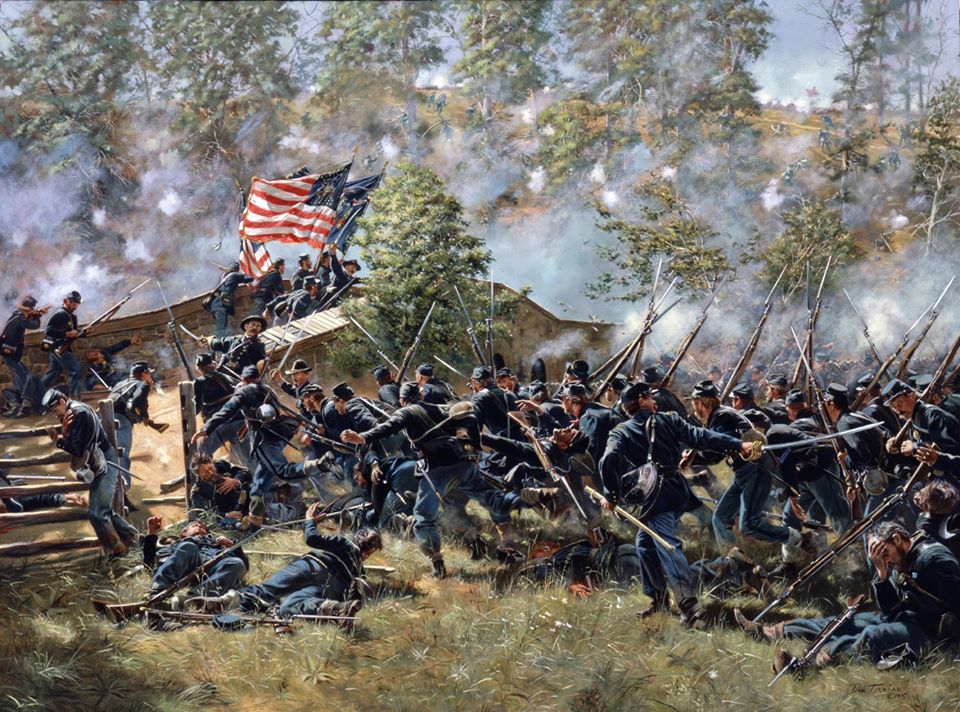
    Brigade commander Colonel Edward Ferrero of the 51st NY Infantry had previously taken away his men’s whiskey ration to reduce drunkenness. On 17 September 1862 near the Lower Bridge at Antietam he called to his own and the 51st Pennsylvania regiments …

    “It is General Burnside’s special request that the two 51sts take that bridge. Will you do it?”

    The request was unlooked for, and the men had not had time to think of it, when Corporal Lewis Patterson, of Co. I [51st PA], although a temperate man, exclaimed, “Will you give us our whiskey, Colonel, if we take it?”

    Col. Ferrero turned suddenly around to the corporal and replied, “Yes, by G–, you shall all have as much as you want, if you take the bridge. I don’t mean the whole brigade, but you two regiments shall have just as much as you want, if it is in the commissary or I have to send to New York to get it, and pay for it out of my own private purse; that is, if I live to see you through it. Will you take it?”

    A unanimous “Yes,” went up that told of the determination of the men to take the bridge, not in anticipation of the whiskey, but to let Gen. Burnside know that his confidence in the twin regiments was not misplaced nor should be abused. After a few words in private by the regimental and brigade commanders, the 51st P. V. led the advance …


    ____________
    Lewis Patterson (1835-1883) survived the charge unharmed, was later promoted to First Sergeant, and was commissioned First Lieutenant in 1865.

    The narrative above is from Thomas Parker‘s “History of the 51st Regiment of P.V. and V.V.” (1869). Parker was First Sergeant, Co. I at Antietam and was wounded in that action.

    The painting of the 51st Pennsylvania at the bridge is by Don Troiani.

  • Maryland Campaign artillery pocket guide

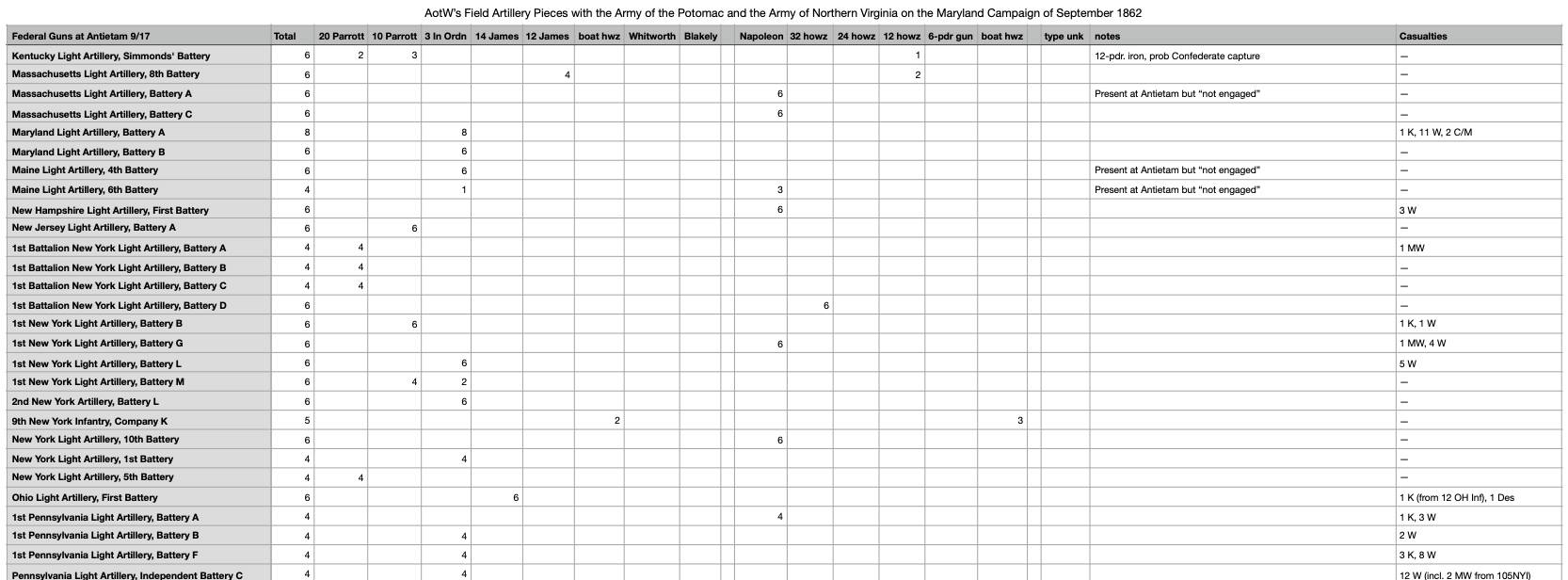
    New on AotW: a handy pocket guide to the field artillery pieces of each of the Confederate and Union batteries at Antietam and on the Maryland Campaign of 1862. In spreadsheet form, it shows counts by gun type for all 135 batteries present, and it’s available as a PDF and also as a link on the main AotW Weapons page .

    I welcome your feedback.

    OK, so it’s not really a “pocket” guide and the print is really small on a letter-sized sheet. But it is concise and reasonably complete. Perhaps best read zoomed-in on your computer screen.

    Some patterns are easy to see in this form. Have fun with the analysis – Confederate vs Federal.

    As always, there’s more info about each gun type and every battery online at Antietam on the Web.

  • Ben Witcher’s Story


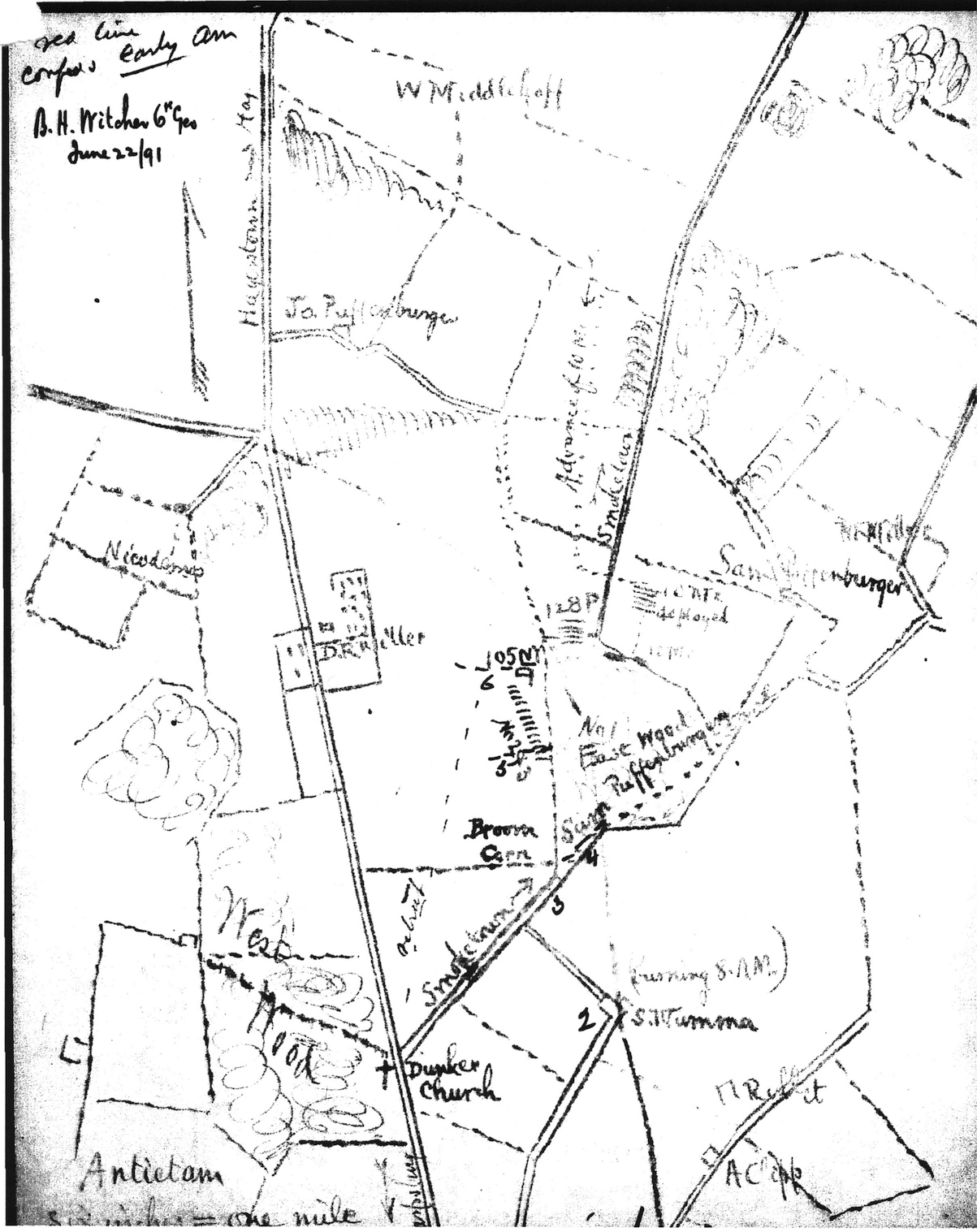
    B. Witcher’s battlefield map (detail, click for full)


    The map above is centered on the eastern part of the Miller Cornfield near the East Woods at Sharpsburg on the morning of 17 September 1862. There has been heavy fighting here since dawn and, along with other regiments in action, the 6th Georgia Infantry has been nearly wiped out. It is between 8 and 9 in the morning.

    Stephen Sears, in his classic Antietam book Landscape Turned Red (1983), wrote this dramatic vignette of that time and place:

    Private B. H. Witcher of the 6th Georgia urged a comrade to stand fast with him, pointing to the neatly aligned ranks still lying to their right and left. They were all dead men, his companion yelled at him, and to prove it he fired a shot into a man on the ground a few yards away; the body did not twitch. Private Witcher was convinced and joined the retreat. 

    Over the years since I first read it, I had forgotten Benjamin Witcher’s name, but not that story. Who could forget that imagery? Even in combat, the shock of shooting into one of your own mess-mates would have been horrendous.

    At least three other well-known books on the battle have used this anecdote, too, citing Landscape as their source. If you’ve read any of the basic literature, then, you will have seen it, and you’d remember.

    But I’ve just found it isn’t true. It didn’t happen that way. (more…)

  • Samuel W. Evans decorative discharge document (1905)

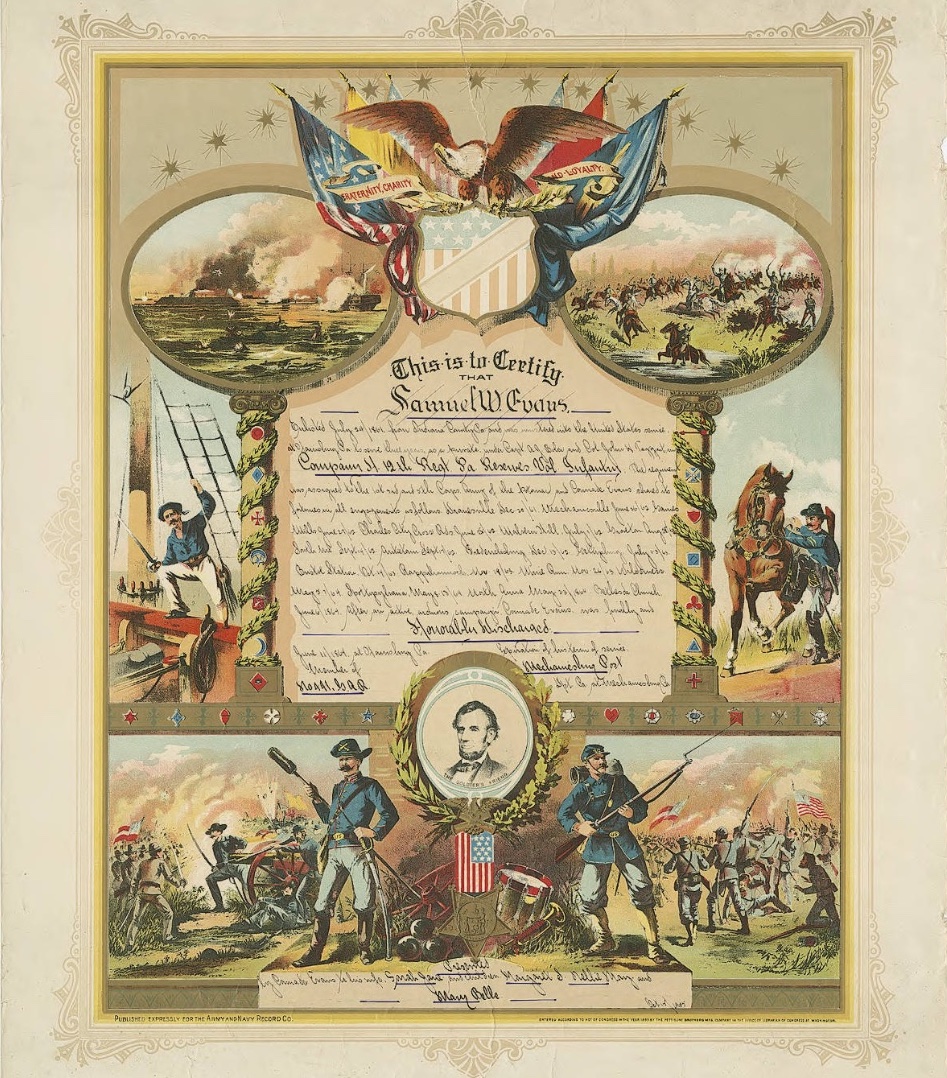
    This lovely piece is a decorative military record – “very tastefully printed in 10 colors” – for Private Samuel Wilson Evans of the 12th Pennsylvania Reserves. He served from 1861 to 1864 and saw action at South Mountain on 14 September and at Antietam on 17 September 1862.

    This certificate was produced by the Army and Navy Record Company, which was started in about 1883 by Walter C. Strickler (c. 1837-after 1920) of Philadelphia – an outgrowth of his personal project to gather an exhaustive timeline for every Union military unit and action of the Civil War. Strickler’s son Theodore compiled some of that work in When and Where we Met Each Other on Shore and Afloat … (1899).

    The colorful parts of this decorative record were printed, but Evans’ name and service details are hand-written. It was “presented” in his name to his wife Sarah Jane and daughters Margaret, Nellie May, and Mary Belle on 1 October 1905. The original is about 19×27 inches and it’s online thanks to the Maryland State Archives.

    Below is an advertisement in the National Tribune of 5 October 1905. By that time the National Tribune had bought out Strickler, and was offering these certificates on their own. Strickler and the Tribune had been in a marketing relationship for some years before.