Author: Brian

  • Kickstarting the oh-seven

    This humble blog is off to a flash-bang start in 2007, thanks to you – the Reader of the Year.

    9rules logo

    A big ‘hello’ to all my new brothers and sisters at the 9rules Network and to all the people who have already found this blog through the network. Over the last couple of years 9rules has become an excellent place to discover high value blogs, on all sorts of subjects. I’m glad to now be a part of that dynamic community. And yes, there are nine rules behind the name. I identify most closely with #4: Simple is Beautiful.

    _____________

    A big shout-out also to Harry Smeltzer for his excellent article on Civil War blogs in the current issue of America’s Civil War magazine.
    ACW March 2007 Cover top

    Although there are dozens of fine ACW blogs out there–most better than mine–Harry made me and this blog look particularly good. Very nice press. Thanks Harry!

    So … another big ‘howdy’ to the readers who are joining us as a result of that piece. It’s good to see all the new faces.

    To all our readers: I hope you’ll find something you can use and enjoy here, and that you’ll feel free to comment often and let me know what you think.

    Thanks again and happy New Year to all of us!

  • Captain Morrison’s red day at Sharpsburg

    In a December 1905 piece in the Richmond Times-Dispatch, Senator John W. Daniel, introducing Emmett M. Morrison’s memoir of the Battle of Sharpsburg, wrote

    … In many a nook and cranny in Virginia, too, is a valiant leader of his neighbors, who commanded and guided them in the battle shock, and stepped behind the scenes to the work of restoration when war’s dread thunders stormed no more.

    One of these is Colonel E. M. Morrison, of the 15th Virginia Infantry, who now resides at Smithfield, in the Isle of Wight County, and who is yet busy with his tasks.

    The 15th Virginia lost at Sharpsburg 58 per cent. of its men, which is 23 per cent. more than the Light Cavalry Brigade of the English army, lost in the world-heralded “Battle of Balaklava.” Our folks write poems in honor of the Light Brigade and our schoolboys declaim Tennyson’s verses; but what do we know of our own boys who stood proof on this red day at Sharpsburg?

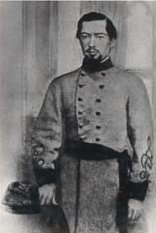
    E. M. Morrisonclick to see larger image
    Lt. Colonel Emmett Masalon Morrison (c. 1863-65)

    At Antietam on the Web we’ve made it our mission to remember some of those ‘boys’, like Emmett Morrison, who indeed stood proof …

    (more…)

  • Merry Christmas via 1862

    Season’s Greetings and Happy Holidays!

    In my house that means Christmas and New Year’s. I wish you and your loved ones a joyous celebration in your traditions as well.

    Noel
    St. Nicholas (Thomas Nast, c. 1880)

    Elements of the popular American Christmas celebration–trees, cards, Jolly Santa–are products of the 19th Century. Cut evergreen trees were popular here by the 1840’s, and most people exchanged Christmas cards by the ’60s. Our modern Santa Claus image was established largely by political cartoonist Thomas Nast (1840-1902) during the Civil War and refined over the 30 years or so after.

    Perhaps most recognizable to Civil War readers is this Nast depiction of the Elf himself, in union garb, distributing goodies to Federal troops at Christmas 1862.

    Santa in Camp (Nast -small)click to see larger image
    Santa Claus in Camp (Thomas Nast, 1862)

    The unflattering Jefferson Davis jumping-jack toy in his hand leaves no doubt as to Santa’s loyalties. That illustration, from the cover of Harper’s Weekly*, is also touted as an early attempt at psychological warfare.

    I doubt Southern children were fooled.
    ________________

    * Harper’s Weekly, 3 January 1863, page image from the US Library of Congress.

    See much more about Christmas and the Civil War, from Kevin “Santa” Rawlings and historic Fort Ward.

    added 22 December

    K. Rawlings

    See Kevin Rawlings, above, at work as Santa earlier this week, and an article from Maggie MacLean with much more from the ACW homefront.

  • Instant digital history

    This afternoon, thanks to Google’s blogsearch, I came upon something I haven’t seen before: a DIY instant history website.

    Wethersfield in the Civil War is apparently brand new from someone at the Wethersfield (Connecticut) Historical Society and looks like a transcription of the work of one Wes Christensen. The site is hosted on Blogger and currently contains 42 posts, almost all dated 14 December. Some are placeholder pages, so perhaps this is just the beginning, but it’s already a complete, if bare-bones, website.

    Most of the posts are listings–for each Regiment or Battery–of the men from Wethersfield who served in the War. Some of these include summaries or anecdotes of the unit’s service. Included is a table of contents which links to all the posts.

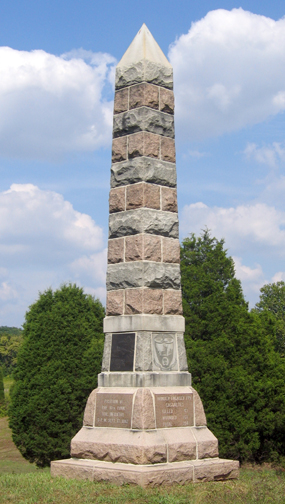
    16th Ct Inf monument at Antietam
    16th CT at Antietam
    from ANBP

    Atypical is the lengthy introduction, which makes particular note of the 16th Connecticut Infantry, one of the many green regiments so badly hurt at Antietam on 17 September 1862.

    Aspiring digital historians could take a lesson here. Do you want to get a lot of information up on the web in a hurry with the minimum technical investment and no cost? Consider basic free blogging like Blogger or WordPress. Quick and painless.

    It would be a good way to get your feet wet, anyway.

  • Confederate surgeon Simon Baruch

    S. Baruch

    This is Assistant Surgeon Simon Baruch (‘ba-rook’) of the 3rd South Carolina Battalion. I found him by following a thread in a CW Society post, part of their recent conversation about Jewish Confederates. Among those prominent in that service it mentioned

    … Nahum Baruch, the father of financier Bernard Baruch, was a doctor and Colonel in Barksdale’s Mississippi Brigade. He was present at Gettysburg.

    As is my wont, I saw the thread sticking out and gave it a yank. Who was this Nahum?

    It turns out this Baruch was not Nahum, actually. Nor a Colonel, though he ended the War in Barksdale’s famous Brigade. He did have a successful son, was a doctor, and was at Sharpsburg and that other northern battle, too. There’s lots more to his story. (more…)