Author: Brian

  • No novice in the business

    Captain Henry W. Addison of the “Bloody” 7th South Carolina Infantry remembered the fight at Sharpsburg many years later:

    I think there had been considerable fighting before we arrived, from a short distance on the right of the Road [Hagerstown Pike], as we passed over dead & wounded before we began firing … we thought the Union Army had or was retreating, but as we reached the end of the crest, under the declivity, we were confronted with Artillery and any numbers of lines of Infantry that belched forth such destruction that as I had never seen before, though no novice in the business.

    I believe we lost, in killed & wounded near 75 percent in twenty minutes … I am sorry I cannot be more explicit; but a grape-shot disabled me soon after our firing began …

    Special thanks to Jim Buchanan for posting Addison’s letters to Ezra Carman on his most excellent Walking the West Woods blog.
  • Sgt James F Robinson

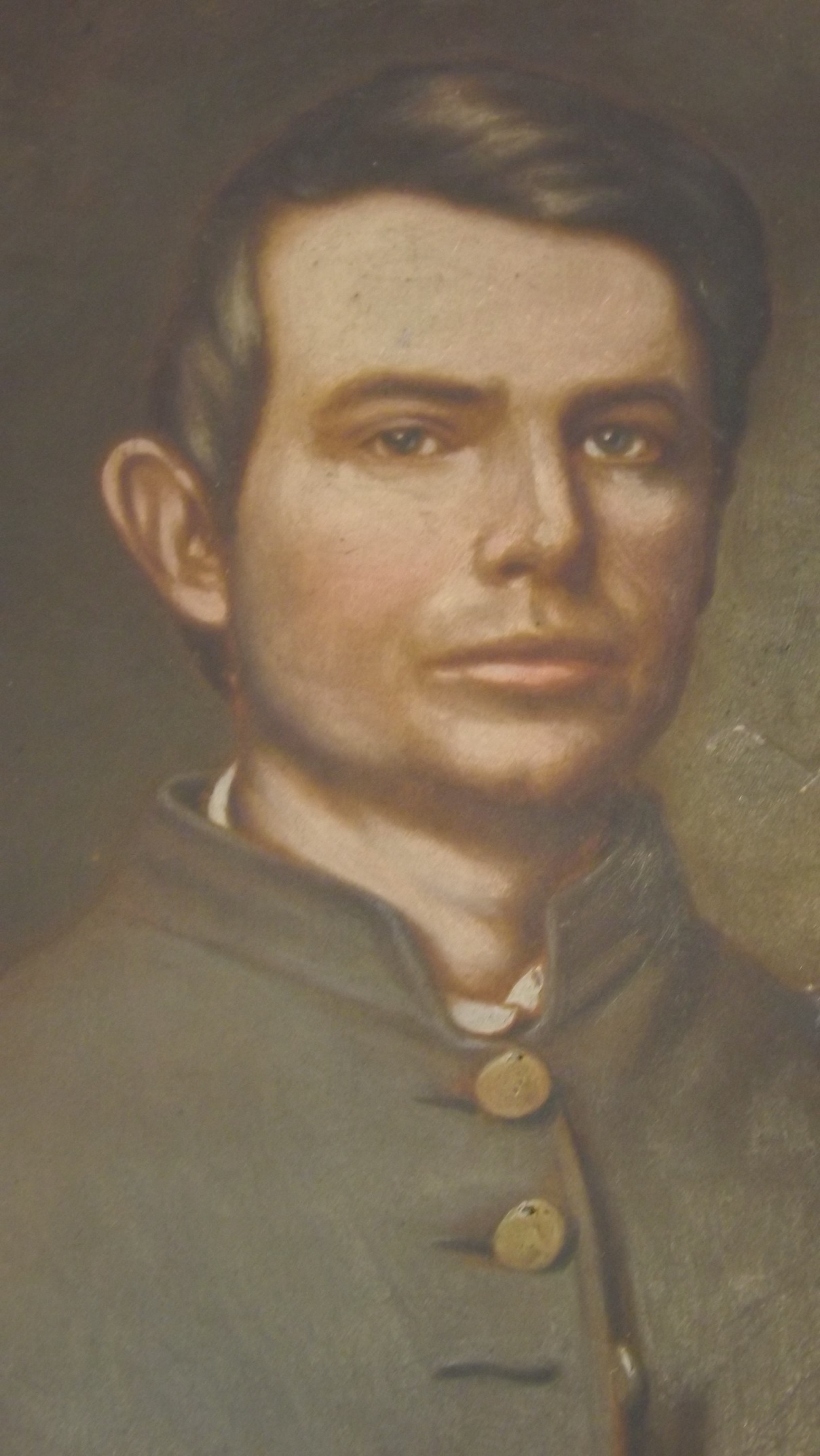
    This stunning portrait, probably painted from (or over) a photograph, is of James Fraser Robinson, First Sergeant of Company H, 7th South Carolina Infantry, who was killed in action on Maryland Heights near Harpers Ferry on 13 September 1862. It was contributed to his Findagrave memorial by Richard Beach.

  • James Riley Blanton

    Private James R Blanton was only 14 when he enlisted in Company M of the Palmetto Sharpshooters in May 1862. He was seriously wounded at Sharpsburg in September, a month after his 15th birthday, and discharged for disability. His obituary, seen here, is from the Gaffney Ledger of 10 September 1901.

  • Death of Hugh Jones Gaston

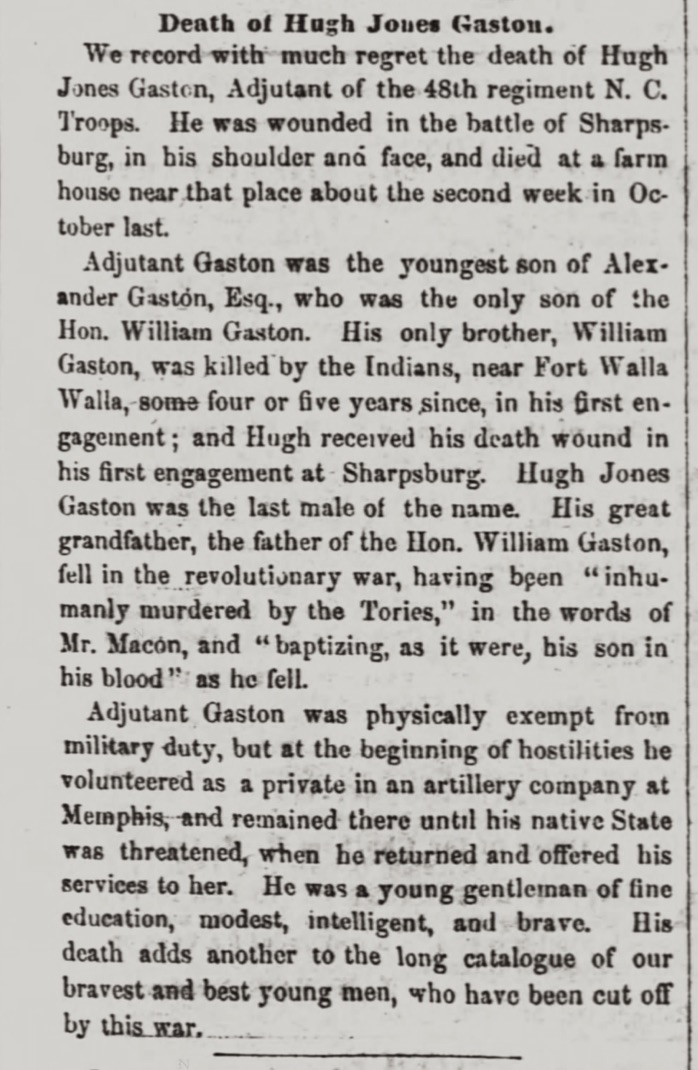
    This obituary is from the Raleigh Semi-Weekly Standard of 28 November 1862. Hugh J Gaston was appointed Adjutant of the 48th North Carolina Infantry in July 1862 and was mortally wounded and captured at Sharpsburg in September.

  • Case 244. – Private J.G. Martin

    James G Martin, a Private in Company K of the 19th Virginia Infantry was wounded by a gunshot though his belly at Turner’s Gap on South Mountain in September 1862, which began at least two years of medical misery for him. His treatment is described in excruciating detail in his case in the Medical and Surgical History of the War of the Rebellion (1870), excerpted here. All six volumes are online thanks to the US National Library of Medicine at NIH.