Year: 2022

  • CSS Patrick Henry (1863-64)

    I’m sorry to admit I didn’t know there was a Confederate States Naval Academy.

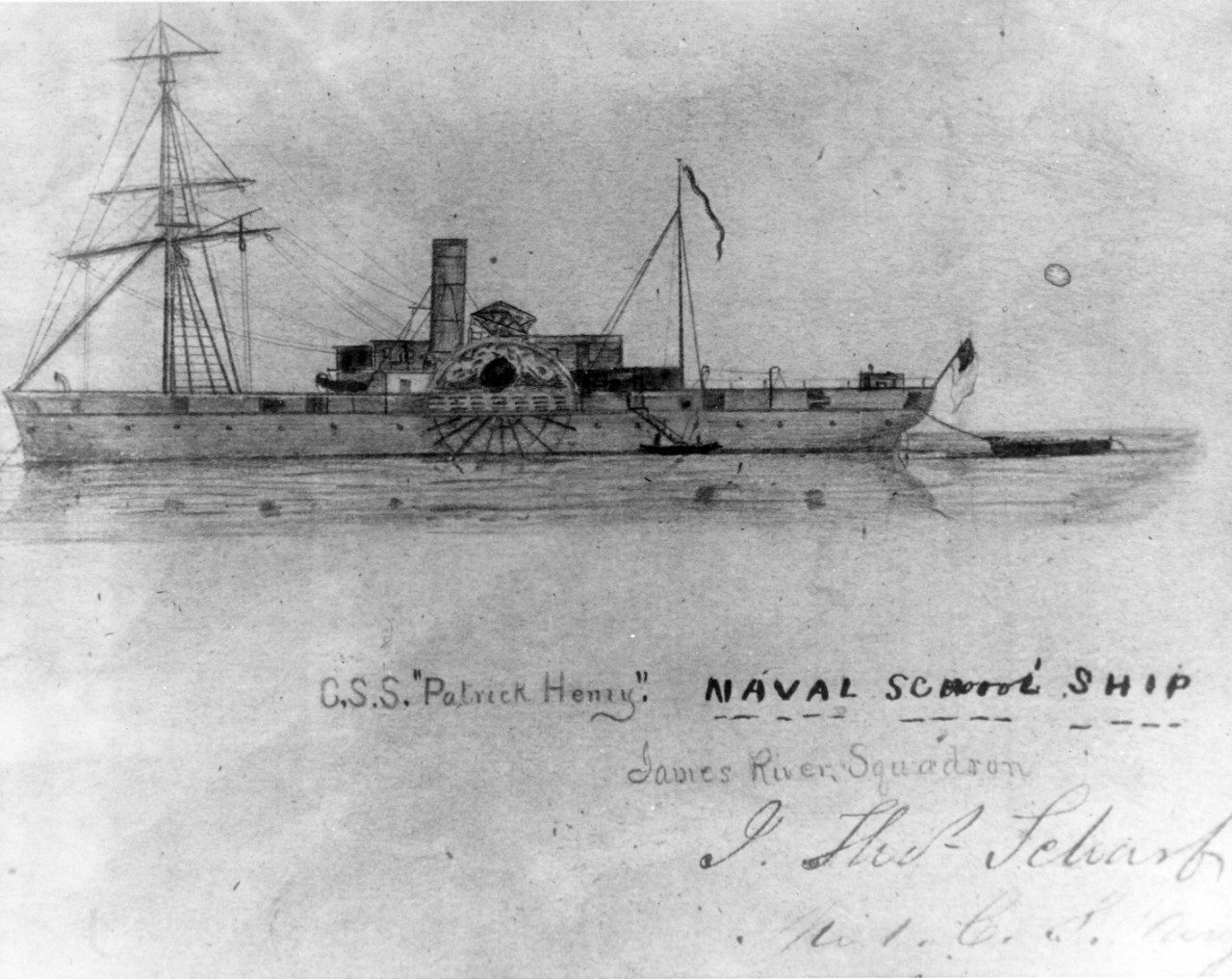
    It was authorized by the Confederate Congress in April 1862 and began operations in July 1863 aboard the CSS Patrick Henry anchored in the James River below Richmond. The initial student body was 52 Midshipmen – all the ship could accommodate.
    One of the Midshipman was Robert H W Pinckney, late Private in Company G, 4th Texas Infantry. He was the youngest man in his Company when he enlisted in July 1861 at age 14, and was with them in Maryland in 1862. He was selected for the CS Naval Academy in April 1863, as an Acting Midshipman, and was commissioned Midshipman, CS Provisional Navy in June 1864.

    His brother John was also at Sharpsburg, and was later a US Congressman; see a December 2021 blog post about him and their sister Susanna Shubrick “Sue” Pinckney.

    ____________________
    Note

    The drawing of the Patrick Henry was done by Midshipman and Pinckney’s classmate John Thomas Scharf, later author of History of the Confederate States Navy from its organization to the surrender of its last vessel … (1894) [online from the Hathi Trust]. That volume includes a chapter of detail on the CS Naval Academy. His drawing is online from the US Navy, Naval History and Heritage Command.

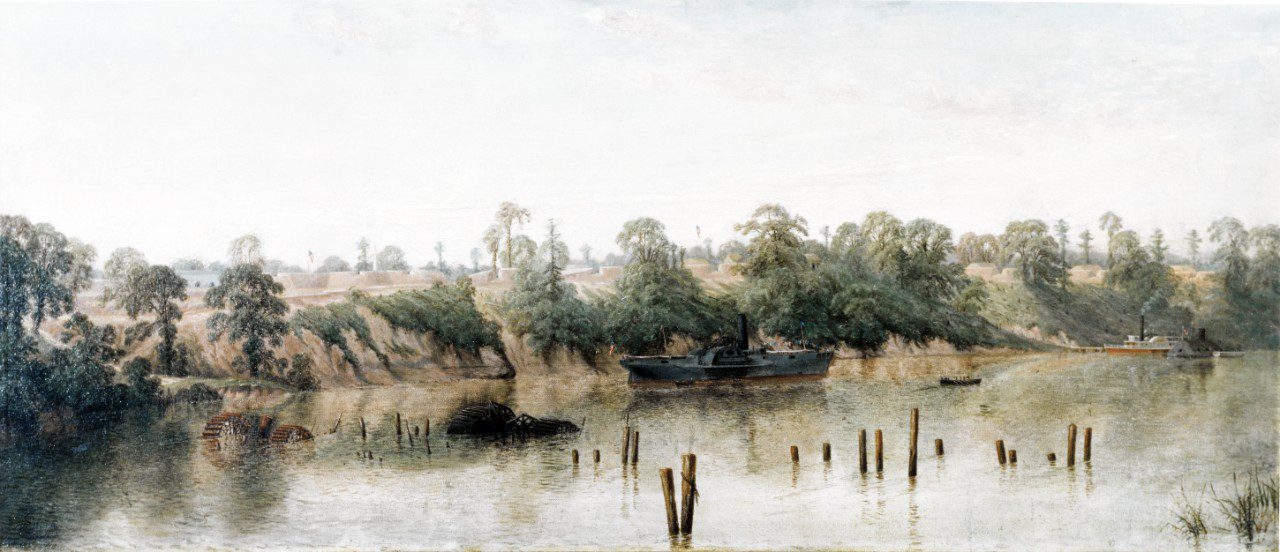
    The painting is by John R. Key. The original caption: “School ship of Confederate Naval Academy at Drewry’s Bluff, circa 1863. On right is a tug and an ironclad of the James River Squadron.”

    For further reference, the Naval History and Heritage Command hosts a copy of the Register of the Commissioned and Warrant Officers of the Navy of the Confederate States (1864) online.
  • Exchange Hotel, Bryan, TX (1909)

    Private James Seth Mooring (20) and his brother Charles Gray Mooring (16) were at Sharpsburg in 1862 with Company G of the 4th Texas Infantry. Both were wounded in the Wilderness in 1864 but survived the war and returned to Texas. Both were also in the hotel business; Charles in Mineral Wells, Palo Pinto County and James in Navasota, Grimes County for many years, then in Bryan, Brazos County.

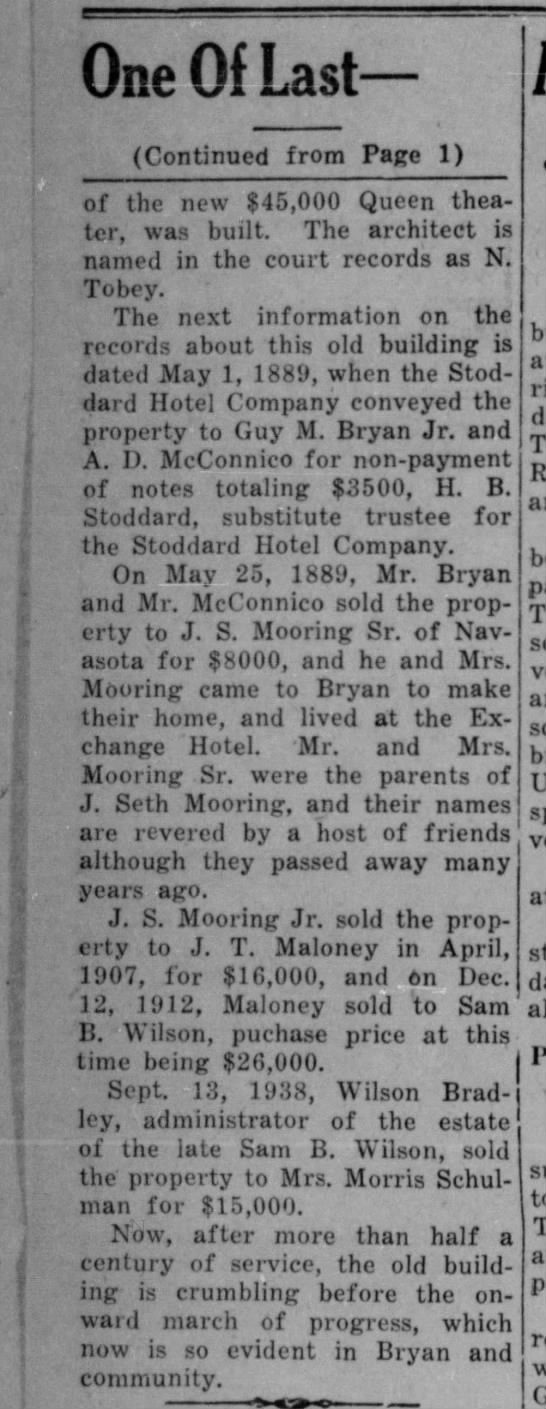
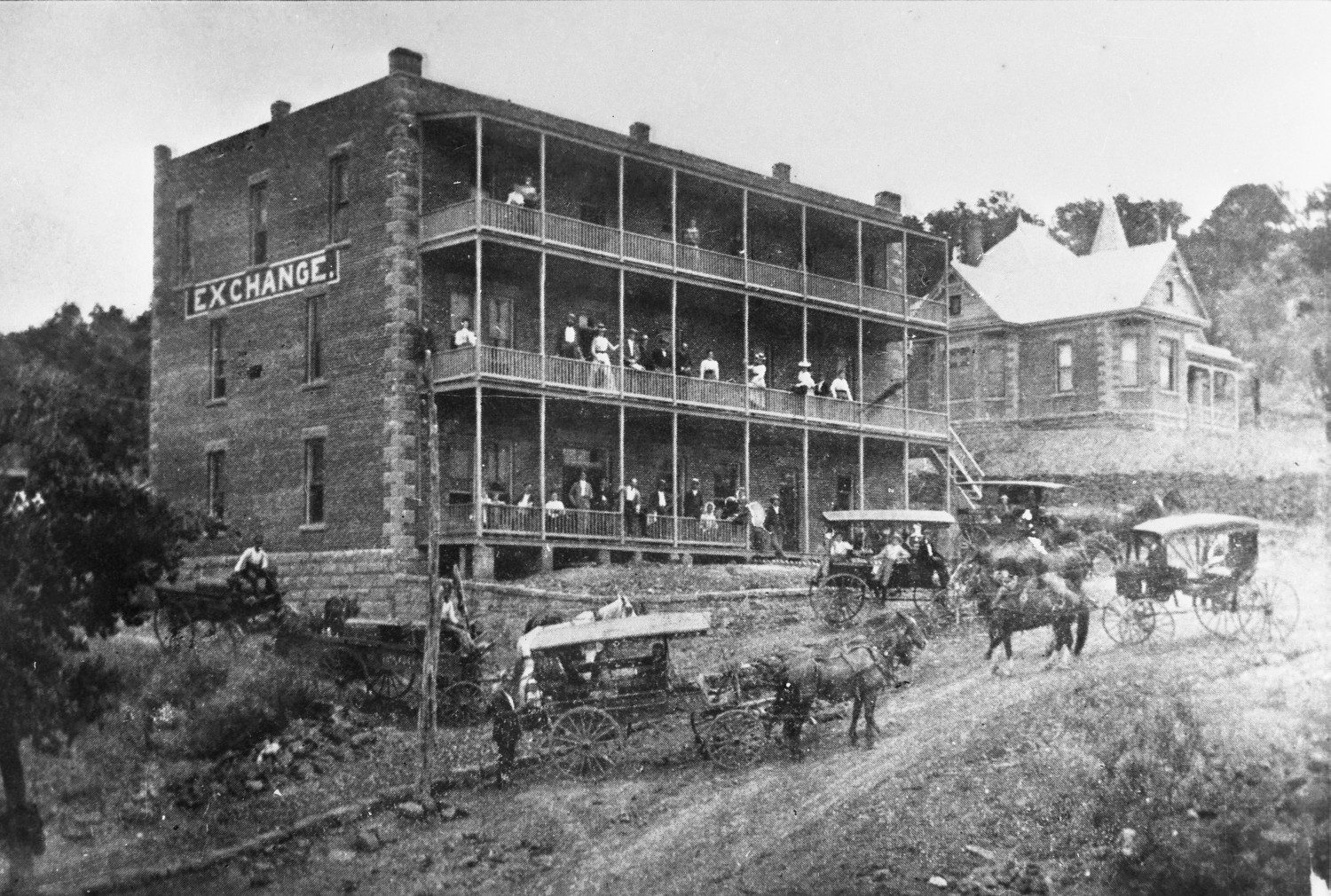
    Here’s James’ place in Bryan, the Exchange Hotel, two years after he sold it.

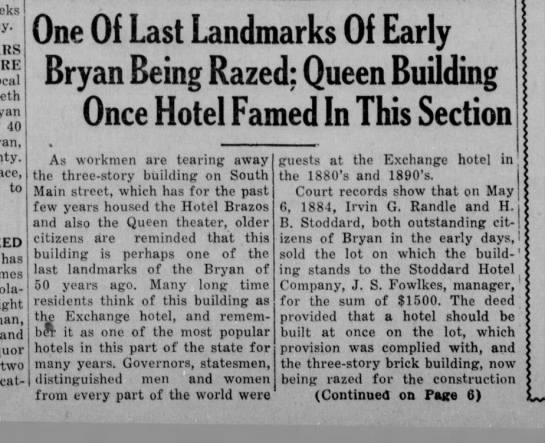
    The Exchange was built as the Stoddard Hotel in 1884 and had 2 owners after J.S. Mooring. It was leveled in 1939.


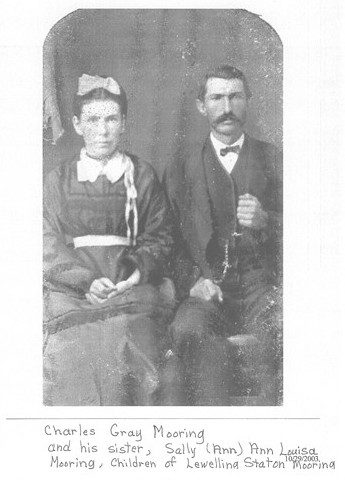
    Bonus: here’s Charles with their sister Sarah Ann Louisa “Sally” Mooring (1851-1913) in about 1870.

    ____________________

    Notes
    The photograph of the Exchange Hotel was posted to Ancestry.com by G. Bryant Hudson.

    The clippings are from the Bryan Daily Eagle of 17 June 1939.

    The photo of Charles and Sally was contributed to the FamilySearch database by Bonnie Rhoton Harris.

  • Will of William McClenny (1851)

    Corporal William Henry McClenny of Company G of the 4th Texas Infantry had been promoted to Sergeant in August 1862, but something went wrong for him on the Maryland Campaign – he was reduced to Private on 16 September 1862 at Sharpsburg. He got his Sergeant’s stripes back by May 1864, but was killed on the 6th in the Wilderness, VA.

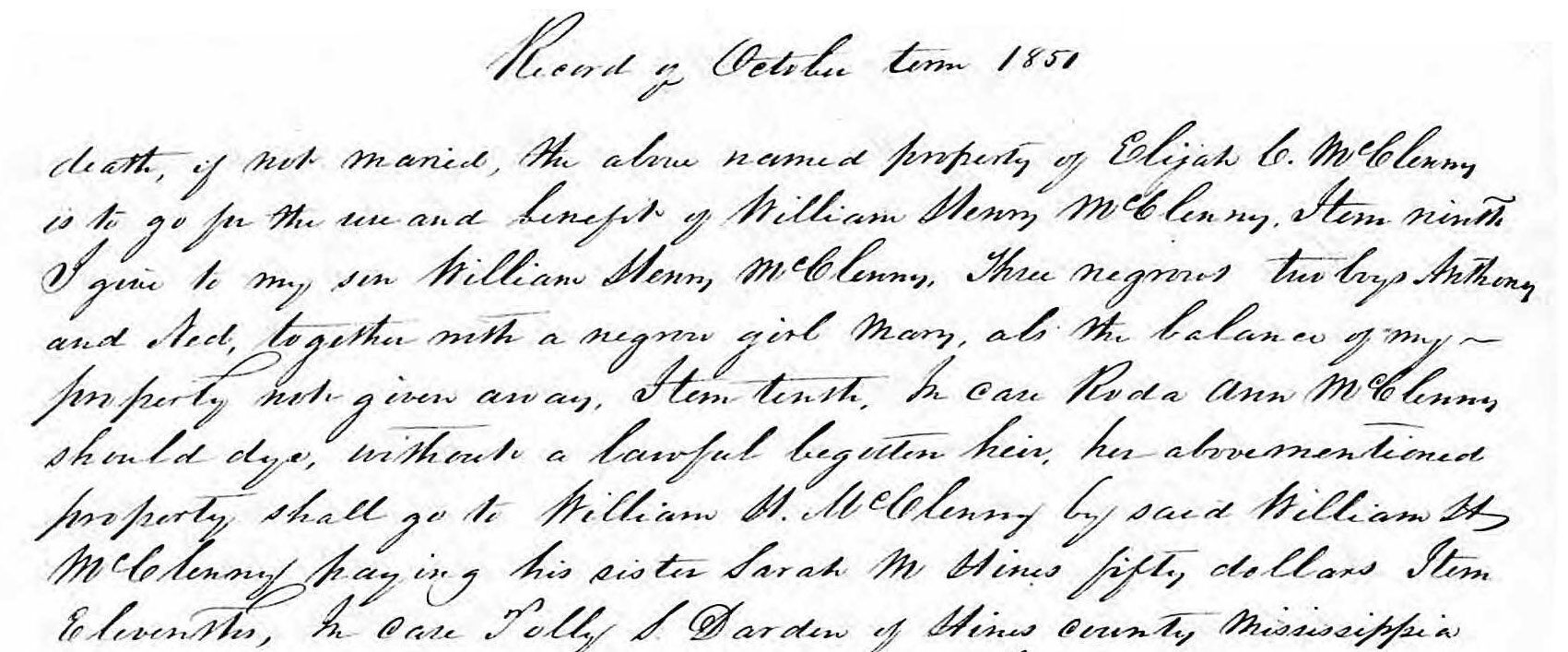
    Sergeant McClenny was from a Virginia family who came to Texas in 1851. In addition to their other belongings, they brought with them 9 of their 11 slaves. Young William, about 11 years old, inherited three of them when his father died shortly after they arrived in Texas: Anthony (12), Ned (10), and Mary (1). Here’s the relevant portion of his father’s will:

    Here’s the whole thing:

  • A spirited and fear-less animal (1862)

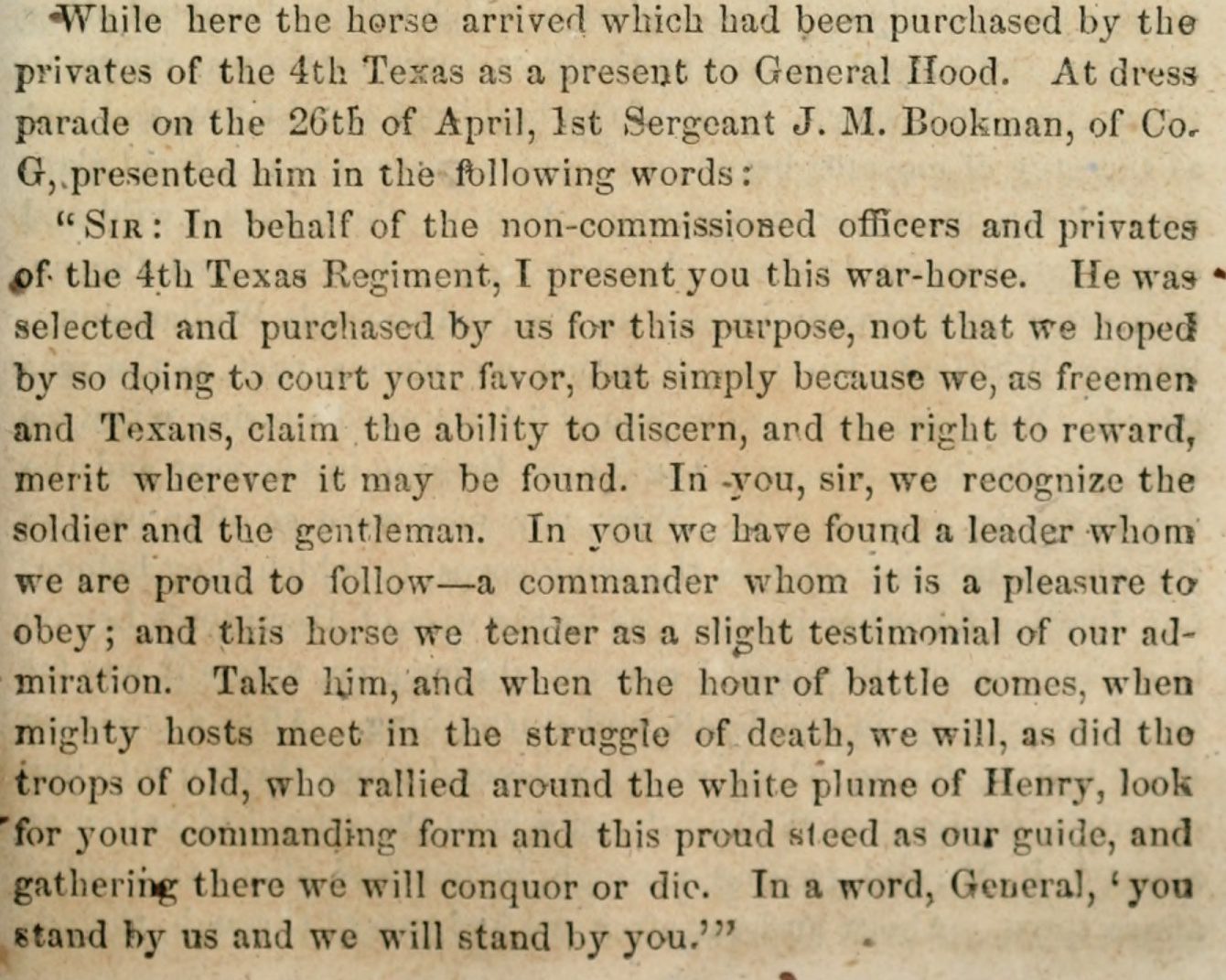
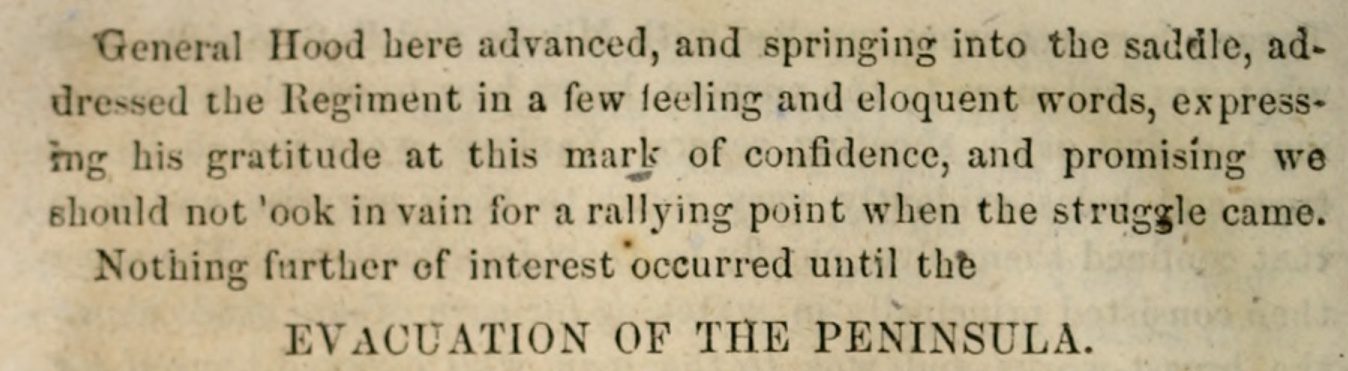
    Lieutenant Isaiah Martin Bookman was with the men of Company G, 4th Texas Infantry at Sharpsburg in September 1862. Five months before, on 26 April, then at Yorktown, VA, First Sergeant Bookman had presented a fine horse to their old Colonel, John B. Hood, recently promoted to command of the Brigade. Here’s regimental Chaplain Davis’ narration of that story:


    Named Jeff Davis, he was apparently Hood’s favorite horse through the war.

    In his 1880 memoirs General Hood wrote of him …

    The members of this heroic band [his old Brigade] were possessed of a streak of superstition, as in fact I believe all men to be; and it may here prove of interest to cite an instance thereof. I had a favorite roan horse, named by them “Jeff Davis;” whenever he was in condition I rode him in battle, and, remarkable as it may seem, he generally received the bullets and bore me unscathed. In this battle [at Chickamauga, GA] he was severely wounded on Saturday; the following day, I was forced to resort to a valuable mare in my possession, and late in the afternoon was shot from the saddle. At Gettysburg I had been unable to mount him on the field, in consequence of lameness; in this engagement I had also been shot from the saddle. Thus the belief among the men became nigh general that, when mounted on old Jeff, the bullets could not find me. This spirited and fear-less animal performed his duty throughout the war, and after which he received tender care from General [John Robertson] Jefferson [1804-1888] and family of Seguin, Texas, until death, when he was buried with appropriate honors.

    Lieutenant Bookman, known as Bob for reasons lost, did not survive the war – he was killed in that same Saturday action where the General’s horse was hit, at Chickamauga on 19 September 1863.

    _____________

    The page clips above are from the Rev. Nicholas A. Davis’s The Campaign from Texas to Maryland (1863), online from the Hathi Trust.

    John Bell Hood’s “military autobiography” is Advance and Retreat: Personal Experiences in the United States and Confederate Armies (1880); it’s online from the Internet Archive.

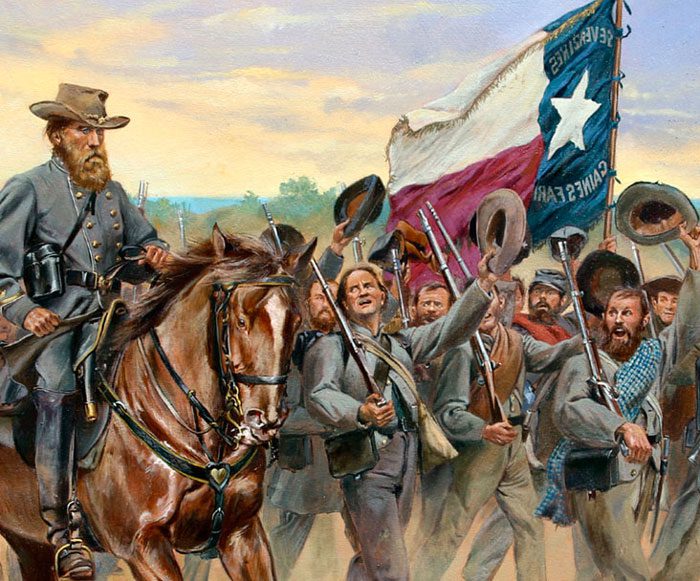
    I’ve not found a contemporary illustration of Hood on Jeff Davis. The picture here is part of the painting Give us Hood by Don Troiani (via Facebook, 2015), and portrays the General rejoining his command at Sharpsburg after being in arrest on the march, riding a roan, presumably Jeff Davis.