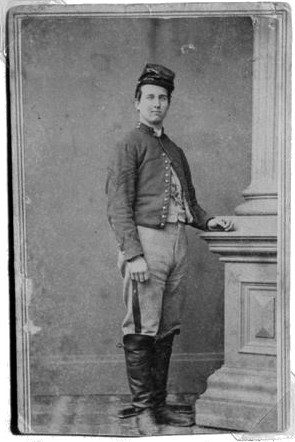
Romaine Ballard Hart was a 17 year old Private of not quite two month’s service with the 108th New York Infantry when he was wounded in the thigh at Antietam, and his military career seemed to be over. But he did recover, enlisted about a year later as a Sergeant in Company B, 22nd New York Cavalry, … and had his picture taken.
Thanks very much to Kathy Jerrow for the pointer to Hart, his bio, and his photograph. This copy from the Historical Data Systems database, contributed by Ron Erwin.
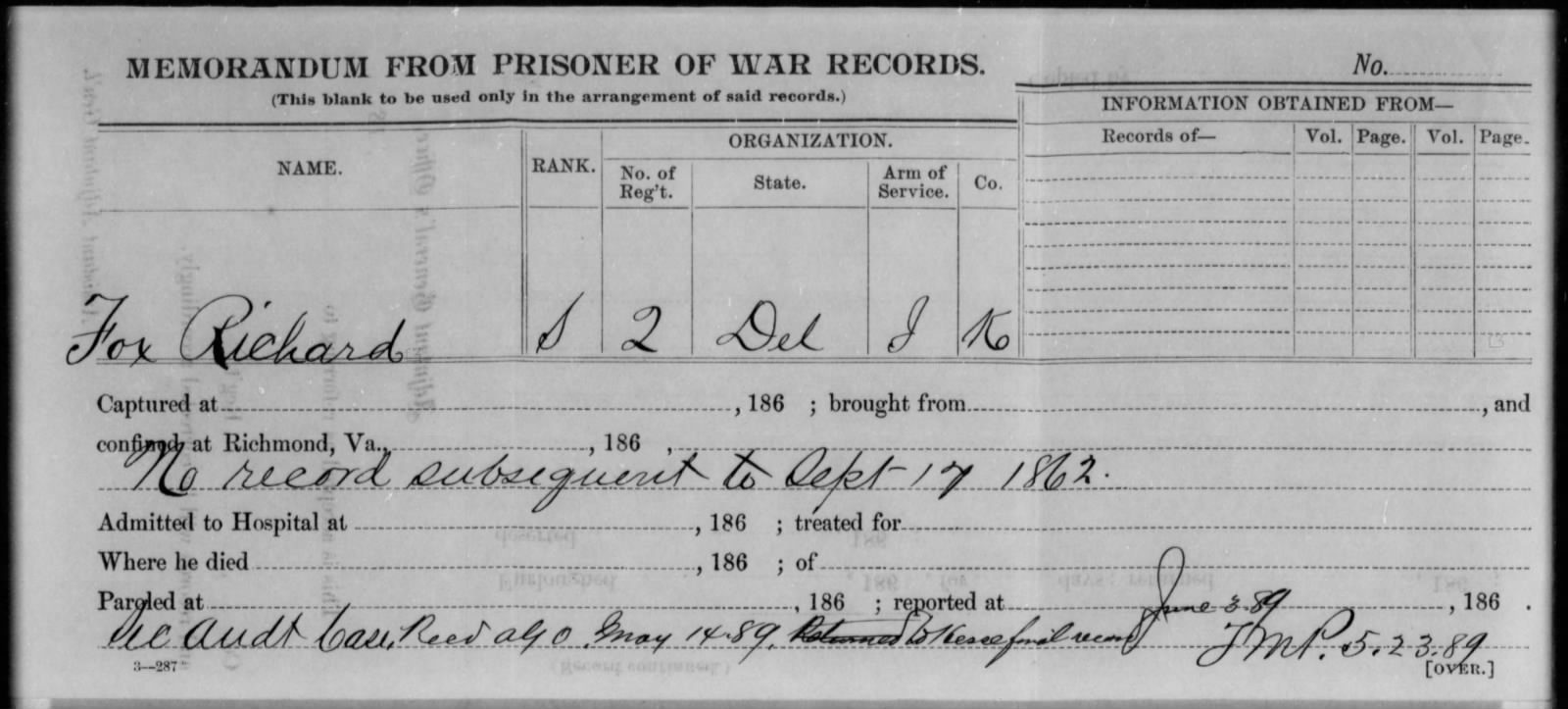
21 year old Richard K Fox from Philadelphia enlisted as 2nd Sergeant of Company K of the 2nd Delaware Infantry in September 1861 and was First Sergeant a year later when he was probably killed at Antietam.
I say ‘probably’ because he was reported missing there and never heard from again. This document from his Compiled Service Records actually has nothing to do with his being a prisoner of war, he wasn’t, but seems to have been a convenient form for a War Department clerk to use.
It shows the result of an audit of his records done by the Army Adjutant General’s Office in May 1889, possibly in an effort to finally determine his fate. All they could say was No record subsequent to Sept 17 1862.
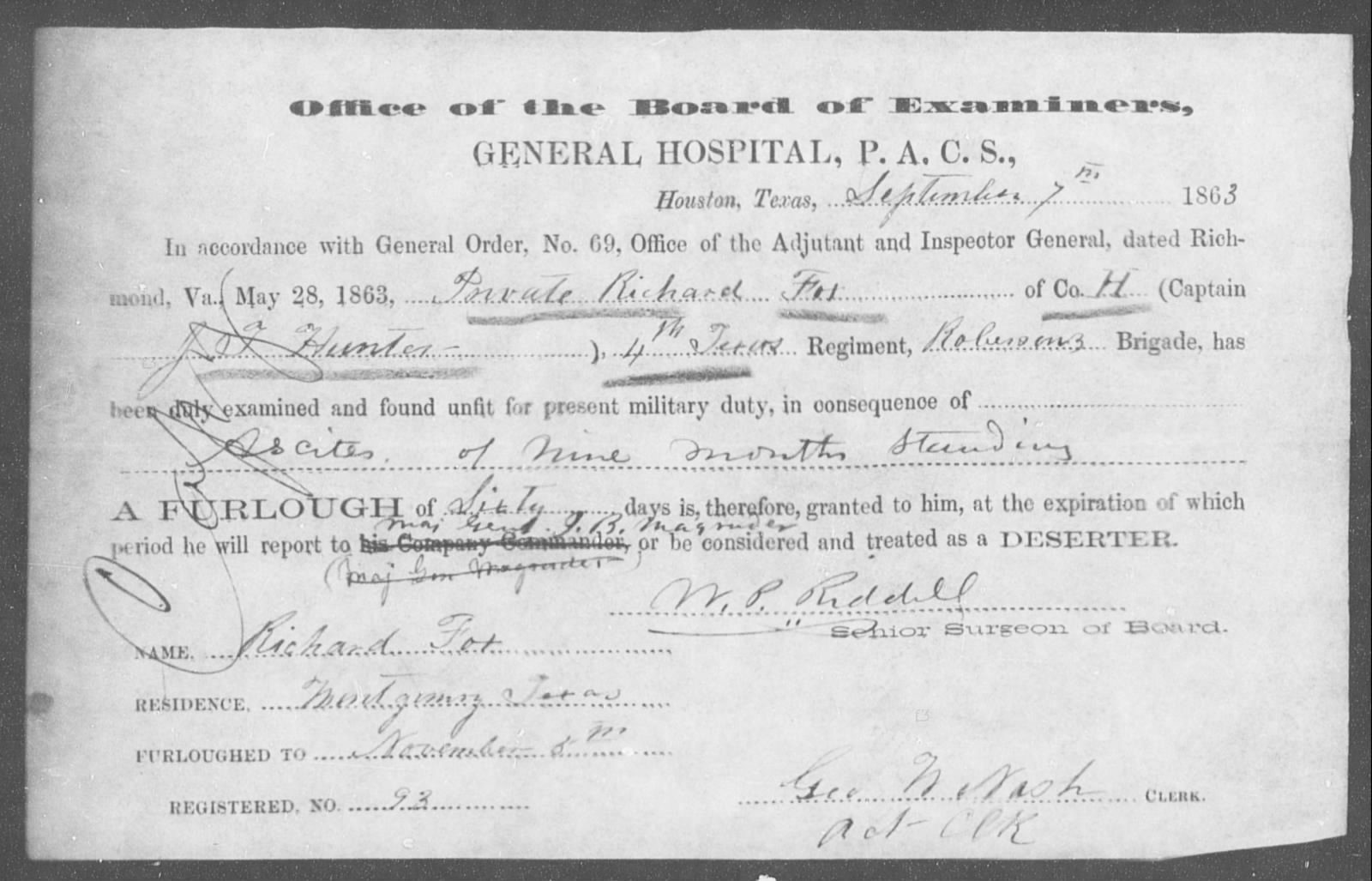
This in contrast to the case of the other Richard Fox in my database. He was a Private in Company H of the 4th Texas Infantry, and several prominent authorities thought him killed at Sharpsburg. He wasn’t. He was sent to the rear, sick, on 16 September 1862 and was in Richmond hospitals and on furlough in Texas to at least November 1863. Here’s a government form from his CSRs:
He may not have survived the war, but he didn’t die in September 1862.
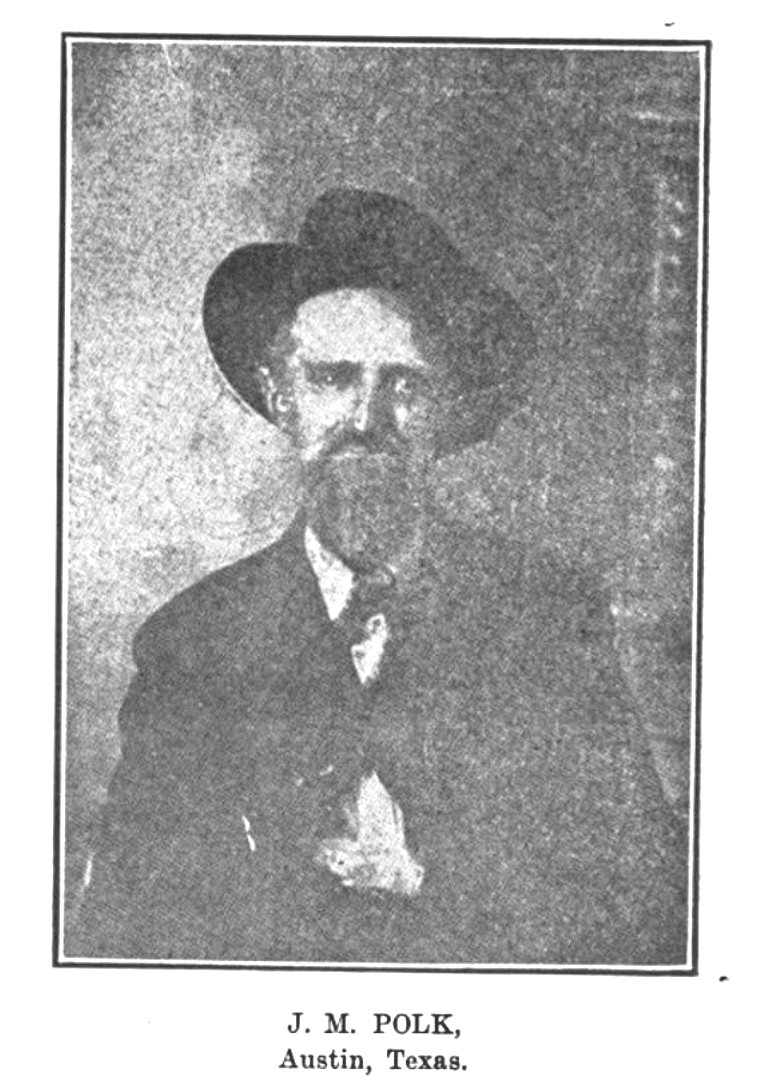
James Monroe Polk was a Private in Company I of the 4th Texas Infantry and was at the battle at Gaines’ Mill, VA on 27 June 1862. He later wrote
I was wounded in the arm, and it swelled to about the size of a stove pipe, turned as black as a pot, and the doctors thought for a while it would have to be amputated.
He had recovered by 1 September and left Richmond to rejoin his Company. He caught up with them at Frederick, MD on 11 or 12 September 1862 and was in action with them at Fox’s Gap and Sharpsburg.
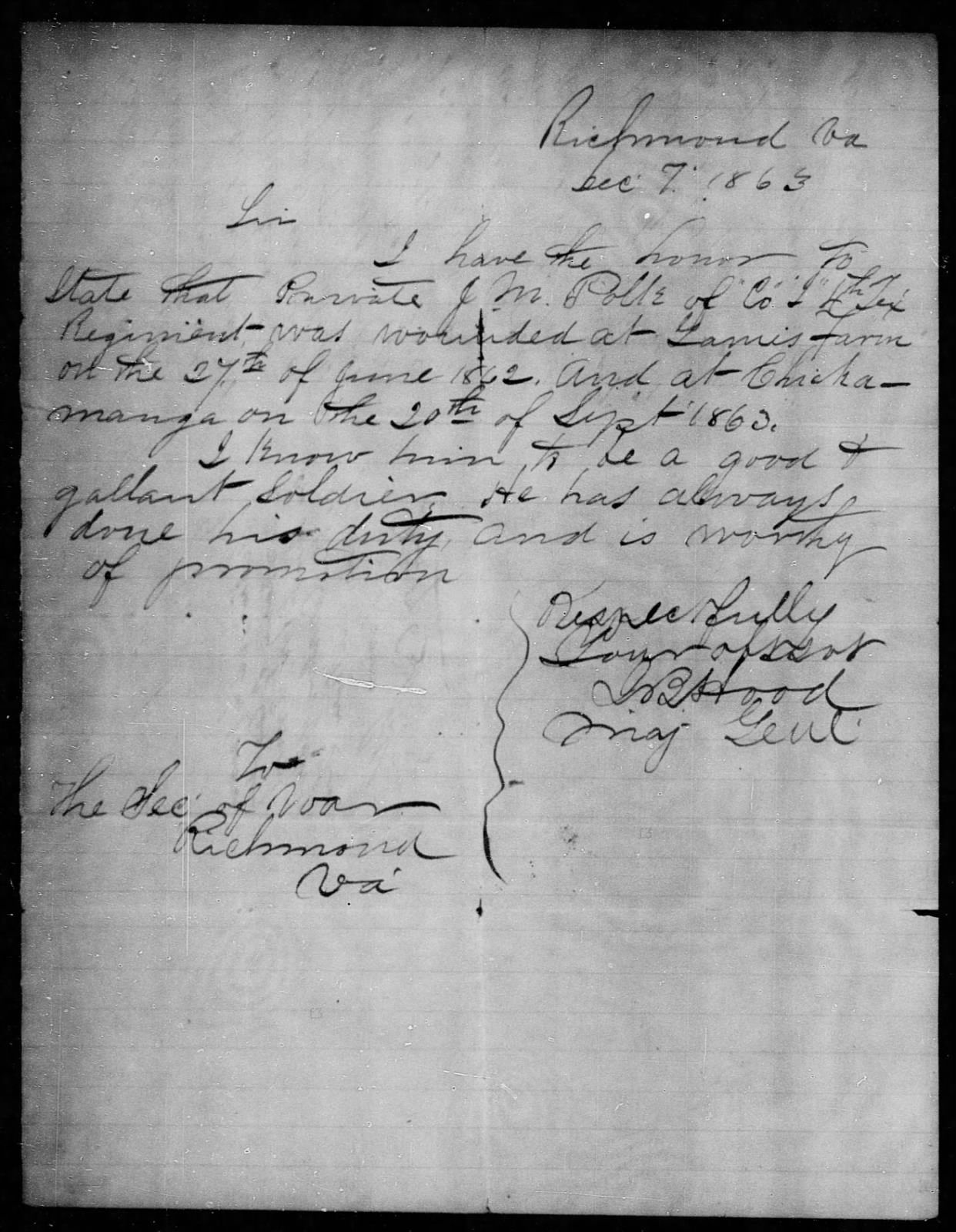
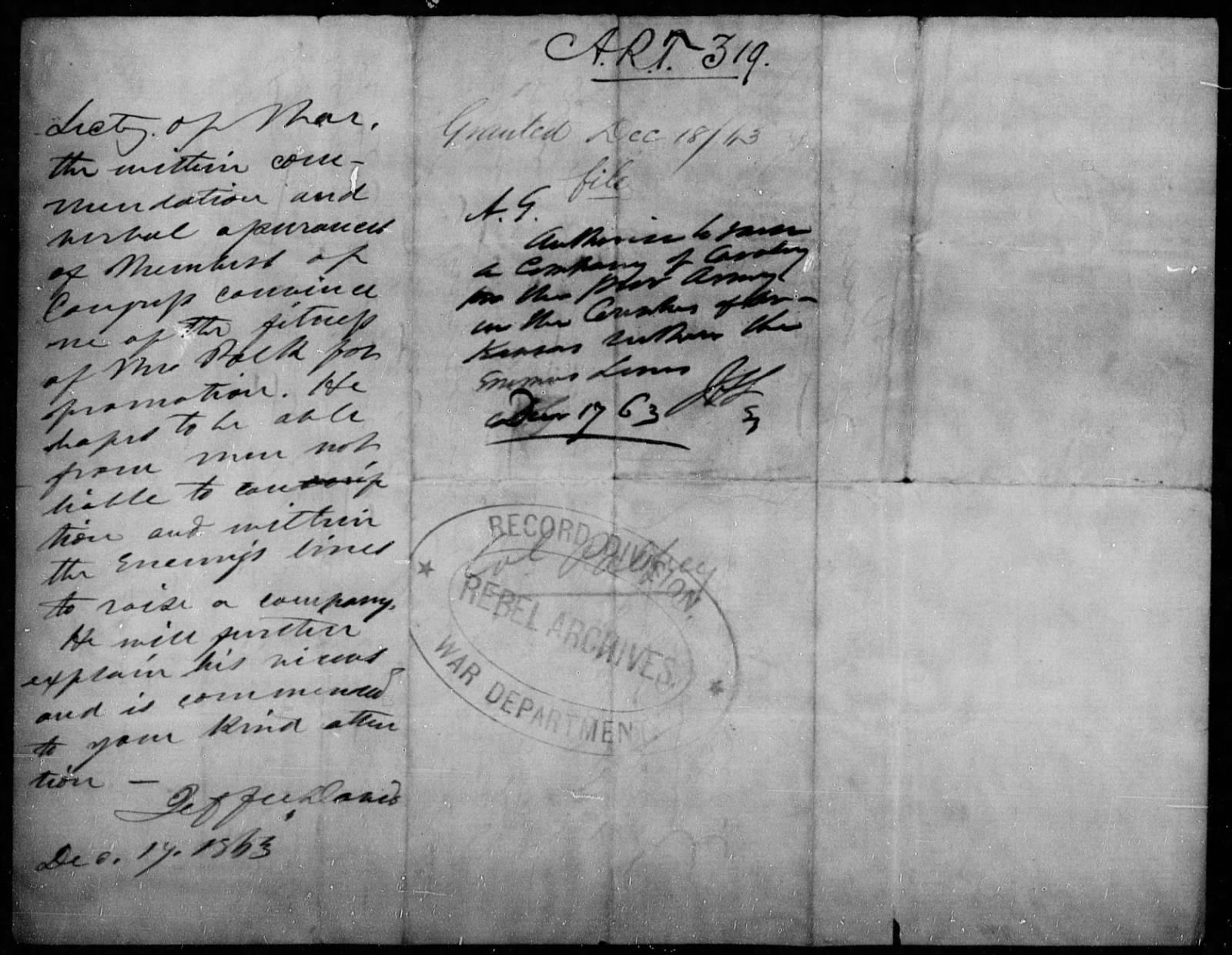
He was wounded again about a year later at Chickamauga, GA on 20 September by a bullet that entered his head at his right temple and was later removed from the back of his skull. Amazingly, he came back rapidly from that wound, and in December 1863 was the subject of the extraordinary correspondence seen here:
front/bodyback/enclosure
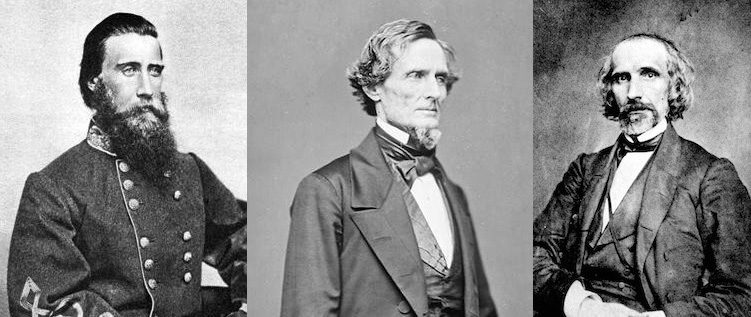
Extraordinary mostly because of the 3 signers: the writer, Major General John Bell Hood, the reviewer/endorser, President Jefferson Davis (who mentions interest from members of Congress), and the approver, Secretary of War James Alexander Seddon.
In summary: General Hood wrote this note to Secretary of War Seddon on 7 December 1863 recommending Private Polk for a promotion because he was a “good & gallant” soldier.” The President concurred and the Secretary of War approved.
Hood, Davis, Seddon
Obviously there was more to it than that. This note seems to be a formality; probably referring to a more detailed conversation or conversations General Hood had previously with the Secretary of War and the President.
I think while he was recovering in Richmond, Polk proposed a scheme for raising Confederate units from men recruited behind the lines in Missouri, a place he knew well from his youth and young manhood. He had the ear of General Hood – also in Richmond recovering from a serious Chickamauga wound – and perhaps some in the Confederate Congress, as well. The Confederacy was in desperate need of new soldiers, and such a plan would have been attractive.
I’ve read a fair amount about Polk now, and haven’t found anything about him that would have stood out to these senior Confederates, except an unusual ability with language. He was an ordinary man and soldier with no apparent political or financial connections. And yet … he convinced the General, President, and Secretary of War to give him a Captain’s commission and go West to recruit. He later wrote
General Hood told me “good bye” and cautioned me about going inside the Federal lines; that I might get caught when I least expected it and spoil everything.
That he wasn’t hanged as a spy when he was, in fact, caught recruiting behind enemy lines in Missouri in 1864 is yet another miracle in this man’s life. What a life.
__________________
Transcription
[front]
Richmond Va
Dec 7 1863
Sir
I have the honor to state that Private J.M. Polk of Co “I” 4th Tex Regiment was wounded at Gamis Farm [Gaines’ Mill] on the 27th of June 1862. And at Chickamauga on the 20th of Sept 1860.
I know him to be a good & gallant Soldier. He has always done his duty and is worthy of promotion.
Respectfully
Your obt svt
J B Hood
Maj Genl
To
The Sec of War
Richmond
Va
[back]
Secty. of War,
the within communication and verbal assurance of members of Congress, convince me of the fitness of Mr Polk for promotion. He hopes to be able from men not liable to conscription [there?] and within the Enemy’s lines to raise a company.
He will further explain his [?] and is commended to your kind attention.
– Jefferson Davis
Dec. 17, 1863
Granted Dec 18/63 [probably by a clerk to the Adjutant General]
A.G. [Adjutant General Samuel Cooper]
Authorize to raise a Company of Cavalry for the Prov [Provisional] Army in the Cavalry of [?] Kansas [between?] the Enemies Lines
JAS
Dec 17 63
_________________
Notes
The picture of Polk and the quotes above are from his book The North and South American Review, published in 1914, available online from GoogleBooks.
The letter is in his file among the Compiled Service Records of Confederate Soldiers, Record Group No. 109 (War Department Collection of Confederate Records) in the US National Archives and Records Administration (NARA), Washington. I found it via fold3 (subscription service).
Both of my readers will know that one of the things I collect is poorly done modern headstones for my guys – veterans of the Maryland Campaign of 1862.
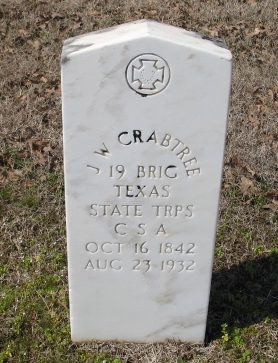
Today I found this one:
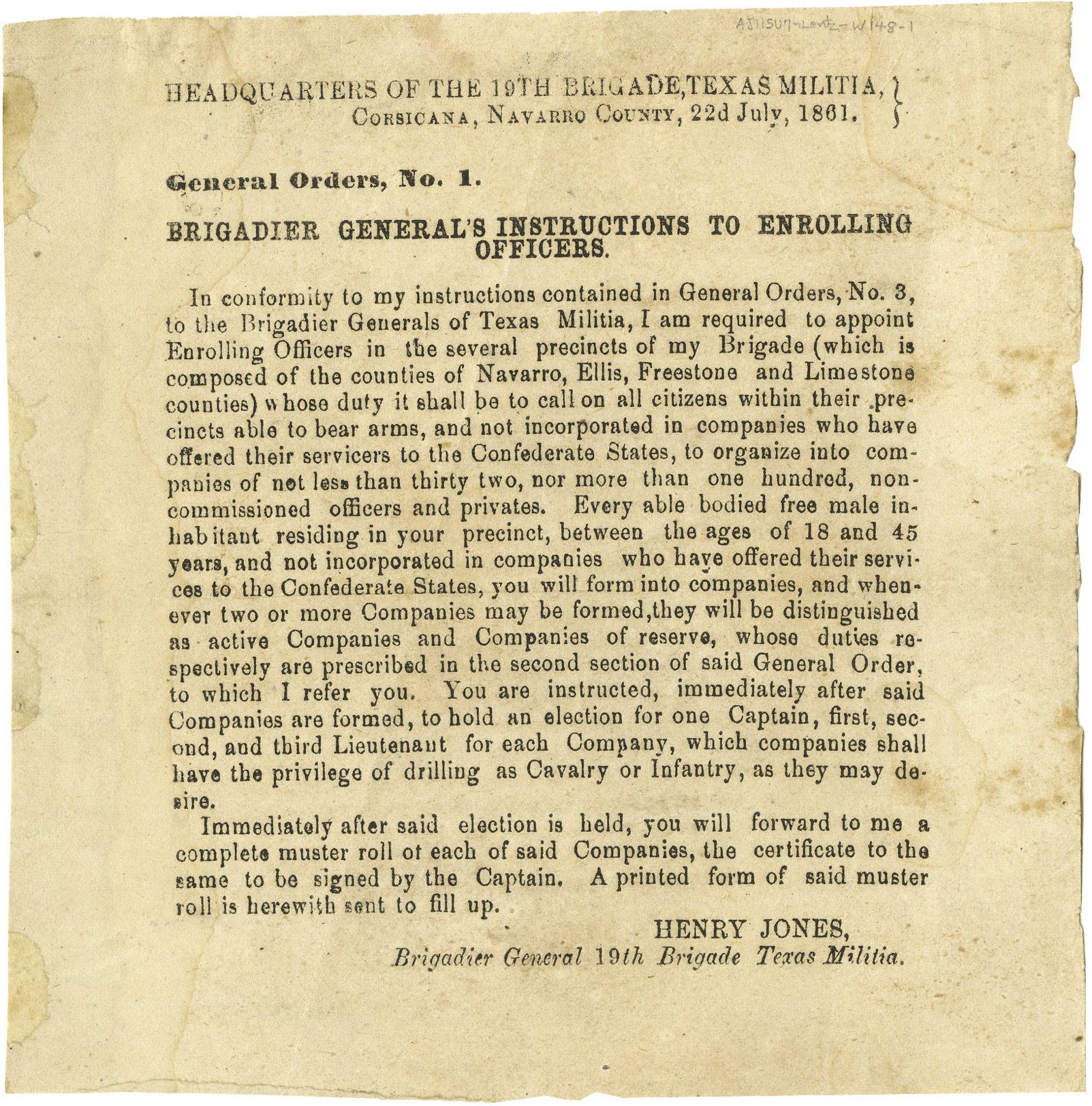
It’s for John William Crabtree of the 4th Texas Infantry. It says he was in the 19th Brigade, but that seems unlikely. Consider this impressive document:
Given that the “Brigade” (a military district of 4 Texas counties) was just beginning enrollment of Companies on 22 July 1861, and our man Crabtree had enlisted in Company I of the 4th Infantry on 17 July, I’m skeptical. Even if he had – however briefly – been enrolled in the Militia, it’s sad that his grave marker doesn’t credit his main service.
_______________
The gravestone photograph was contributed to his Find-a-grave memorial by Frank Everett.
John Wesley Duren was First Sergeant of Company I of the 4th Texas Infantry at Sharpsburg in September 1862 and was 2nd Lieutenant at Appomattox in 1865.
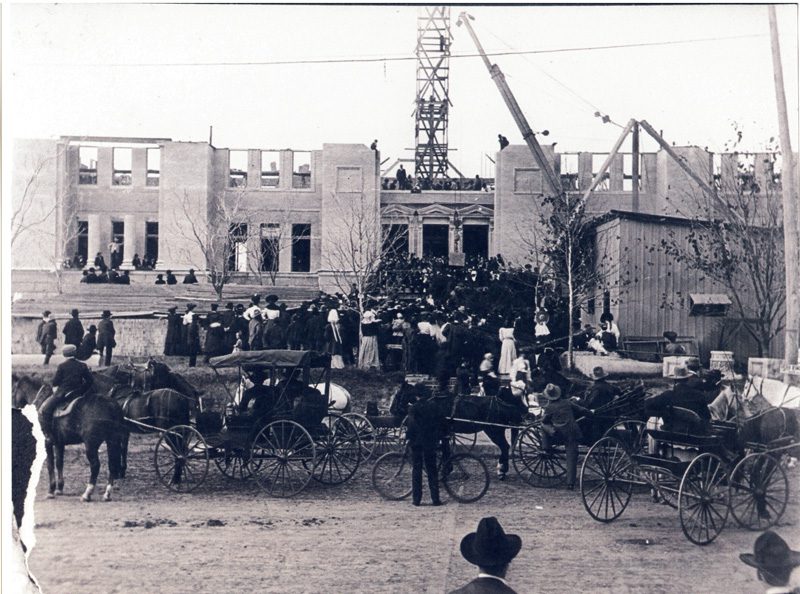
This was the view out of his front door in about 1904, as Navarro County put up a new courthouse in Corsicana, TX.
His address was 309 West 3rd Avenue (the courthouse is at #300) and Duren had strong ties to that spot.
His father Abraham Duren (1812-1883) had been County Clerk and worked in the old courthouse before and during the war. Almost as soon as John returned from the war he married Leora Josephine Kerr (1847-1921). Her father was County Judge Samuel Harris Kerr (1823-1894), who, perhaps obviously, also worked in the courthouse. Judge Kerr’s family’s home was across the street, at #309.
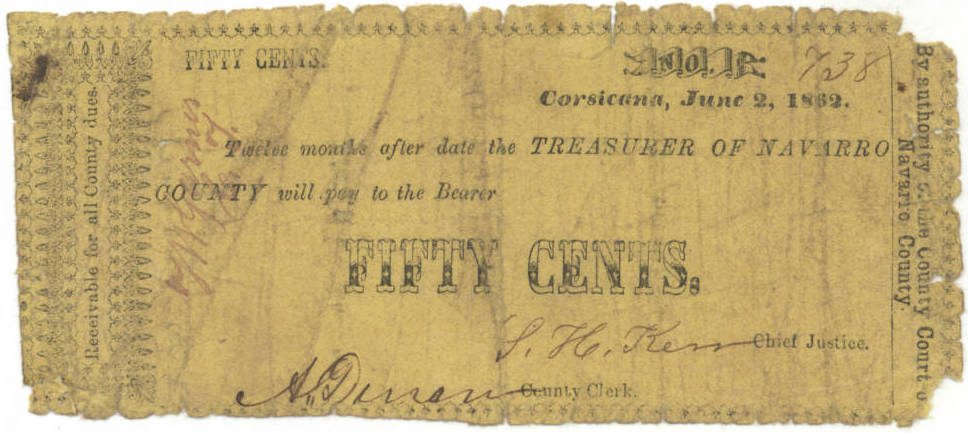
Here’s an interesting artifact dated June 1862: a treasury bond issued by Navarro County and signed by both the Clerk (A. Duren) and the Judge (S.H. Kerr).
By 1900 John and Leora Duren were running a boarding house in the old Kerr place and her mother Catherine (1829-1907) was also living with them. I’m guessing they inherited the building when she died, and John was still living there to at least 1921.
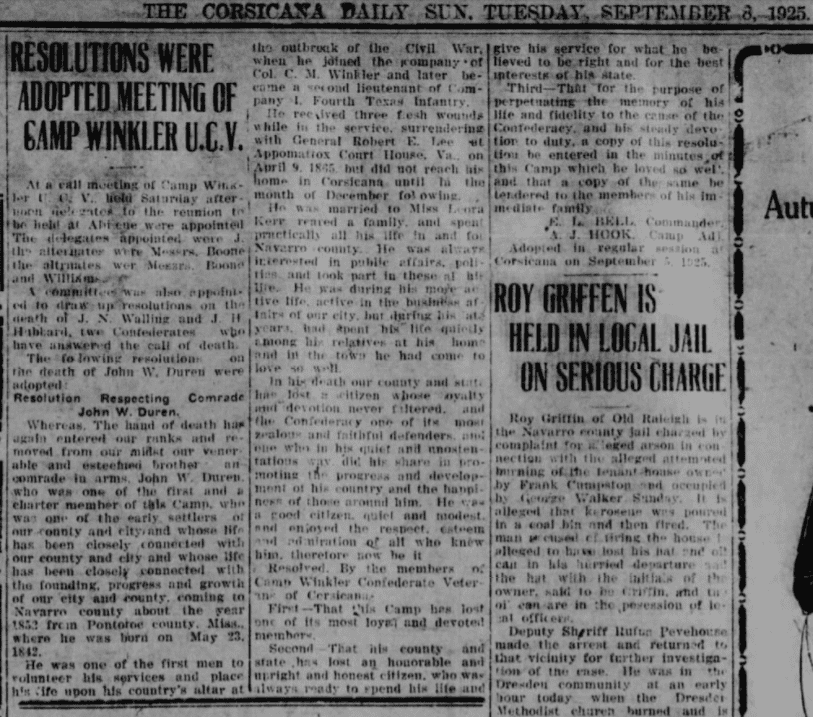
Here’s a testimonial his fellow Confederate Veterans made to him on his death in 1925:
__________________
Notes
The photograph of the courthouse under construction is part of an online exhibit about the courthouse from the Texas Historical Commission’s Texas Heritage Trails Program.
The county treasury bond is online from the Libraries of Southern Methodist University, Dallas, and is part of the Rowe-Barr Collection of Texas Currency. Other examples are available from Navarro County TexGenWeb contributors.
Camp Winkler of the United Confederate Veterans (UCV) was named for Clinton McKamy Winkler, who was Captain of Company I of the 4th Texas at Sharpsburg, later Lieutenant Colonel, and he commanded the regiment at Appomattox.