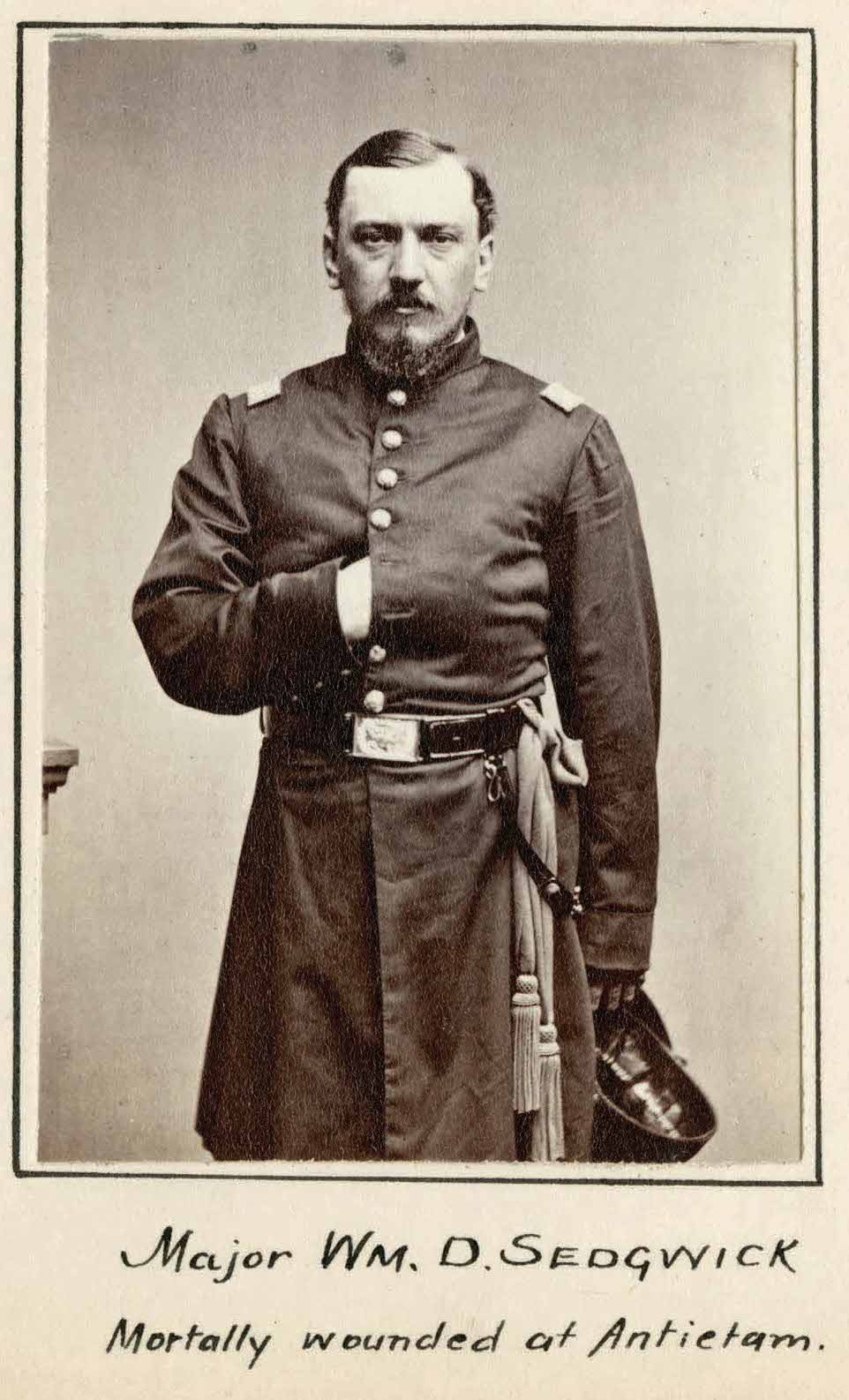
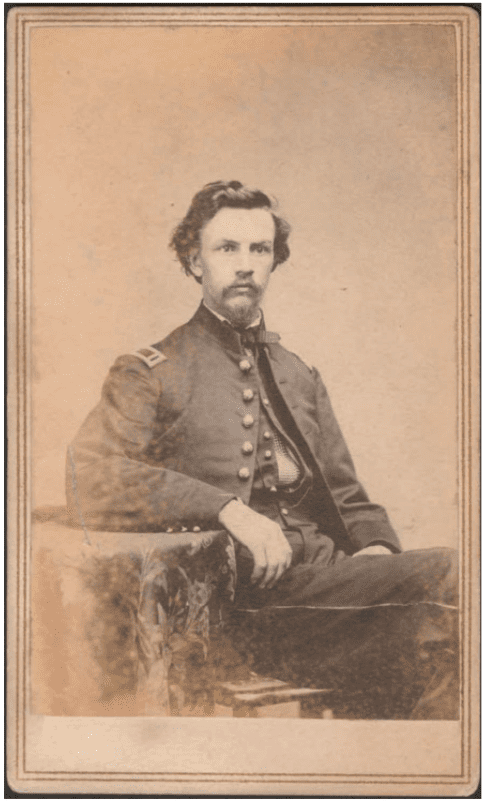
Major William Dwight Sedgwick was Assistant Adjutant General to General John Sedgwick at Antietam on 17 September 1862, where both men were wounded. The General recovered to return to duty, but the Major died in Keedysville, MD on 29 September.
This photograph is in the MOLLUS-Massachusetts Collection at the US Army Heritage & Education Center.
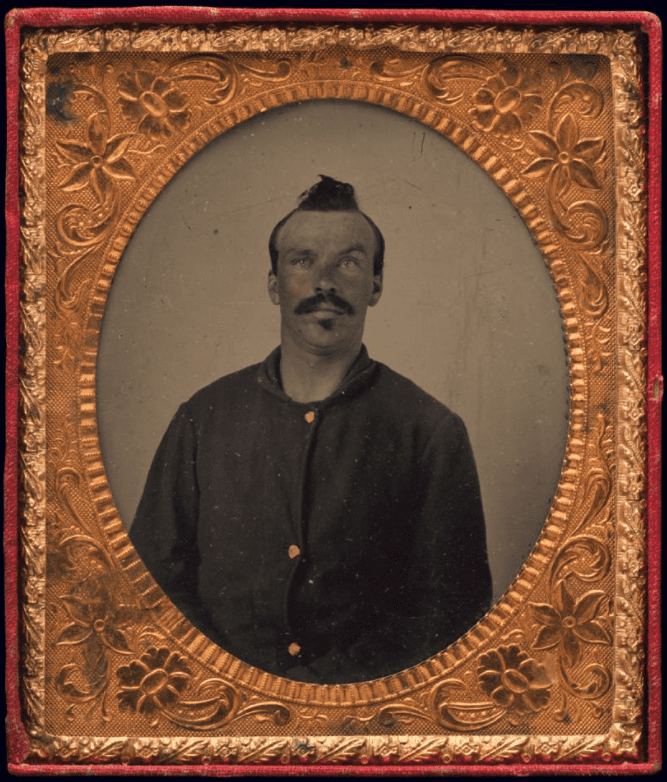
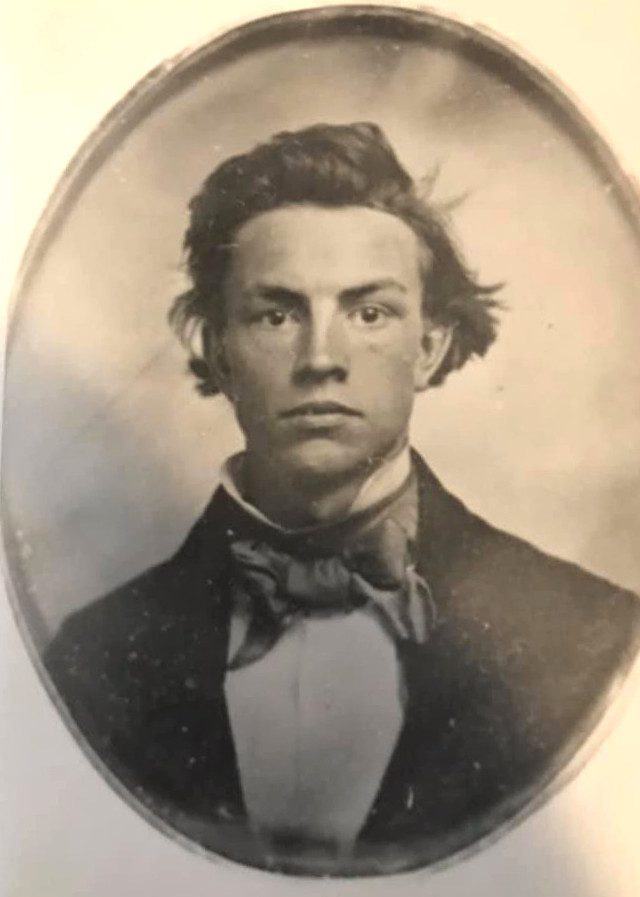
Corporal Hiram Warner of Company C of the 2nd United States Sharpshooters was killed in action at Antietam on 17 September 1862.
His older brother Horace Warner was later First Lieutenant of his Company, and was with him at his death.
A somewhat fanciful tale came down in the family afterward:
Mr. [Horace] Warner was one of the best sharpshooters in the Union Army. He was with his brother Hiram Warner, after whom the Wilcox G.A.R. first was named, when the latter was killed in Antietam and he carried his dead body with him for three days in the hope of sending his brother’s body home. Being surrounded by rebels, he was at last compelled to bury the remains and dug his grave on the southern soil with a bayonet.
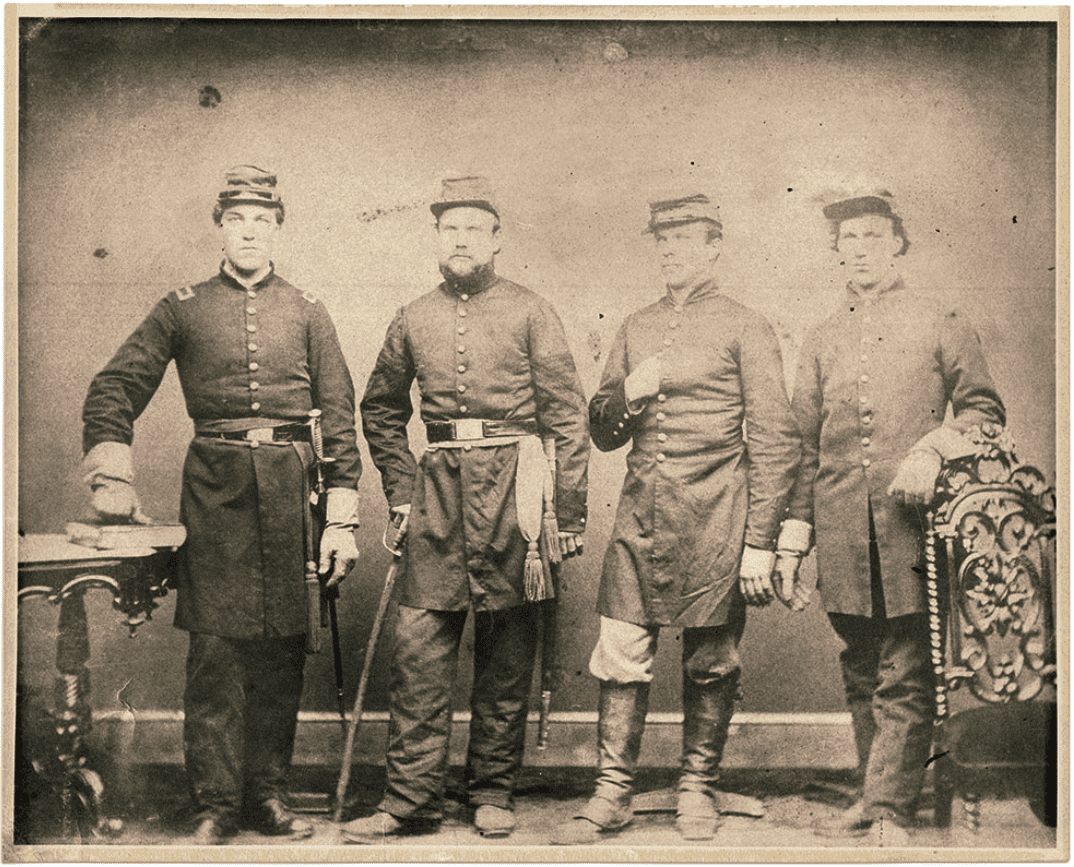
Hiram and Horace were two of the 4 Warner brothers who served during the War. Here they are together in mid-1862 in Washington, DC.
From left to right: Lt. Robert Warner, Lt. and Quartermaster Horace Warner and Pvt. Hiram Warner of Berdan’s 2nd U.S. Sharpshooters, and Pvt. William Warner of the 42nd Pennsylvania Infantry “Bucktails.”
_____________________
Notes
The quote above is from Horace’s obituary in the Ridgway (PA) Advocate of 18 January 1893.
Hiram’s magnificent photograph, a sixth-plate hand colored tintype, is from the Metropolitan Museum of Art in New York, and was published in curator Jeff L. Rosenheim’s Photography in the Civil War (2013).
The photo of the Warner brothers is or was in the collection of Harry Roach, founder of Military Images Magazine, and it graced the cover of his first issue in 1979; his caption used here.
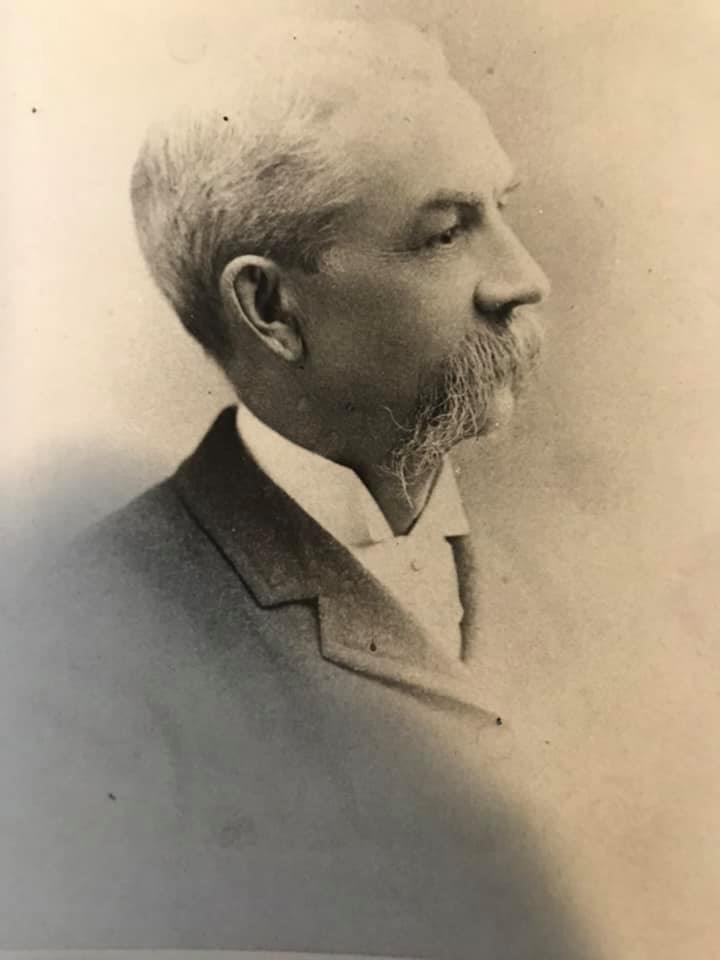
These are pictures of Doctor Nehemiah Nickerson as a youth, then early and late, respectively, in his medical career.
The first is of him at about age 17 (c. 1850). In the US Census of that year he was living with his parents and siblings in Bristol, Massachusetts where his father was a dresser tender. Young Nehemiah was listed as a card guider. Both are jobs operating machines in a textile mill. Within a year or two he was a student at Wesleyan University in Middletown, CT.
This next one shows him in uniform as Assistant Surgeon of the 16th Connecticut Volunteer Infantry, probably taken less than a month before he found himself under fire on the battlefield at Antietam in September 1862. It’s from the Connecticut State Library.
The third is from 1900 or later, after he had been a practicing physician in Meriden, CT for about 40 years. The first and third photographs are thanks to great-granddaughter Cindy Wales-Murphy.
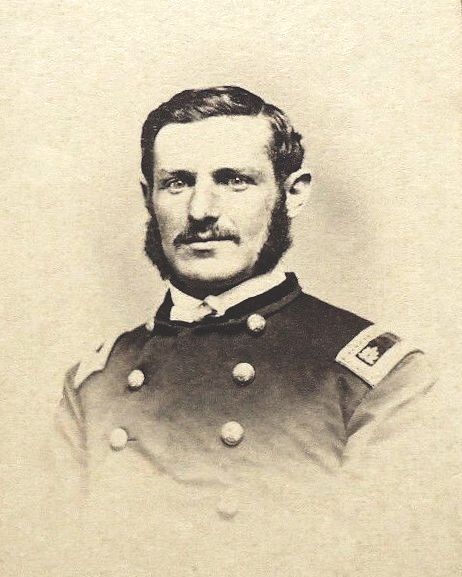
Nathan Mayer, Assistant Surgeon of the 11th Connecticut Infantry treated wounded soldiers under fire at Antietam on 17 September 1862. Here he is after being promoted to Surgeon and Major, and transferring to the 16th Connecticut in January 1863 to fill the vacancy left when Surgeon Abner Warner resigned.
Thanks to Chris Van Blargen for sharing that photograph.
Dr Mayer had two observations on his experience at Antietam. The first was that even untrained men could be trusted to use chloroform safely. The second
… that all the wounded came in, exalted in spirit, full of patriotic fire, anxious for the battle, the defeat of the rebs, and complaining hardly of their own injury. This was quite remarkable on that day. Whether the whiskey which was given to the wounded man at once — and needed in the collapse of serious gunshot wounds – contributed to this exaltation I know not. But I have still in mind some badly wounded boys that fiercely demanded the fate of the battle before they cared about themselves, and the beautiful resignation with which others awaited their certain death.
This is not romance. I saw it and it is realism.
Doctor Mayer had a long and distinguished medical career and was in addition a poet, novelist, and critic of some note. Here he is in about 1890. This picture is in the collection of the Hartford Medical Society, of which he was President in 1906. It was published by Janice Mathews to accompany a piece about him in the Spring 2007 issue of Connecticut Explored magazine.
Young William G Hooker survived a wound at Antietam in 1862 and a term as a prisoner at Andersonville in 1864, and was mustered out of the 16th Connecticut Infantry at age 19 in June 1865. He was a printer in later civilian life, eventually owning his own shop in Meriden, CT.
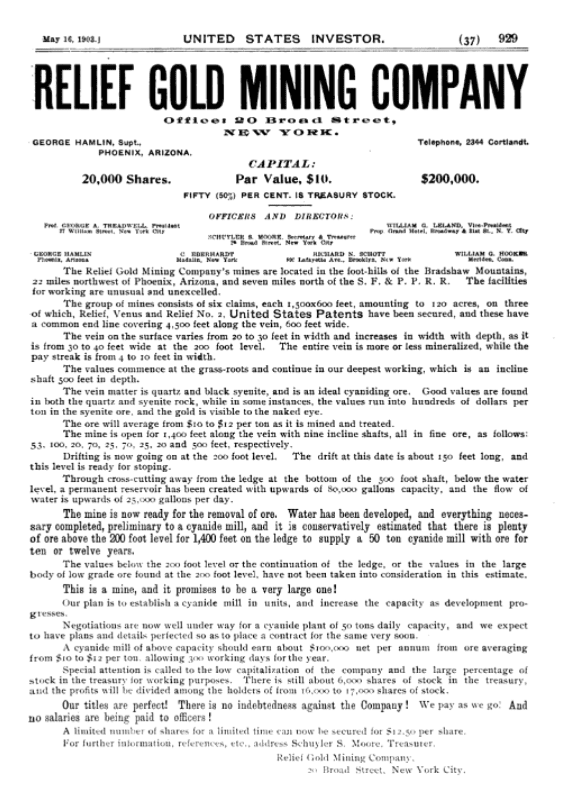
By 1901 he was a Director of the Relief Gold Mining Company which developed claims near Phoenix in the Arizona Territory. Here’s a 1903 offer of shares:
Hundreds, perhaps thousands of such “investment” offers were made in the early 1900’s. Most were scams and very few were likely to ever make money.
The Relief Mine, however, seems to have raised enough money by mid-1904 to construct a processing mill of crushers and rollers, and actually produced some gold. In 1907 mine superintendent Hamlin reported they were running 12 hour shifts and had 14 men working, and in 1909 said they’d taken $60,000 in gold to date.
The Relief Gold Mining Company operated the mine until 1912 (others followed into the 1930s). We can only hope that Mr Hooker saw some benefits.