Year: 2021

  • R.A. Davidge (1864)

    Robert A. Davidge enlisted as a Private in Company B of the 4th Texas Infantry in July 1861. According to the Confederate muster rolls and US Army records that comprise his Compiled Service Records, these are the highlights of his military service:

    • absent without leave when his Company fought at Fox’s Gap on 14 September 1862, but present at Sharpsburg on the 17th
    • captured at Chickamauga, GA on 18 September 1863 and in the Federal prison at Louisville, KY
    • captured again on 6 December 1863 in Dickson County, TN
    • while a prisoner, admitted to a US Army hospital in Nashville on 1 March 1864 with typhoid pneumonia
    • died at the hospital on 6 March 1864

    A little odd, with those various apparently overlapping captures, but otherwise fairly straightforward, right?

    If there’s any truth in the following news piece, his actual experience was far more interesting than the dry records suggest. See what you think …

    R. A. Dᴀᴠɪᴅɢᴇ.
    —Hon. A. C. Niles received a letter from Judge Searls on Monday evening last, from which he has permitted us to make the following extract in relation to an old Nevadan:

    “Robert A. Davidge, formerly of Nevada [City], was in Texas at the commencement of the war and enlisted in the [4th] Texas regiment, served a year or so in Virginia and deserted: was arrested by the rebels in Tennessee and got clear through the influence of influential friends. Was arrested by the Federal authorities near Nashville for alleged disloyalty — took the oath and enlisted in the Union army; served a few weeks, deserted and joined a band of guerrillas known as Ray’s band. Was finally captured and thrown into prison at Nashville, and while awaiting his trial for desertion and murder, finally died on the 27th of last February.”

    “My informants were a physician from Hopkinsville, Ky., who knew him from boyhood, and a Capt. Moore, now in the Union prison at Donelson, who belonged to the same brigade.”

    Davidge came to this city [Nevada City] in 1852 and was appointed Deputy Clerk of this county at that time by Theodore Miller. During the following year Miller returned to the Atlantic States and Dividge acted as County Clerk for the remainder of the term. Davidge was then appointed Postmaster of this city through the influence of old Gwin; and while acting in that capacity was selected as editor of a new paper started at that time called the Young America, to advocate the interests of the chivalry, which had control of all the offices in the county. Having become disgusted with everything and everybody, he left for his home in Kentucky in the year 1855, where he remained up to the time of the breaking out of this rebellion, editing a newspaper. Thus, one by one, the would-be chiefs of this county in early times have received the deserts they merited.

    — Nevada Transcript.
    ___________

    That article is from the Marysville (CA) Daily Appeal of 9 June 1864, online from the California Digital Newspaper Collection.

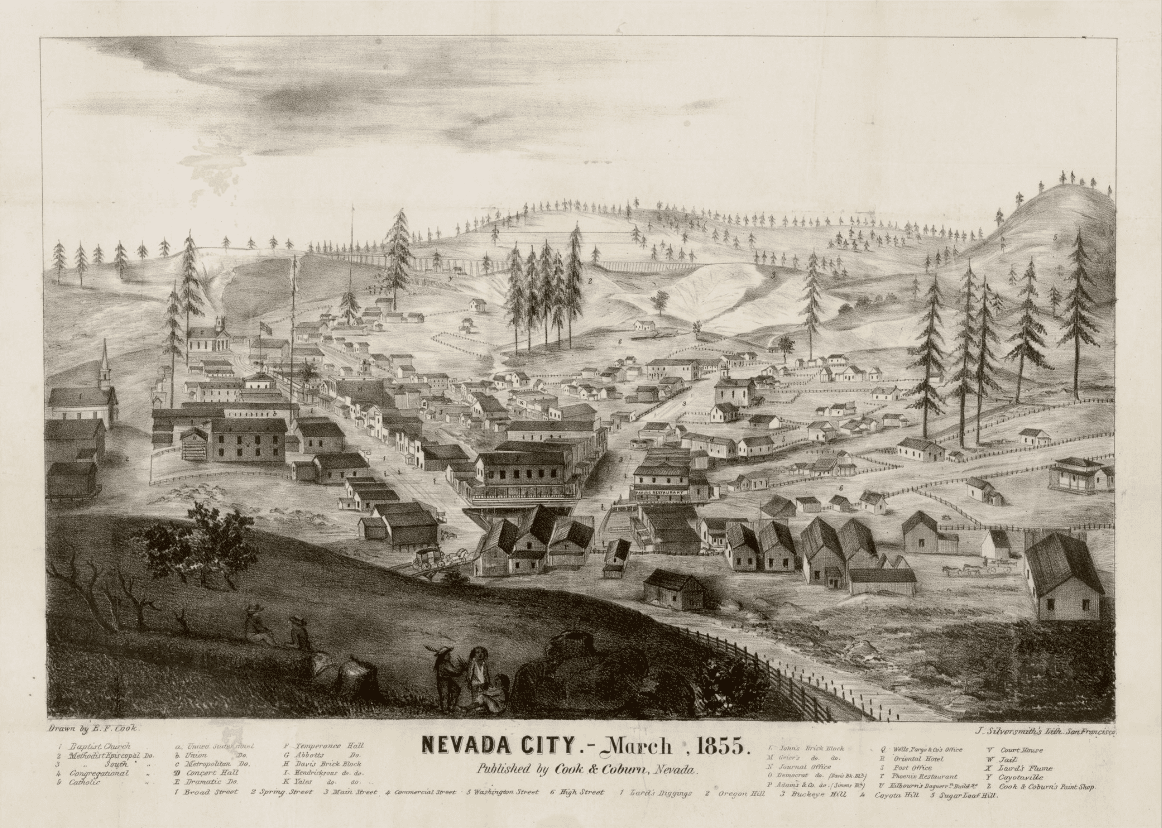
    The view above of Nevada City in March 1855 is a copy of a print sold by Barry Lawrence Ruderman Antique Maps Inc.
  • Congress Avenue, Austin, TX (1867)

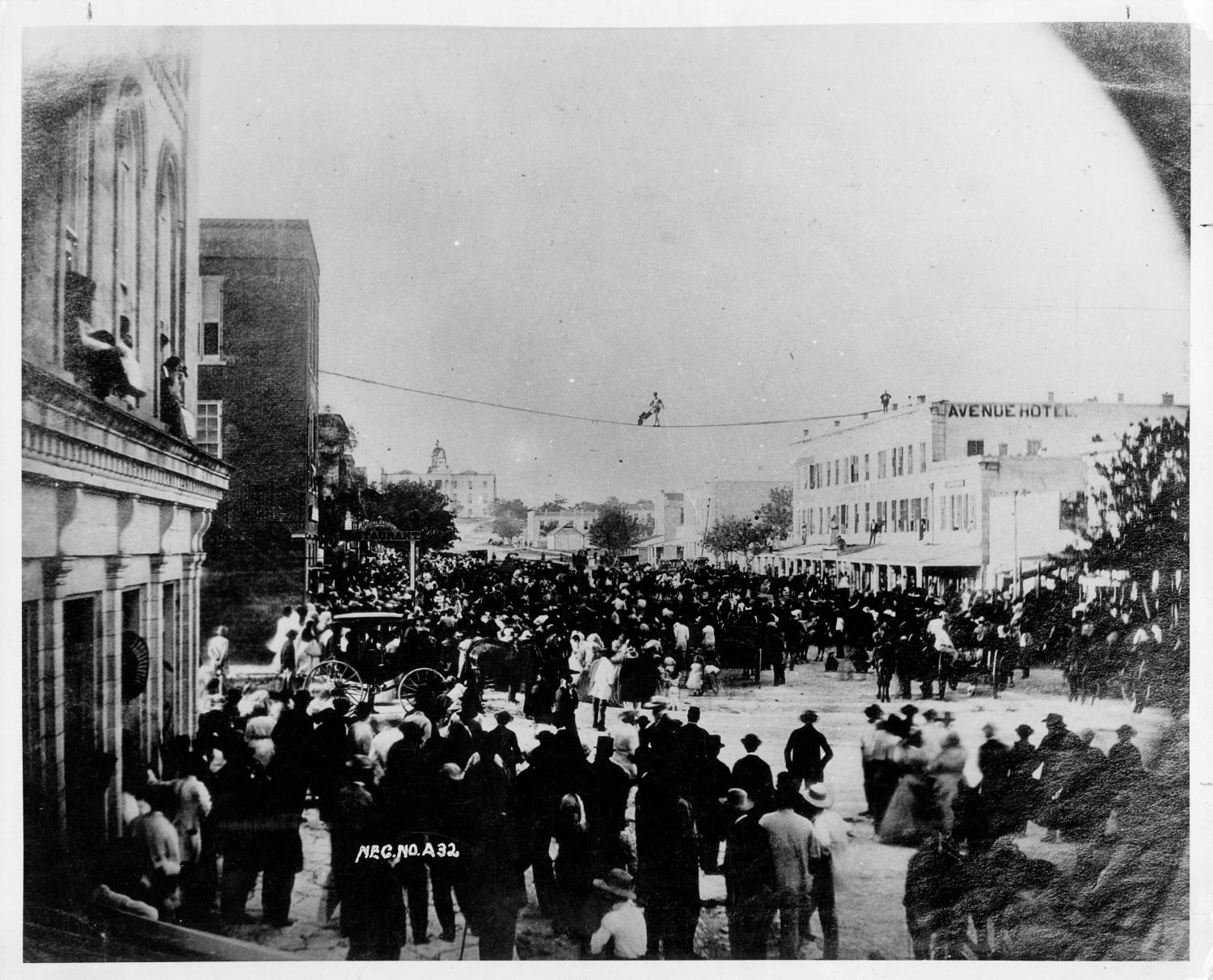
    A view north down Congress Avenue in Austin, TX just after the war. Try to ignore the tight-rope walker. The (old/2nd) State Capitol building is at the end of the avenue. At right, under the Avenue Hotel sign, is the Swenson Building – the Avenue Hotel took the upper 2 floors, and a number of businesses shared the first floor with storefronts under that awning.

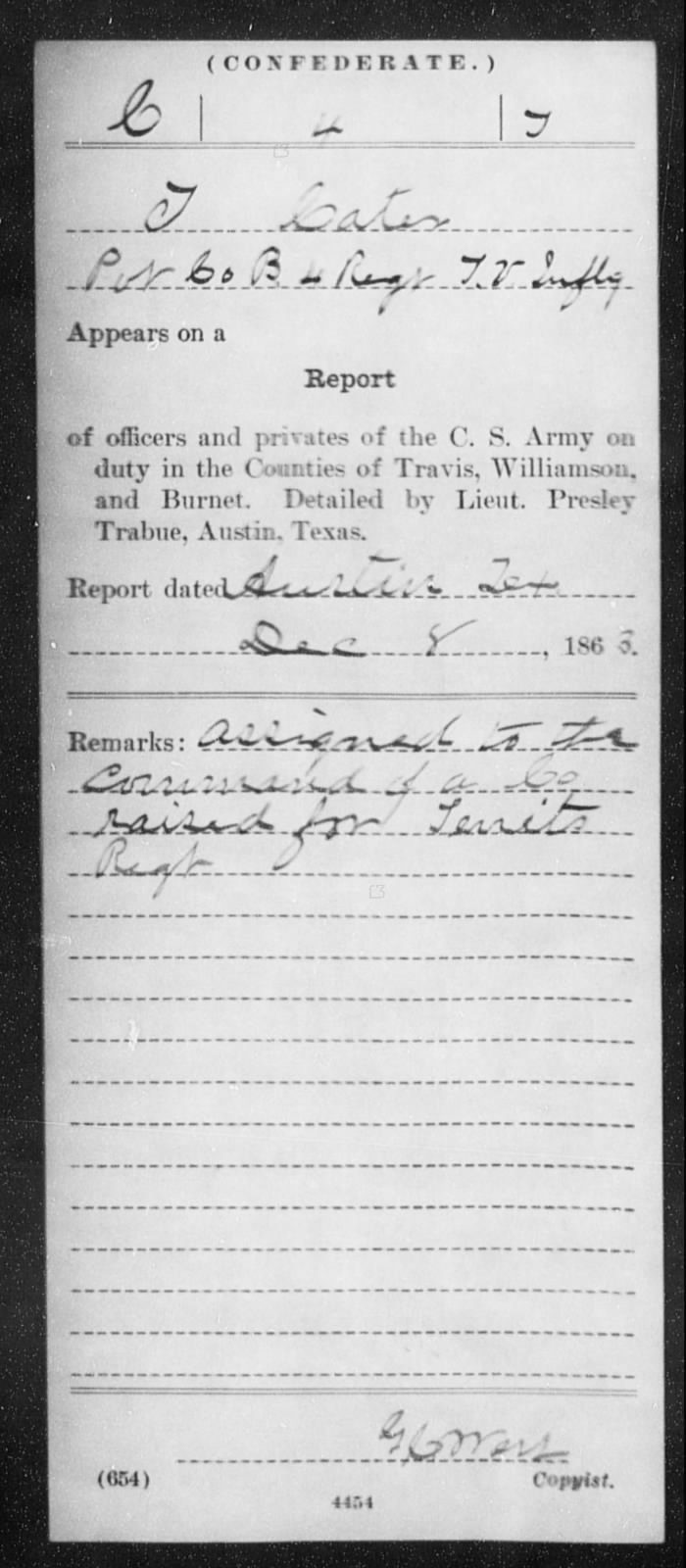
    One of those was a grocery and liquor store operated by Sharpsburg veteran and late Private, Company B, 4th Texas Infantry, Thomas E. Cater.

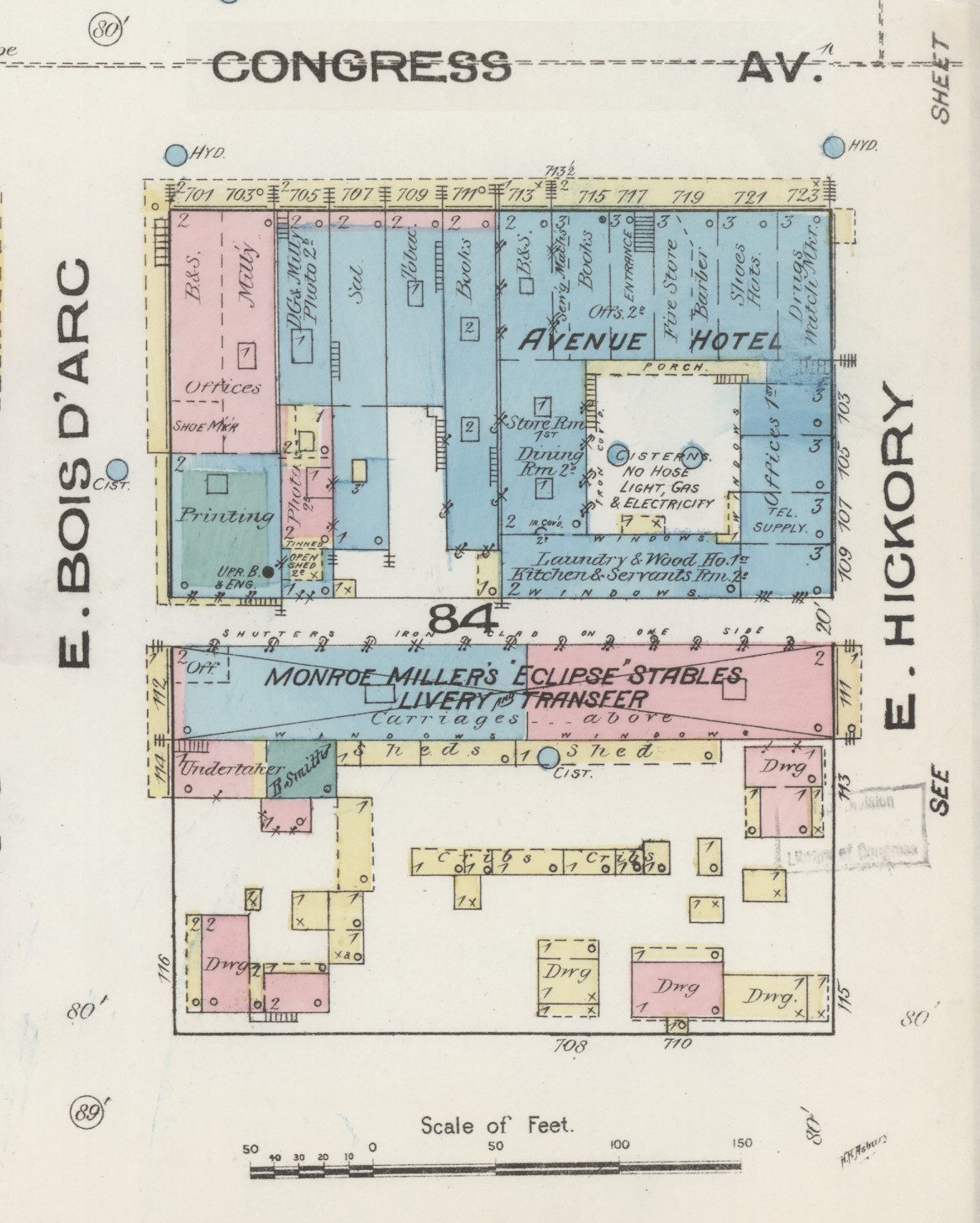
    Here’s a plan view of that same city block 20 years later, showing some of those businesses, from the Sanborn Fire Insurance Map (1885), online thanks to the Library of Congress.

    A fine businessman I’m sure, but Thomas E Cater caught my eye for another reason.

    In February 1863, while serving in Virginia, he got a furlough home to Texas, but he was listed as absent without leave – AWOL – when he hadn’t returned by May. I could find no evidence of a catastrophic wound or dire illness to explain why he left and I don’t know why he didn’t return. Perhaps he preferred being with his new wife and baby daughter Elizabeth in Austin.

    But (and here’s the extraordinary part) while still technically an AWOL Private of the 4th Infantry in December 1863 he was assigned to command a Company in or near Austin …

    … he was Captain Cater with his own independent cavalry company on 27 December 1863 and by August 1864 he was a Major commanding his and 2 other Companies as Cater’s Battalion of Texas Cavalry. They had service in South Texas to the end of the war, though without Cater in their final action at Palmito Ranch, TX – arguably the last battle of the war.

    He was formally surrendered at Galveston, TX on 25 May 1865 and paroled in Austin on 27 July. He went home, established that mercantile establishment, and had many more children.

    _______________

    The photograph at the top is in the collection of the Austin History Center, Austin Public Library and hosted online by the University of North Texas Libraries. The caption reads:

    Scene on Congress Avenue in 1867, showing exhibition by [French] tight-rope walker ([Jean] Devier) across the Avenue from the historic old Avenue Hotel at Eighth and Congress, on East side. The carriage at the left, entering the Avenue, is that of Gov. E. M. Pease (Gov. from 1853-57 and 1867-69).

    The card here is from his Compiled Service Record jacket; the original is in the US National Archives.

    _______________

    My notes on operations and leaders of Cater’s Battalion 1864-1865, after the break … (more…)

  • Joseph McCarty, 4th Texas: murderer?

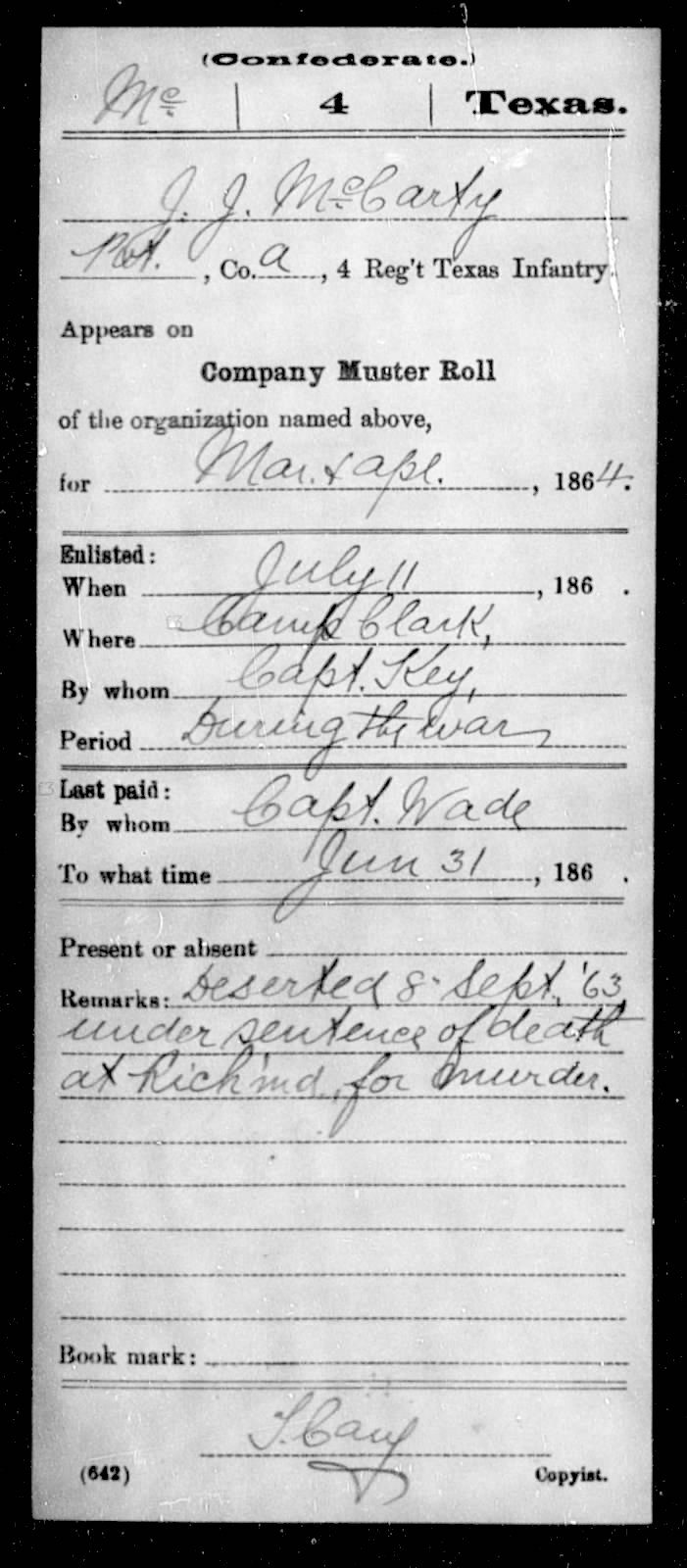
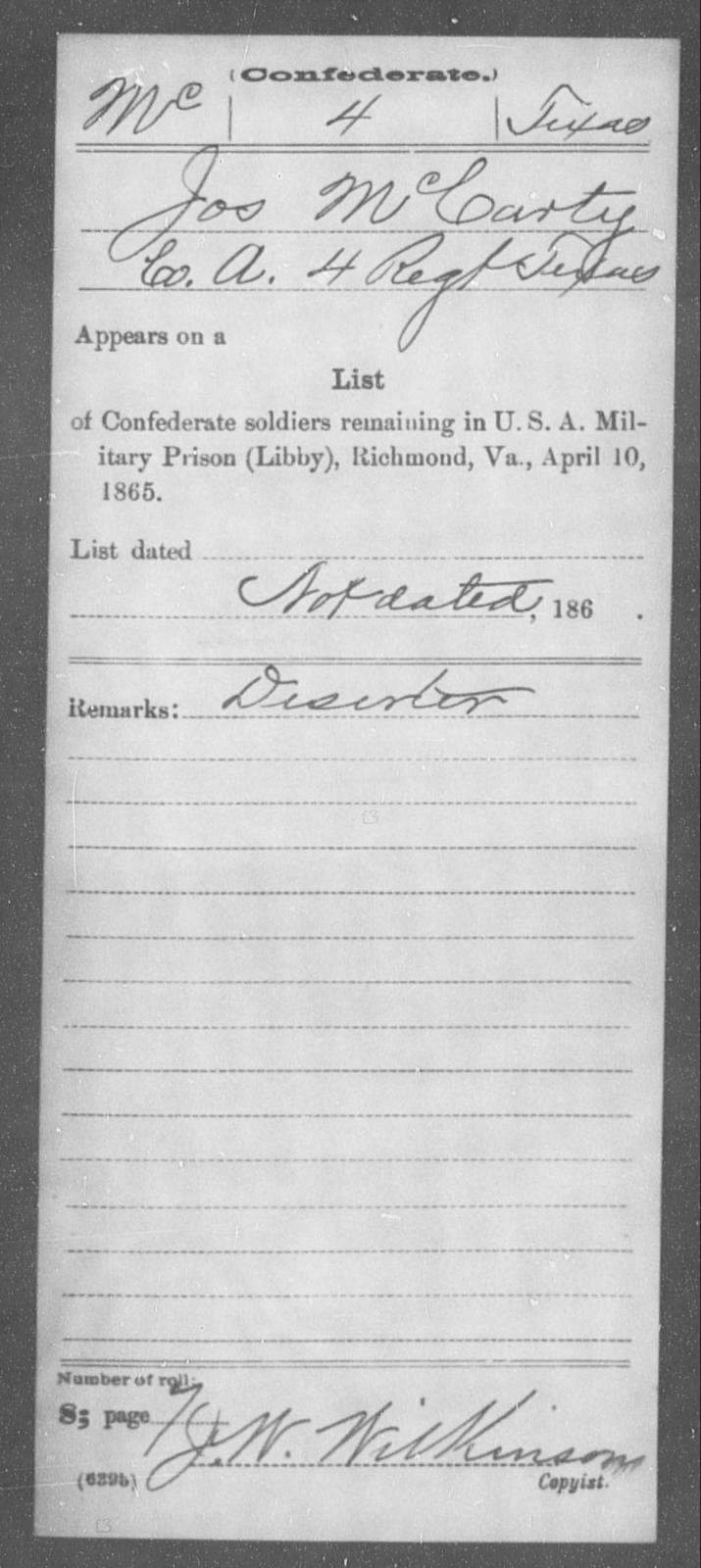
    There’s surely a story behind these two cards from Private Joseph McCarty’s Compiled Service Records at the US National Archives, but I haven’t found any more details about them or Joseph. I’ll leave these here with hopes to hear more one day …

    Deserted 8 Sept.’63 under sentence of death at Richmond, for murder.

    And here he is, held by Federal troops at Libby Prison, Richmond as a deserter, the day after General Lee surrendered the Army of Northern Virginia in April 1865.

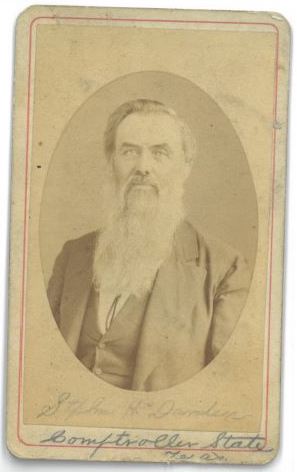
  • Oath of Amnesty, Stephen H. Darden

    Older than your average company officer at about 46 years, Captain Stephen H. Darden led Company A of the 4th Texas Infantry in Maryland in 1862 and was conspicuous at Sharpsburg on 17 September:

    Color-bearer Parker, of Company H, was severely wounded and left on the field. At his fall Captain Darden, of Company A, seized and carried the colors until we fell back to the woods.

    Not long afterward he was commissioned Colonel of a 6-month home-front unit, the 4th Regiment, Texas State Troops and served with them on the Gulf Coast (1863-64). He was then elected to the Confederate Congress (1864-65).

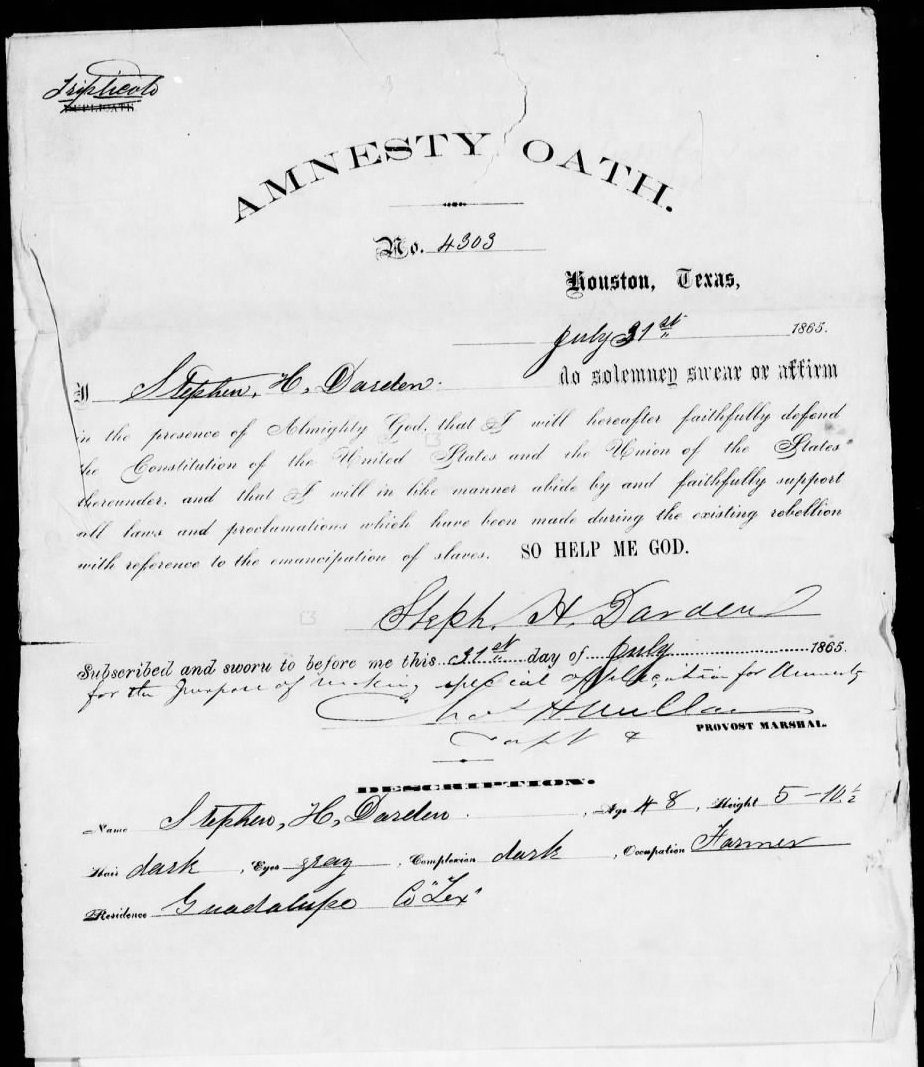
    After the war, like many former Confederate officers and public officials, he made an application for amnesty from possible prosecution. As part of that, he signed this Oath of Amnesty in Houston, TX on 31 July 1865.

    I’ve seen many references to such oaths in soldiers’ records, but not actually seen a paper copy before. This one is among his Compiled Service Records in the US National Archives, Washington, DC.

    Here’s Colonel Darden in 1876 when he was serving as the Comptroller of the State of Texas, in a photograph taken in Austin posted to the FamilySearch database by a family genealogist.

  • William Armstrong Cavitt, c. 1865-68

    19 year old Private William A Cavitt was with his Company – “A”, of the 4th Texas Infantry – in combat at Fox’s Gap on South Mountain and at Sharpsburg, Maryland in September 1862.

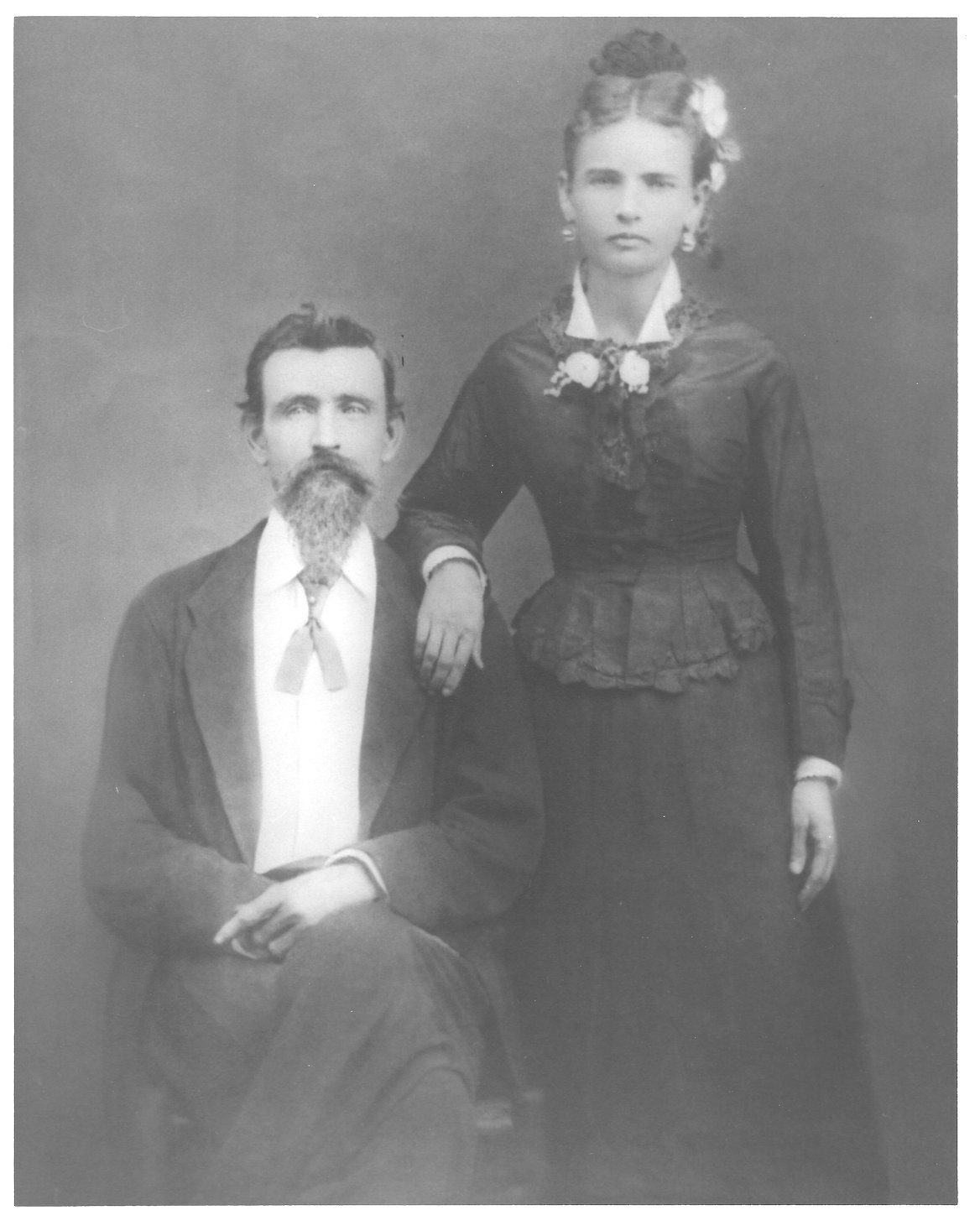
    Here he is in a photograph taken with his wife Elizabeth “Lizzie” Powell (b. 1849), probably on the occasion of their marriage in June 1868 in Bexar County, Texas. He’s 25 and she’s 19.

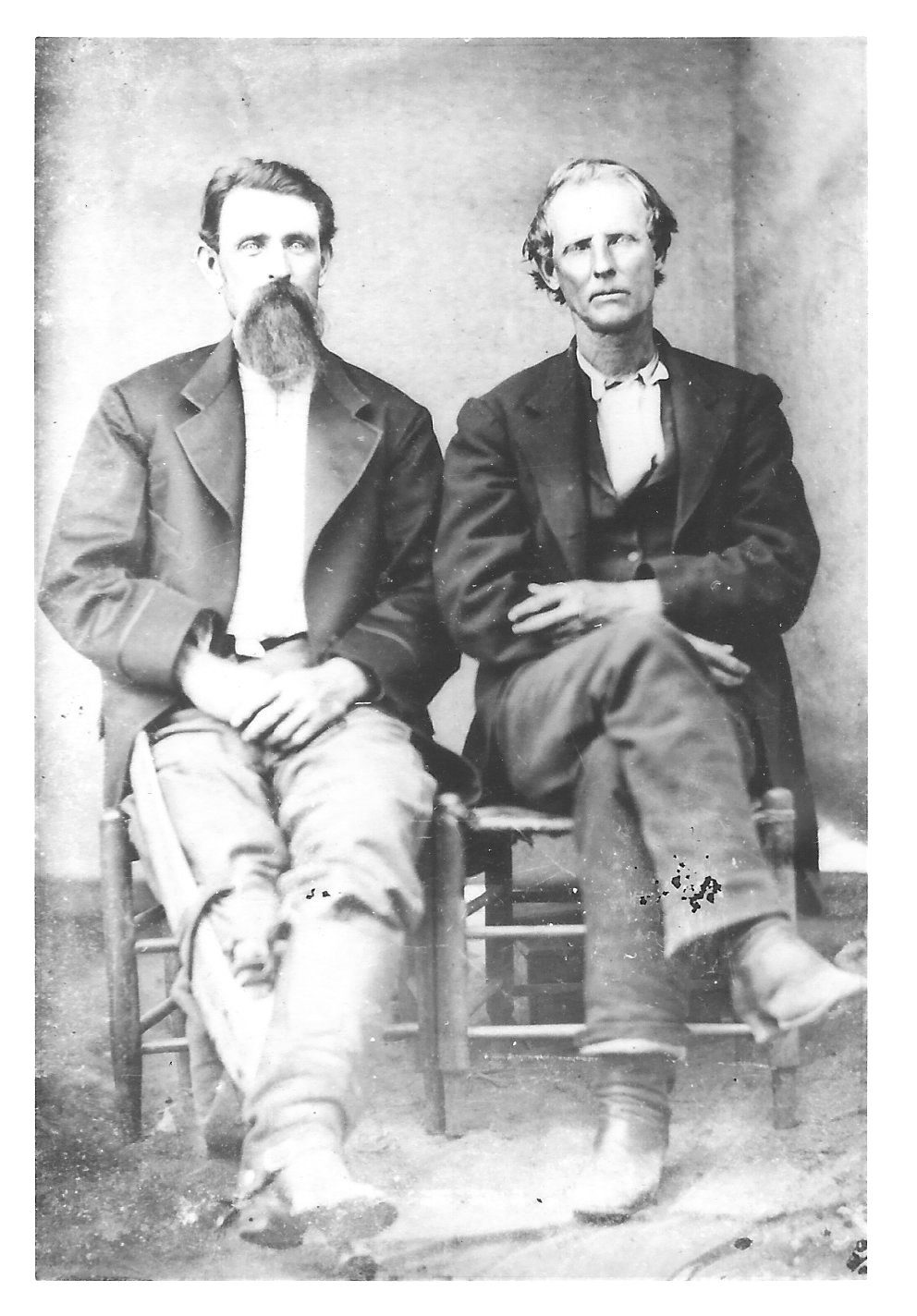
    Here he is again, with, I think, his father William Canada Cavitt (1819-1873), probably shortly after the war.

    If you look closely (click picture to enlarge) you’ll see he doesn’t have a right foot, and there’s a kind of a peg strapped to his leg. He lost part of his right leg to amputation after he was wounded at Chickamauga, Georgia in September 1863. Looking back at the portrait with his wife, also, it looks like his right leg ends at his knee …

    Both photographs were shared to Ancestry.com by William Lemke.