Dublin-born William J Leahy was seriously wounded in the thigh at Antietam on 17 September 1862 while serving as 2nd Lieutenant of Company C, 2nd United States Sharpshooters. As a result, he resigned his commission and went home in January 1863.
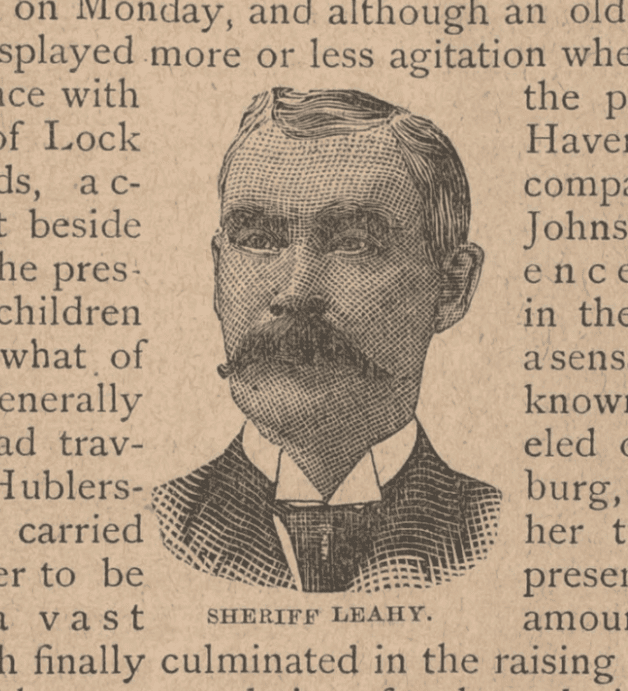
Here he is as Sheriff of Clinton County, PA in 1887 from a pamphlet titled The Colby Tragedy (1888) about a sensational local murder case.
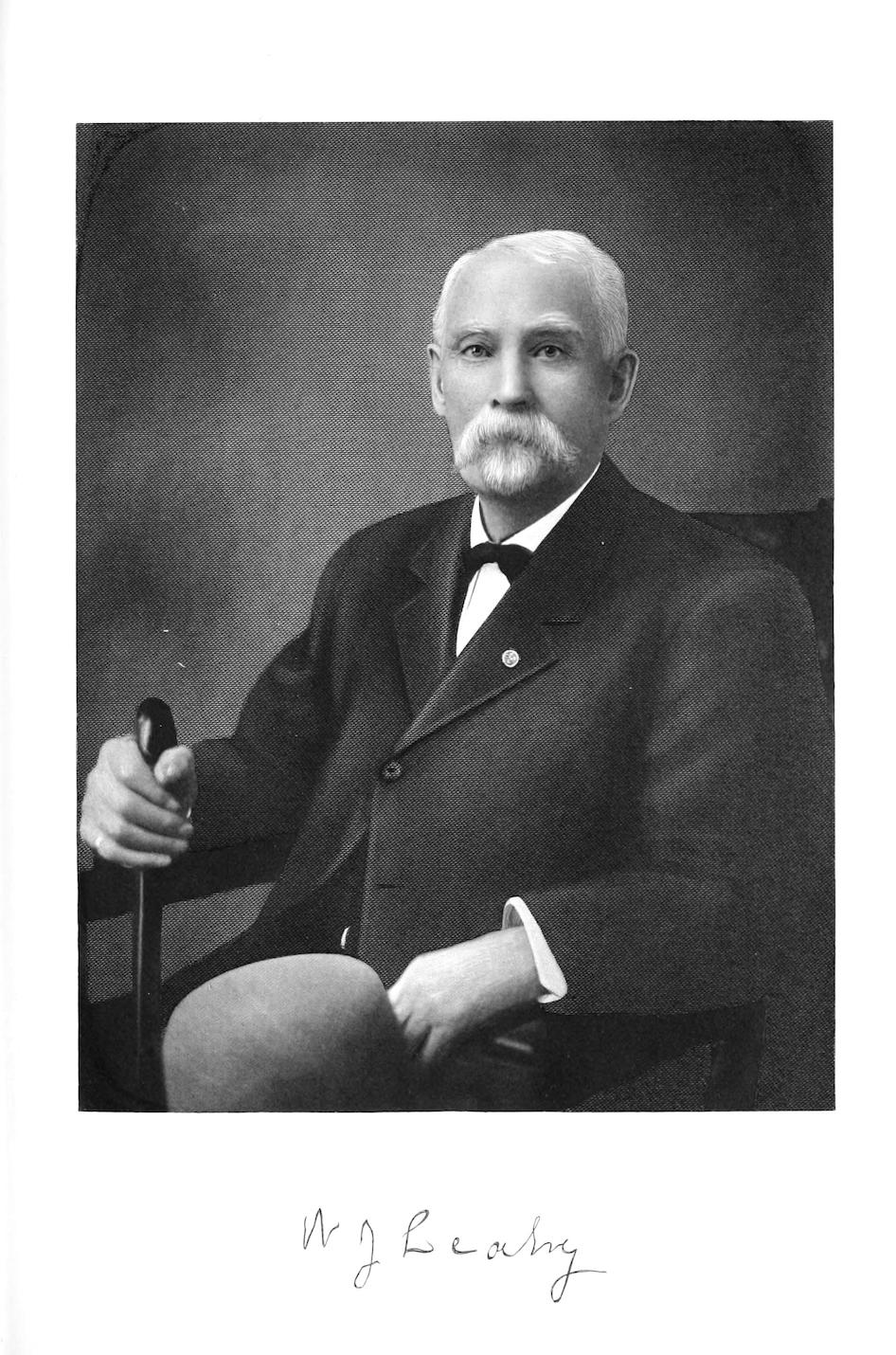
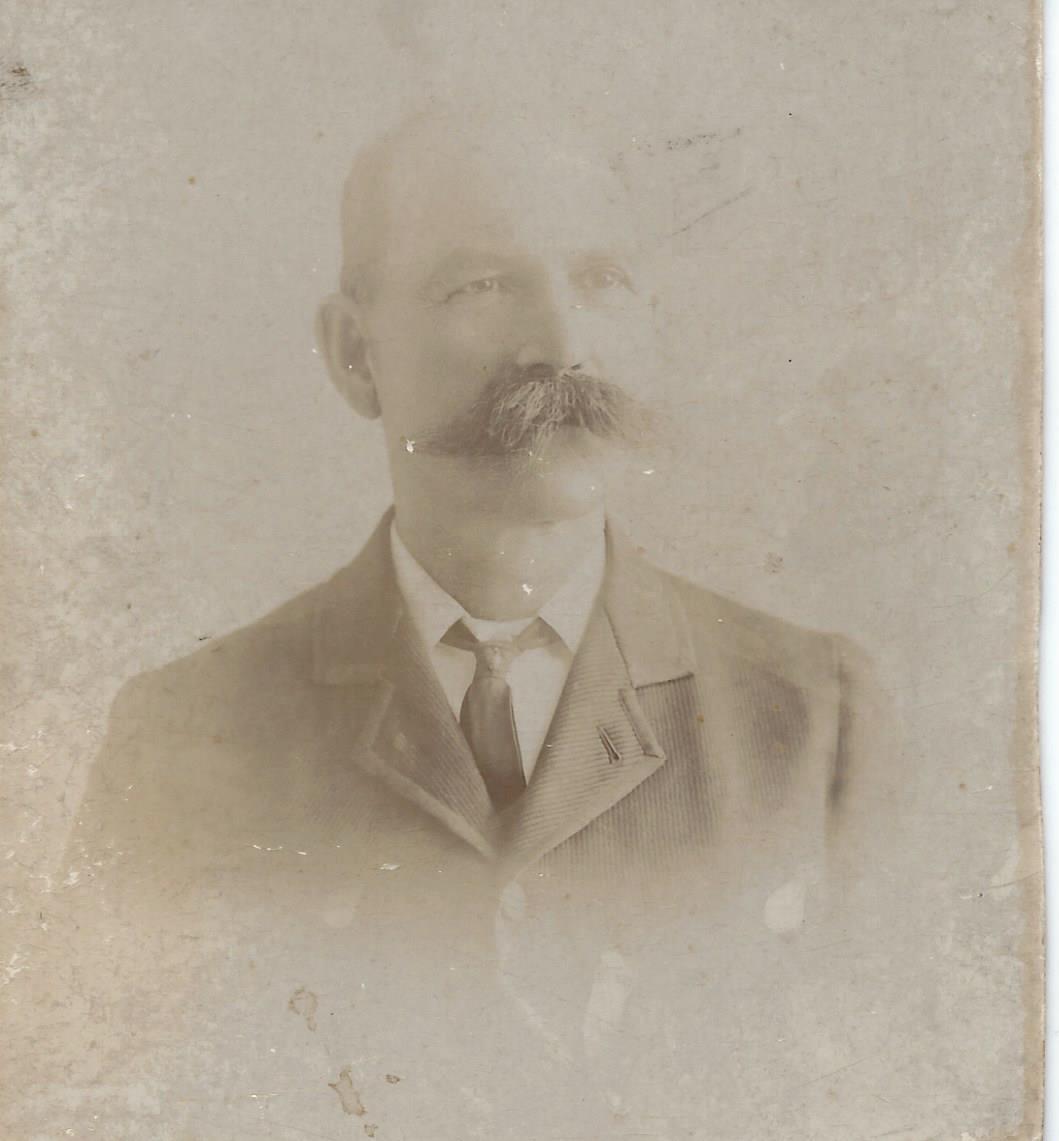
This is him later in life from W.J. McKnight’s Jefferson County, Pennsylvania: Her Pioneers and People, 1800-1915 (Vol. II, 1917).
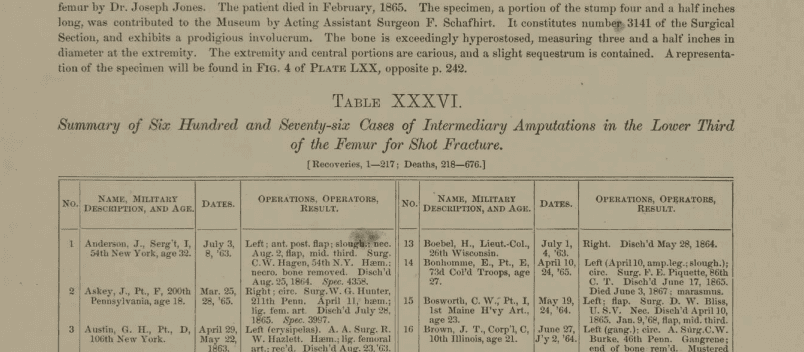
From the Medical and Surgical History of the War of the Rebellion (MSHWR, Volume 2, Part 3, page 293), a list of 676 cases of Intermediary Amputations in the Lower Third of the Femur for Shot Fracture performed by Army surgeons during the war. Intermediary meaning the amputations were done some days or weeks after the injury was received. Of the 676, 217 soldiers recovered but 459 died of their wounds or from the surgery.
One of these soldiers was James Kelly of the 2nd United States Infantry. From County Roscommon in Ireland, he’d enlisted in St. Louis in 1858 at age 22, and was a Corporal by 1862.
In action at Antietam on 17 September 1862 he was shot in his lower left leg, the bullet grazing his tibia. He was initially treated on or near the battlefield and was in a hospital in Frederick, MD by the 27th, but infection apparently traveled up his leg past the knee, and his leg was amputated at the lower thigh on 16 October. The surgery didn’t save him and he died on 21 October 1862.
________________________
All 6 books of the MSHWR are online thanks to NIH’s National Library of Medicine.
Charles R. Kay was a Private in Company G, 2nd United States Sharpshooters and was wounded on South Mountain on 14 or 15 September 1862. He was discharged in 1863 and returned home to New Hampshire, where he worked in a sawmill, married twice, and raised 10 children. He’s seen here considerably post-war in a photo from family genealogist Sylvia Ann Kay Johnson.
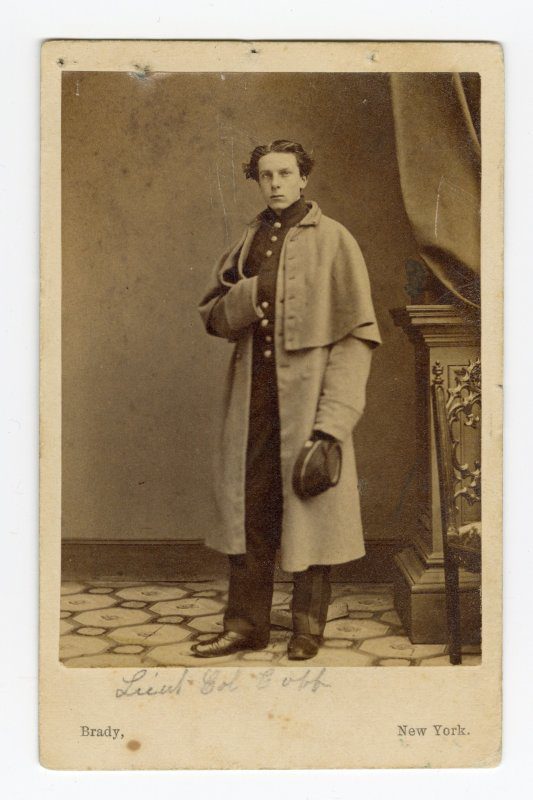
Here’s Septimus Cobb in a carte-de-visite offered by the Excelsior Brigade‘s online shop. He was wounded at Antietam on 17 September 1862 while 2nd Lieutenant of Company C, 42nd New York Infantry.
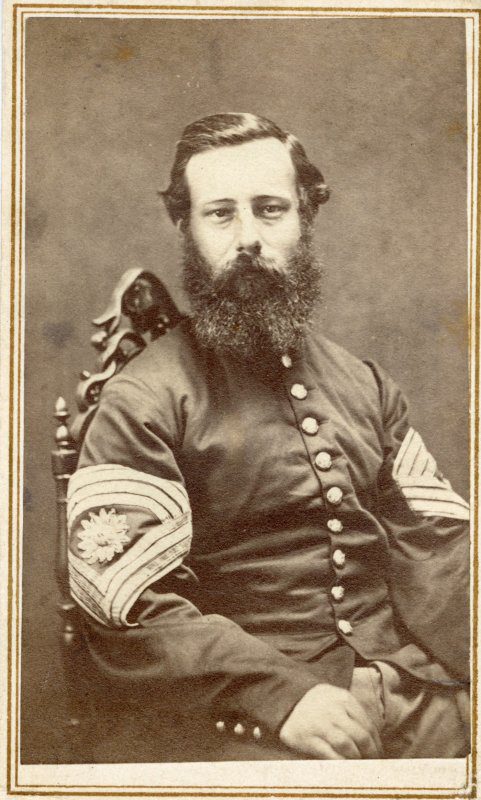
James D Loades was a Sergeant in Company I of the 2nd Maryland Infantry when he was wounded in the side, probably near the Lower (Burnside’s) Bridge over the Antietam on 17 September 1862.
This photograph was taken in Paris, KY, probably in the Spring of 1863, soon after Loades was appointed Sergeant-Major of the regiment. It is offered for sale online by the Excelsior Brigade.