Here, in a pair of photographs from Vol. 95, page 4876 of the Massachusetts Commandery of the Military Order of the Loyal Legion of the United States (MOLLUS-Mass) photograph collection, is James Oliver, June 1862 graduate of the Harvard Medical School and newly appointed Assistant Surgeon of the 31st Massachusetts Infantry (left, 1862) and Surgeon of the 61st Massachusetts (right, 1864-65).
He treated wounded soldiers in a barn near the Burnside Bridge during the battle of Antietam on 17 September 1862, and for some three months after the battle at the Locust Spring Farm hospital near Keedysville, MD.
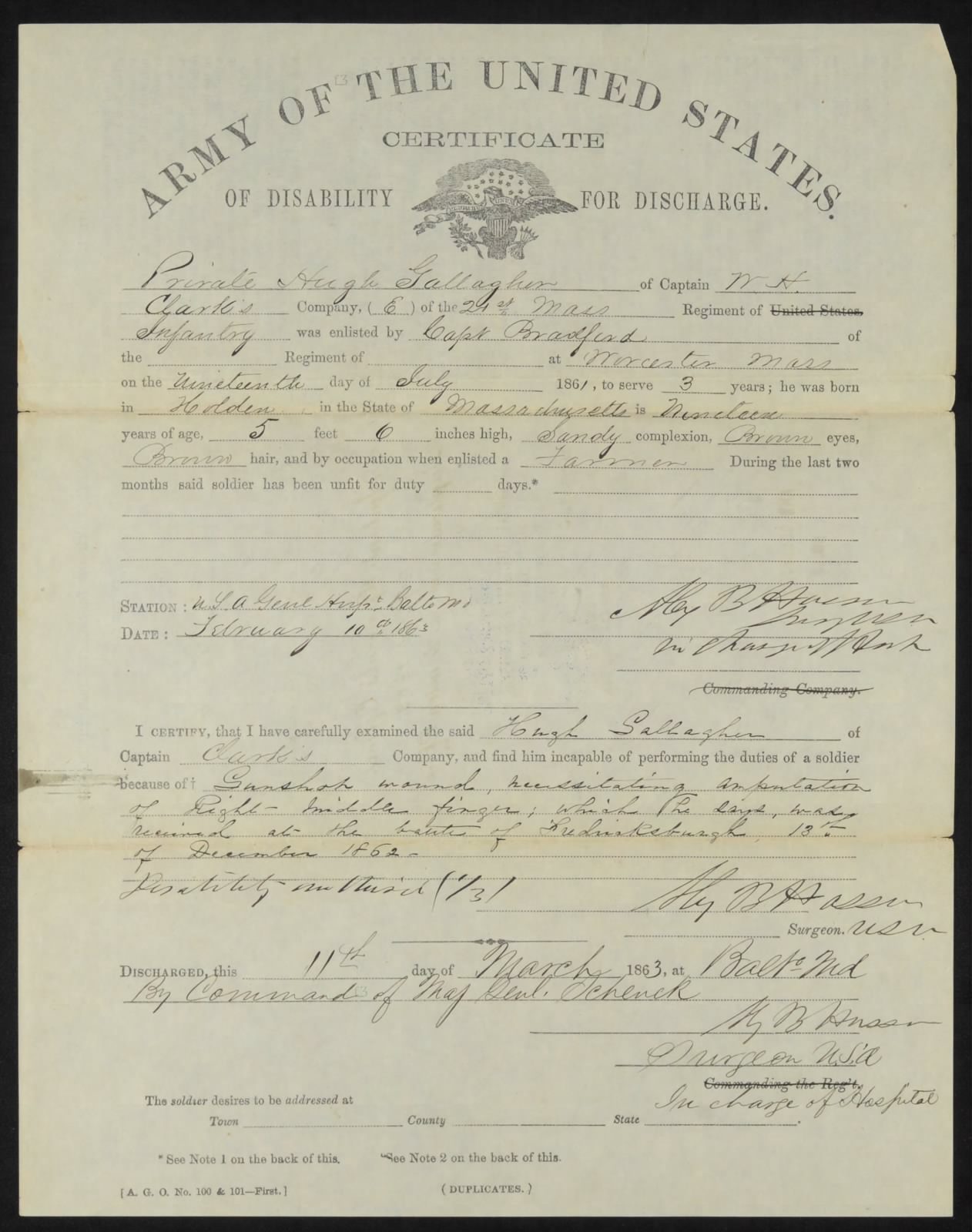
This is Private Hugh Gallagher‘s Certificate of Disability for Discharge drafted 10 February 1863 at the US Army General Hospital in Baltimore, MD. It’s from his Compiled Service Records now in the National Archives (this copy online from fold3).
Private Gallagher was in Company E, 21st Massachusetts Infantry and was wounded in action at Fox’s Gap on 14 September 1862 and again at Fredericksburg, VA on 13 December. He lost a finger as a result and was discharged to go home on 11 March 1863.
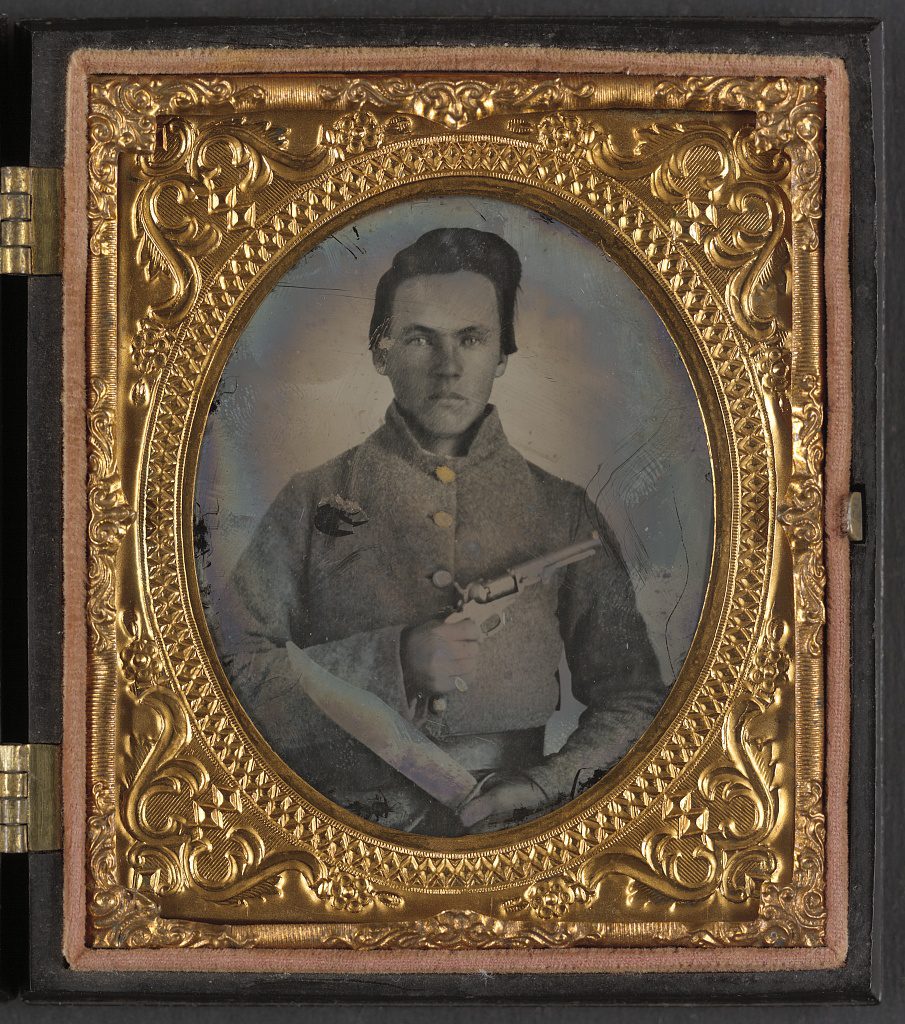
20 year old Corporal Edward F Powell of the 5th North Carolina Infantry was grievously wounded in the face in combat near Fox’s Gap on South Mountain on 14 September 1862. He spent the rest of the war in Virginia and North Carolina hospitals, as a patient and later a nurse. This fine portrait photograph (c. 1861) is from the Liljenquist Family Collection at the Library of Congress.
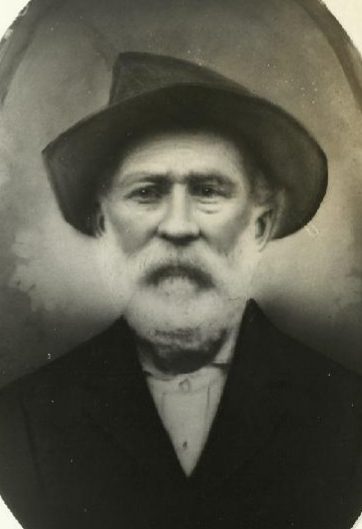
Thanks to Great-great Grandson Josh Powell for the poke this evening to look into his ancestor and for another picture of Edward, below, taken many years later. Josh notes that Edward “kept a beard following his service to help cover the scars from the wounds he received.”
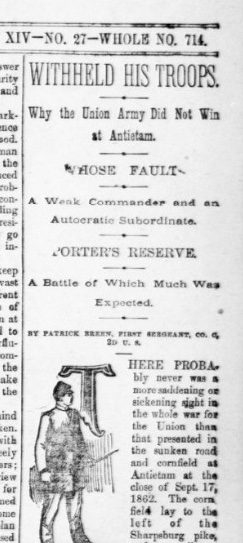
Sergeant Patrick Breen fought with Company C of the 2nd United States Infantry above the Middle Bridge at Antietam on the afternoon of 17 September 1862, and two days later at Boteler’s Ford near Shepherdstown.
Many years later, in 1895, he wrote a piece for the National Tribune – a Washington, DC newspaper which catered to Civil War veterans – suggesting how differently the battle at Antietam would have ended, if only …
Following is a transcription with the accompanying illustrations: (more…)
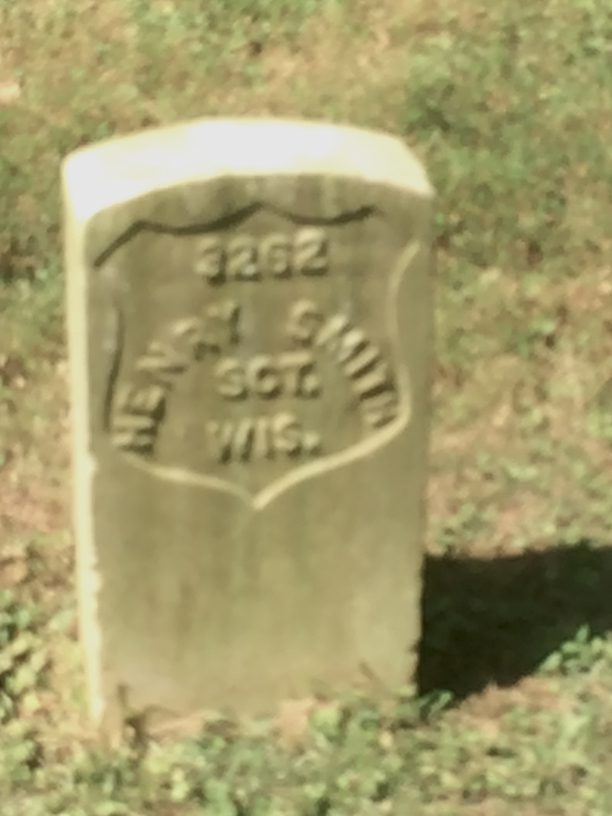
That’s the stone in the Antietam National Cemetery under which Sergeant Henry Smith of Company K, 2nd United States Infantry is likely buried.
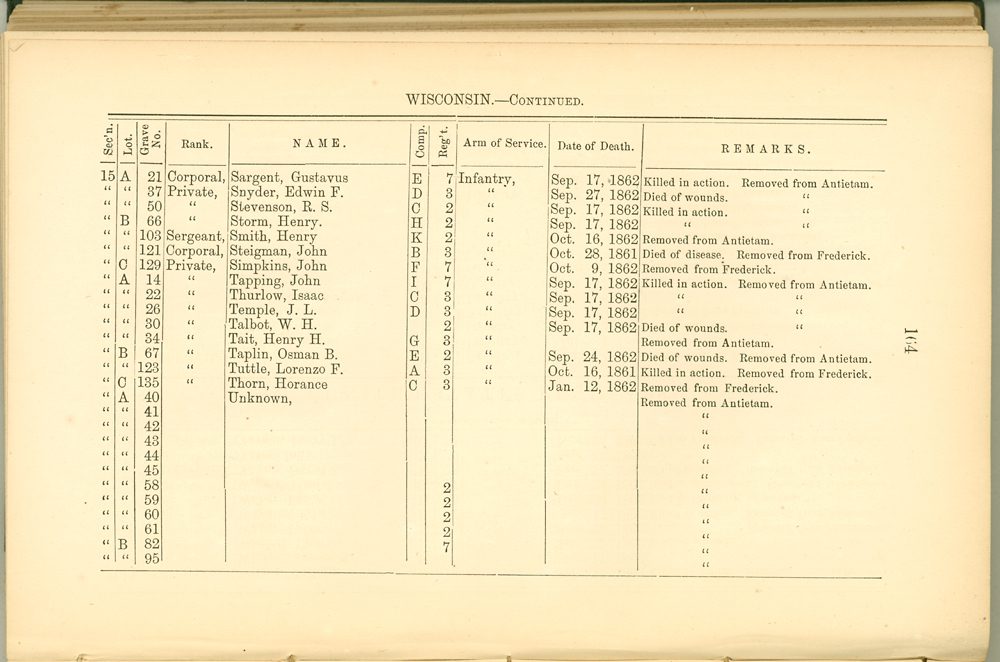
The Cemetery History says he’s Sgt. Henry Smith of Company K, 2nd Wisconsin Infantry, and “Wis.” is written on the headstone. There are no certainties in these matters, but I’m fairly sure that’s wrong.
There is no Sergeant Henry Smith in the State roster for Company K (or any Company) of the 2nd Wisconsin. There were two Henry Smiths in the regiment, neither a casualty at Antietam: one, in Co. K, transferred out to the heavy artillery in December 1861 and mustered out in 1865; the other, of Co. H, lived to 1918 and is buried in Oregon.
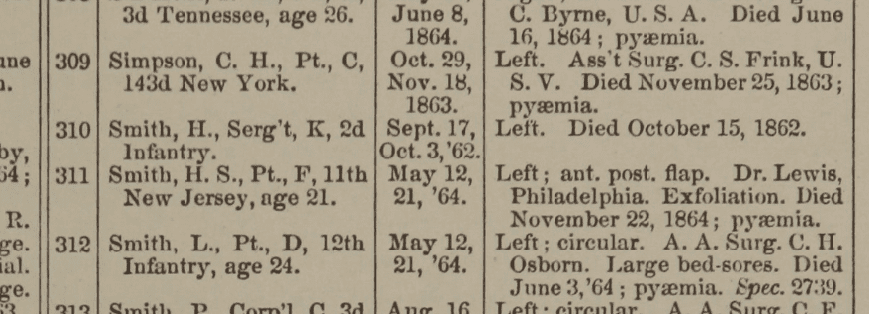
But there are pretty good enlistment and medical records for Sergeant Henry Smith of the 2nd US who was wounded at Antietam. By way of example, here the entry for him in the Medical and Surgical History of the War of the Rebellion (MSHWR, 1870).
___________
The headstone photograph was contributed to his memorial on Findagrave by Sandy Boyd.
The History of Antietam National Cemetery (1869) is online in an excellent exhibit from WHILBR – by the Western Maryland Regional Library. The image here is of page 164.
The MSHWR is online from the National Library of Medicine at NIH in Bethesda, MD. The image above is from Volume 2, Part 3, page 535.