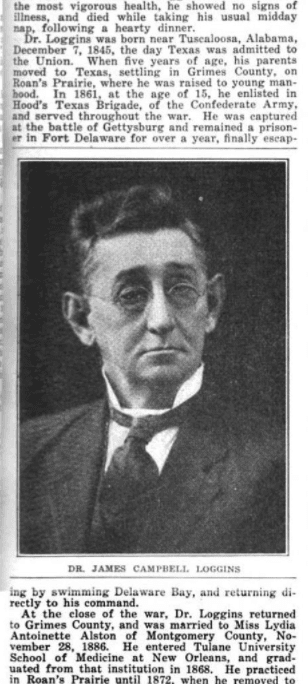
This is from Sharpsburg veteran James C. Loggins‘ obituary [via GoogleBooks] in the Texas State Journal of Medicine of November 1921.
He enlisted very young, and was only 16 years old in Maryland in 1862. He was captured the following year at Gettysburg, but escaped from Fort Delaware in 1864 to return to duty. After the war he went to the medical school at Tulane in New Orleans, graduated in 1868, and practiced for about 50 years, most of that time in Ennis, TX.
I hope you’ll appreciate this timely symbol of the most significant outcome of the 1862 Battle of Antietam – the issue of the Emancipation Proclamation.
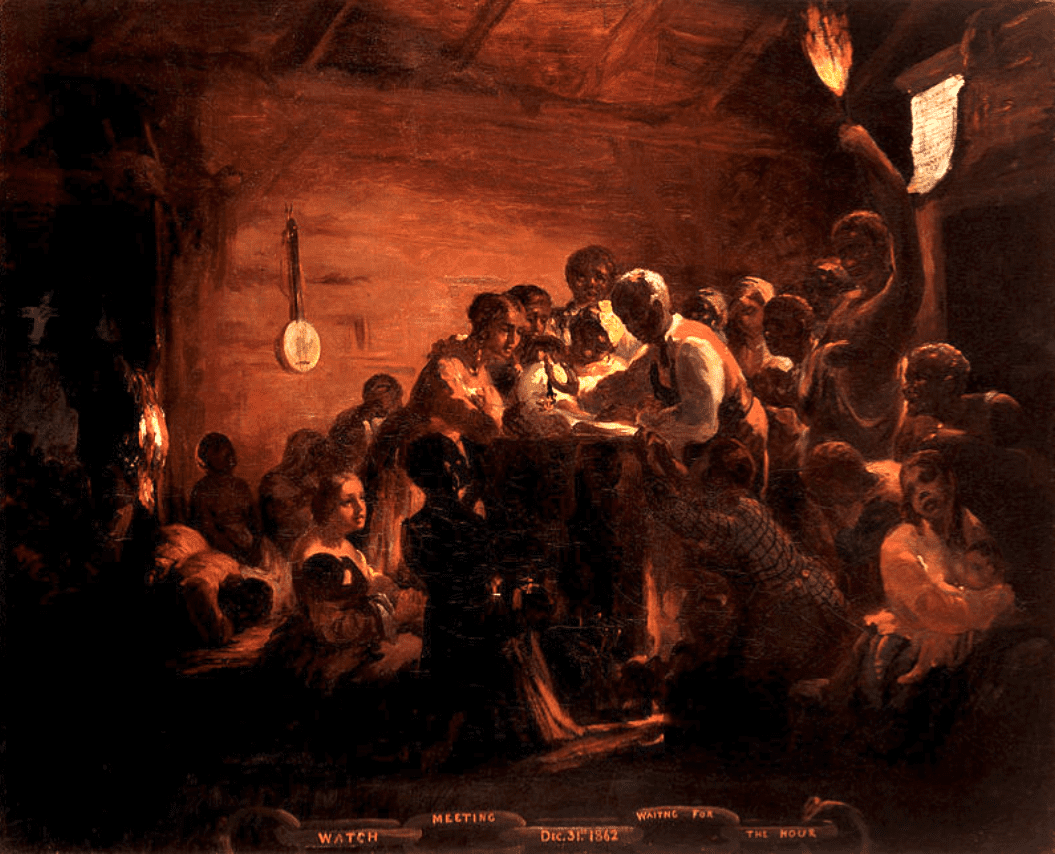
Watch Night: a New Year’s tradition still alive in Black churches today.
This evocative painting is by William Tolman Carlton (1816-1888). He presented it to President Lincoln in July 1864. That copy has been lost, but this one, probably an earlier study, is in the White House Historical Association collection today. It’s online from artsy.net.
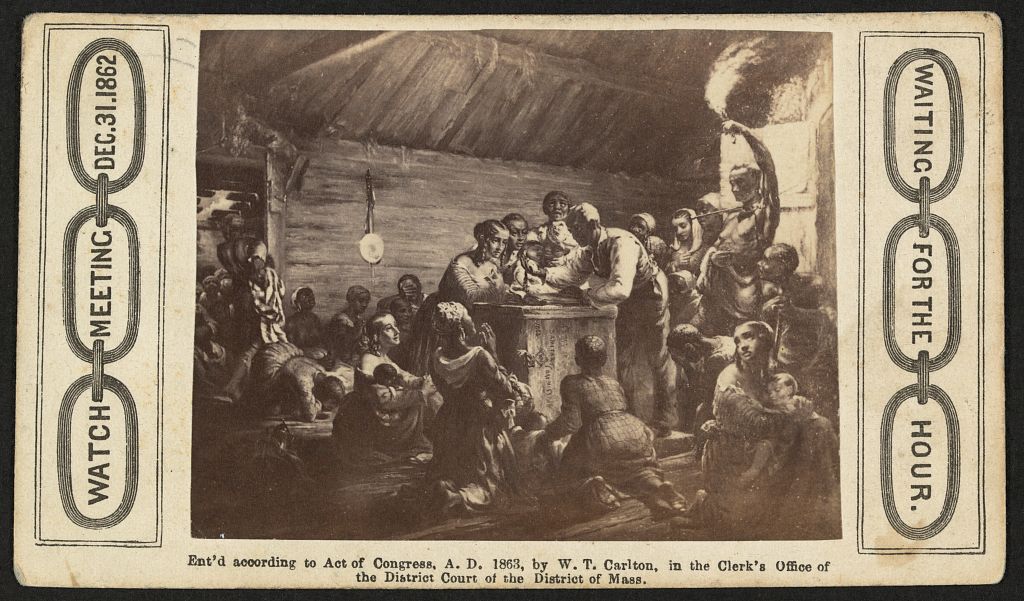
The illustration below, based on that painting, is a CDV in the collection of the Library of Congress. Published by Heard & Moseley, 10 Tremont Row, Boston, MA, it’s been widely reproduced.
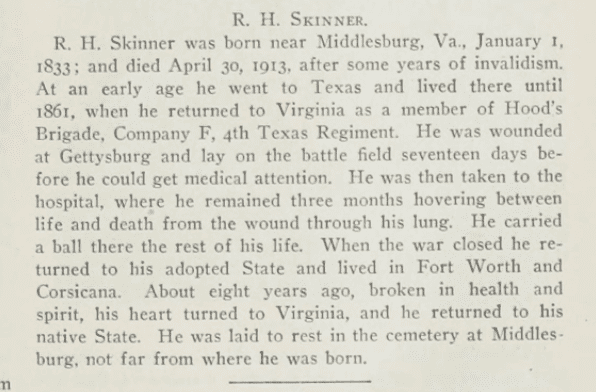
No, Sergeant Richard H Skinner of the 4th Texas Infantry did not lie on the field at Gettysburg, PA for 17 days without medical attention. Nor did he “remain three months hovering between life and death” afterward.
He was badly wounded at Gettysburg on 2 July 1863, captured at Cashtown on the 5th, in a field hospital till the 17th, then in the big US hospital at Chester, PA until deemed “well” – on 17 September – and sent South for exchange.
It makes a good story, though.
And I was very glad to find this, his obituary in the Confederate Veteran magazine of January 1914. I had been unsuccessfully searching for a connection between this Texas soldier and Loudoun County, VA for about an hour before I did.
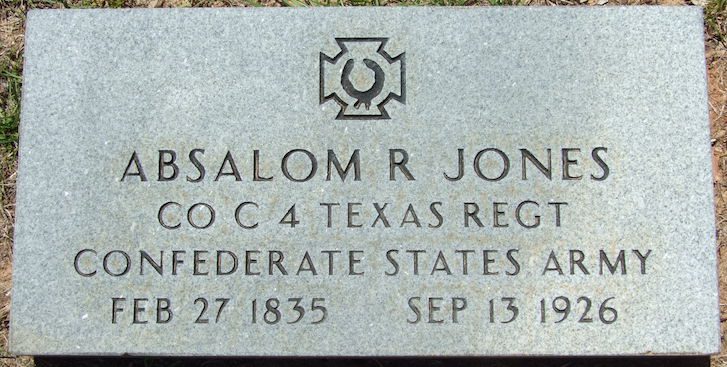
Here’s the relatively modern government marker in Prospect Cemetery in Morgan County, GA for Sharpsburg veteran Absalom R. Jones. He was a Private in Company F (wrong on the stone), 4th Texas Infantry until October 1864, then a “galvanized Yankee” in Company C of the 4th United States Volunteers to June 1866, with service in the West fighting Indians.
It’s not surprising that his stone doesn’t mention his US service.
But, with only a little evidence, I’d say he had been at best a lukewarm Confederate. He was an ambulance driver or litter bearer for much of his Confederate service – non-combatant roles – and was captured “on the march” near Spotsylvania, VA in May 1864, not in battle; perhaps he slipped away from his unit there.
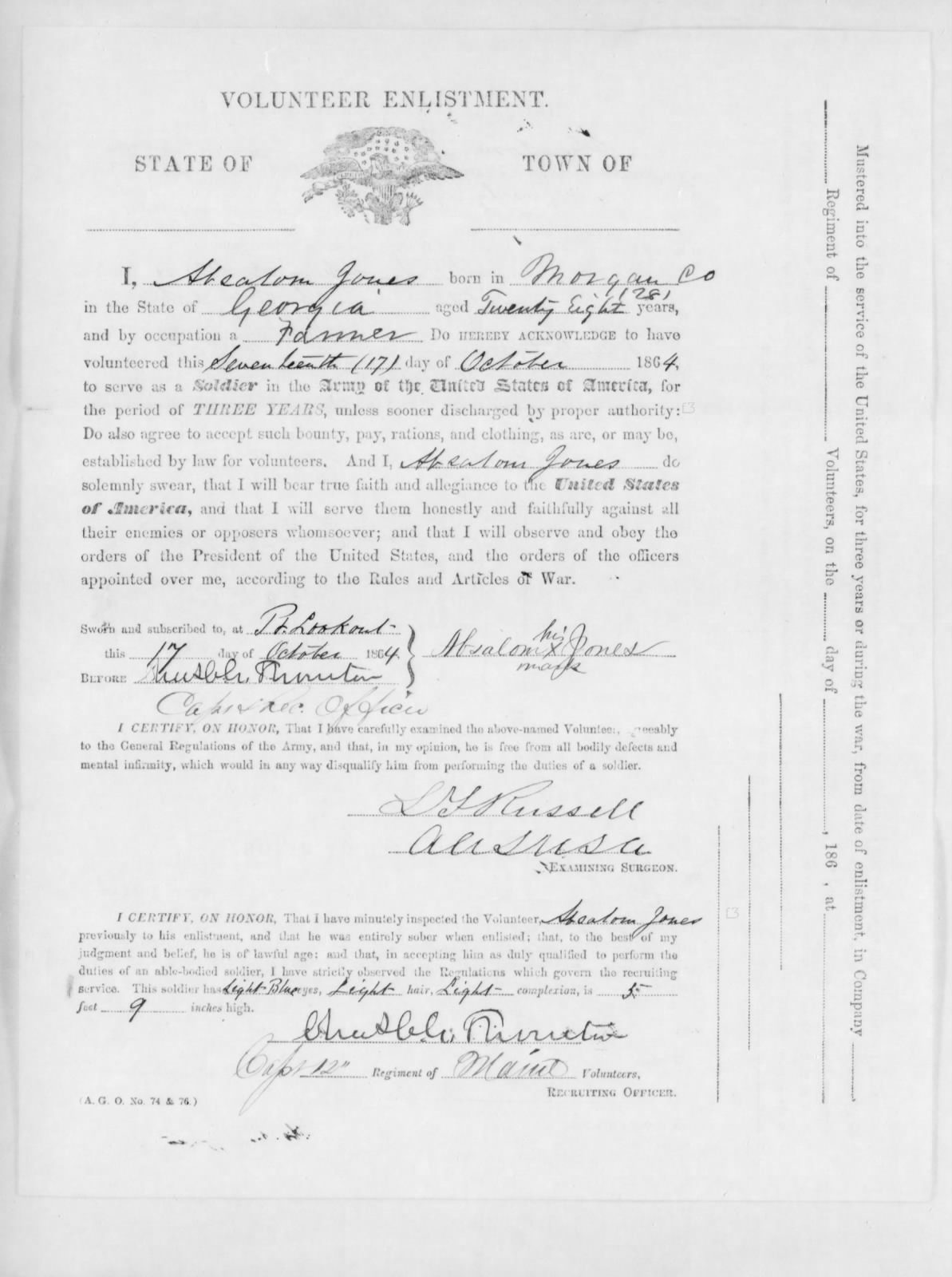
To be fair, though, there were many reasons more than 5,000 former Confederates enlisted for US service in 1864-65: desperation to get out of a miserable prison among them, and that may well have been his reason. His enlistment document doesn’t specify:
Although he originally enlisted in Texas in 1861, he returned to his native Georgia after his military service and was a farmer there for the rest of his long life.
______________________
His marker photograph kindly contributed to Find-a-grave by Ed Hooten.
His enlistment paper is from his file among the Compiled Service Records of Former Confederate Soldiers who Served in the 1st Through 6th U.S. Volunteer Infantry Regiments, 1864-1866, at the US National Archives. I got my copy from the fold3 subscription service.
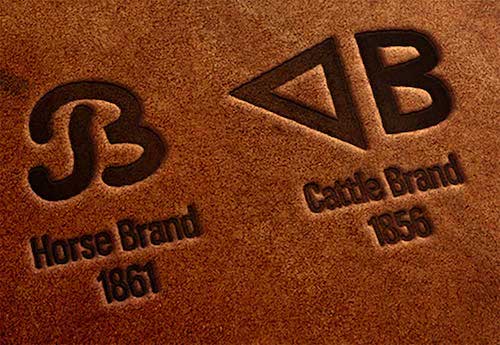
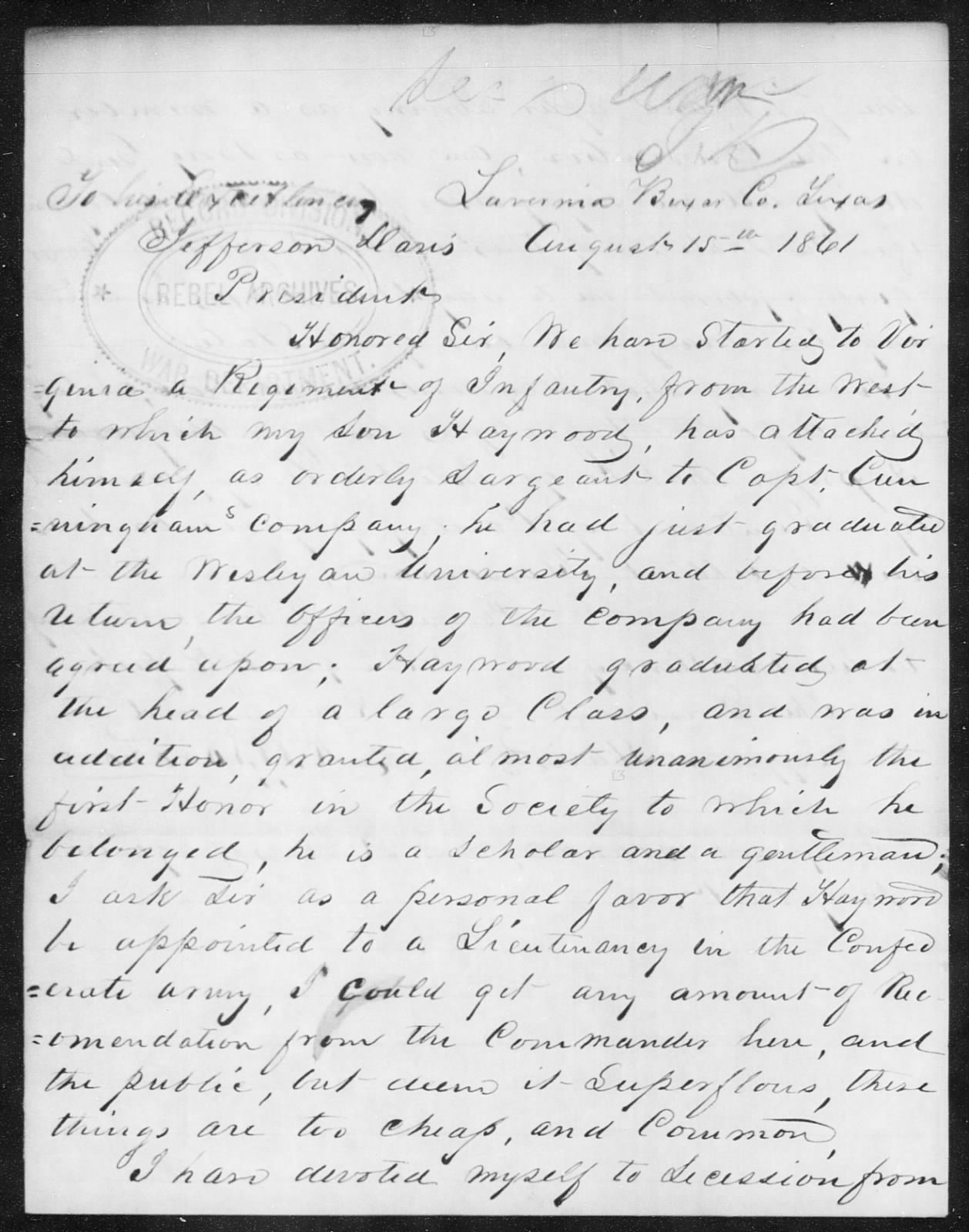
Robert Weakley Brahan was born into a prominent Nashville, TN family in 1811, trained as a physician, married well, and had all the right friends, among them, apparently, President Andrew Jackson. After a decade in Panola County, MS, he took his family to Bexar County, TX in 1852 and established a large plantation and raised cattle there.
In July 1861 his oldest surviving son Haywood Weakley Brahan, 21, enlisted as First Sergeant of Company F, 4th Texas Infantry and started off for New Orleans to get a train to Virginia.
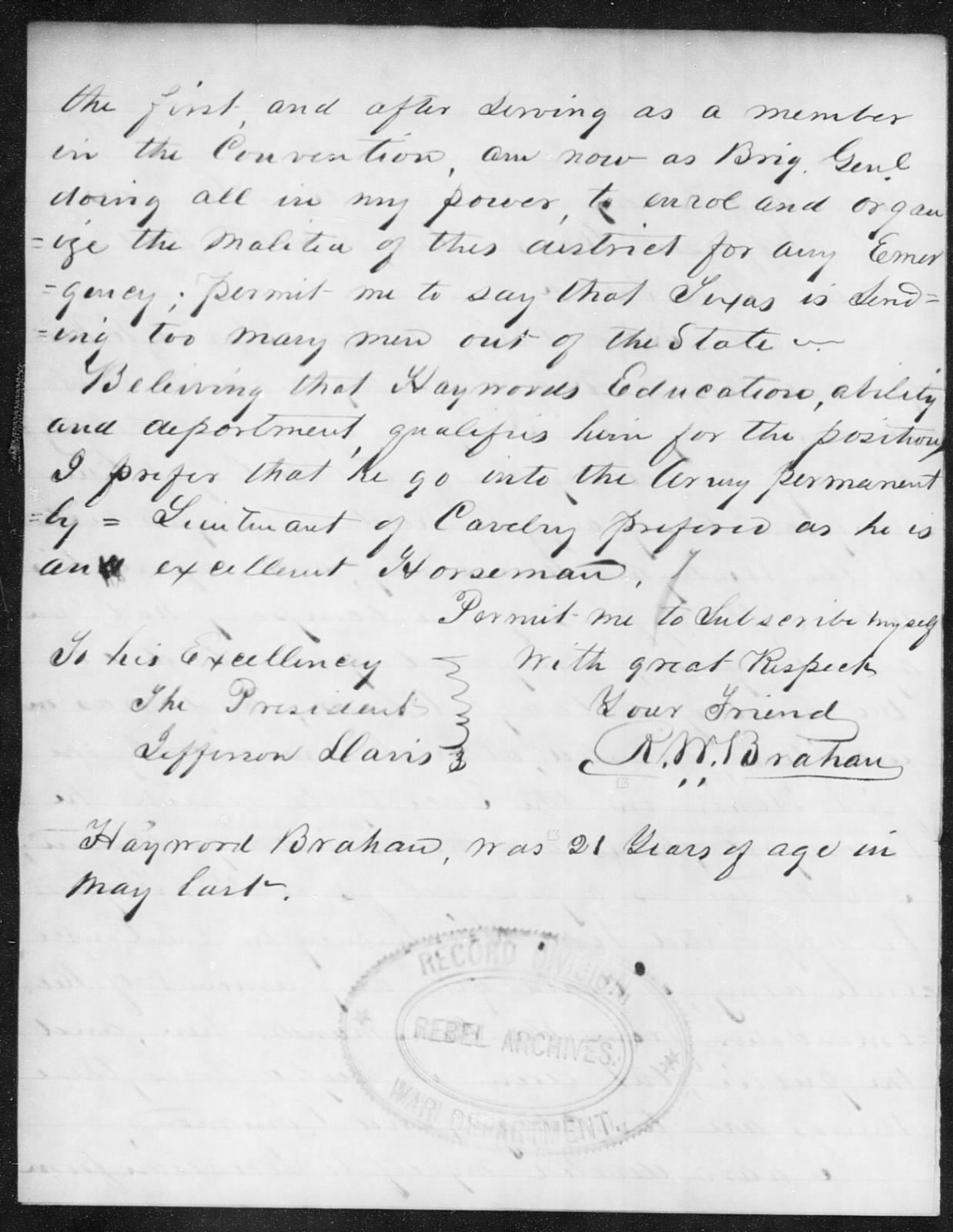
Shortly afterward, in August, Robert sent a letter to President Jefferson Davis requesting a commission for his son. He asked as a “personal favor” and cited Harwood’s excellent college record, “ability, and deportment,” as well as his own work as a Brigadier General of Texas Militia on the homefront. He added “I prefer that he go into the Army permanently = Lieutenant of Cavalry preferred as he is an excellent horseman.”
I expect the President got hundreds if not thousands of such letters. Like most of them, he probably ignored this one, as a commission was not immediately forthcoming.
Young Haywood was elected 2nd Lieutenant of his Company on his own merits (probably) in November 1862 and survived Sharpsburg and all the other actions of the regiment to Appomattox in April 1865.
___________________
Notes
His brands above and much more about Robert W Brahan are from a fine post on Lost Texas Roads by Regina Tolley and Allen Kosub.
The letter pages here are from Haywood’s Compiled Service Records, US National Archives, via the fold3 subscription service.