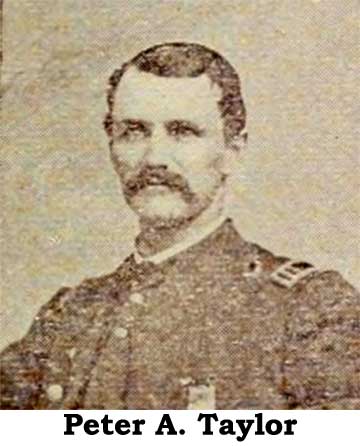
This is a lithograph by Don Stivers called Signals at Little Round Top. It depicts Captain Peter A. Taylor, Captain James T. Hall, Sergeant John Chemberlin, and Sergeant Lucian H. Goodnaugh at Gettysburg.
Captain Taylor, of the 49th New York Infantry, was with the Army of the Potomac Signal Detachment on the Maryland Campaign of 1862 and wrote an after-action Report about his signal communications there. He continued in the Signal Corps to September 1865.
His photograph was published in J. Willard Brown’s The Signal Corps, U.S.A. in the War of the Rebellion (1896), which is online from the Signal Corps Association 1860-1865.
First Lieutenant Ansil Denison, Jr of Company K, 77th New York Infantry was mortally wounded at Antietam. He died at home with his wife and daughter in Gloversville, NY on 27 February 1863. His photograph is in the collection of the Lee Library, Brigham Young University in Provo.
Captain Nathan S Babcock of Company K commanded the undersized 77th New York Infantry at Antietam as senior officer present.
I entered the battle of Antietam Creek on the 17th instant with not more than 175 men all told, most of the regiment having been on picket for two days, a part of which joined us just as the brigade was ordered to charge upon the rebels … (from his Report)
This excellent photograph of him is from the New York State Military Museum, online from New York Heritage.
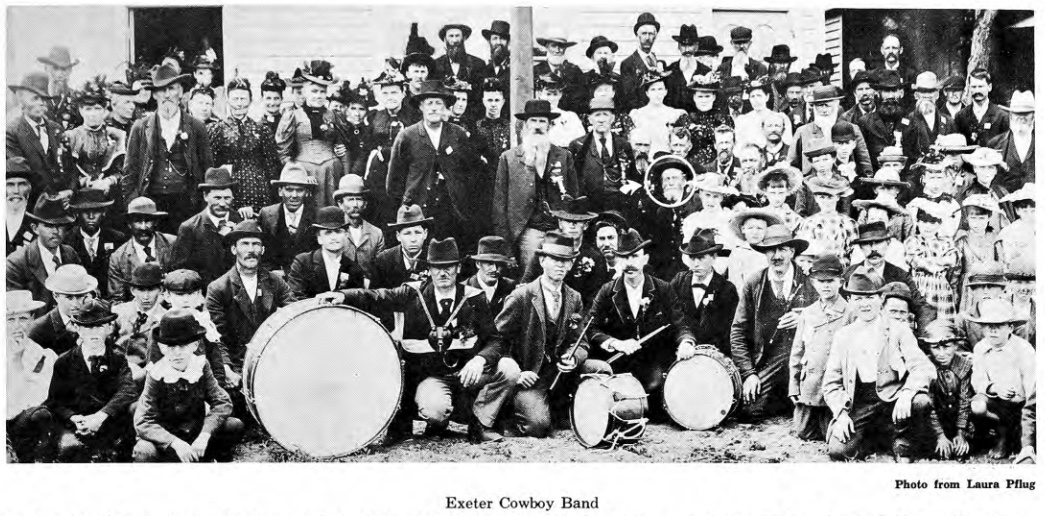
Babcock tried the Pennsylvania oil business after the war but “went under.” He then went West, settling in 1871 on a farm near Exeter, Nebraska. He’s circled in the picture below, from an Exeter Township history [pdf] in the Geneva Community Grange #403’s The Fillmore County Story (1968).
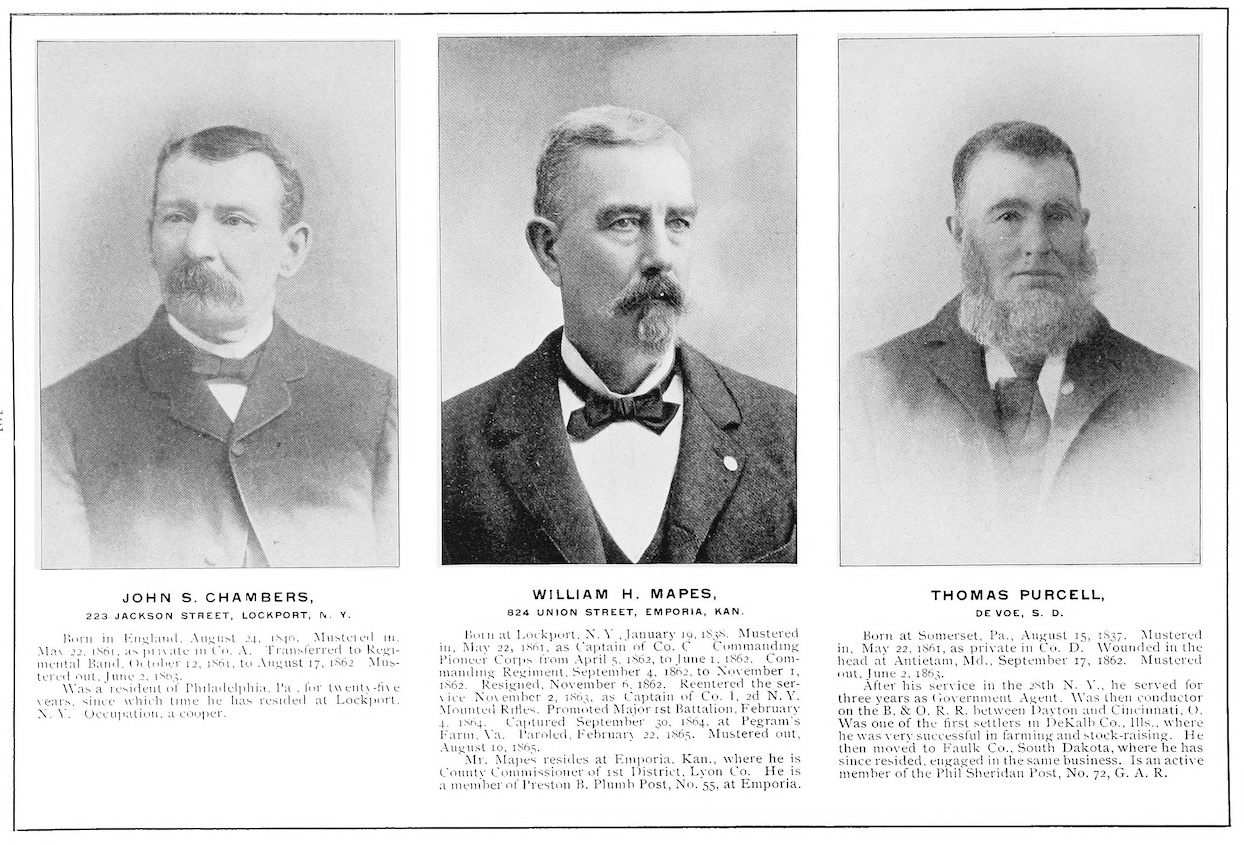
The 28th New York Infantry was reduced to four consolidated companies, about 65 men, by September 1862, and they were commanded at Antietam by Captain William Henry Harrison Mapes of Company C.
He resigned in November 1862 but he helped form a new unit in 1863, the 2nd NY Mounted Rifles, and was their Major when he was captured at Peeble’s Farm near Petersburg, VA on 30 September 1864. He was a prisoner into March 1865 and mustered out in August.
After the war he farmed in Kansas, and is seen here in a photograph in Charles W Boyce’s A Brief History of the Twenty-eighth Regiment New York State Volunteers, First Brigade, First Division, Twelfth Corps, Army of the Potomac (1896).
He was among the veterans who dedicated the New York State monument on the Antietam battlefield in 1920 and he died in 1932 at age 94.
This is Captain Samuel H. Sims, who led Company G of the 51st New York Infantry across the Lower Bridge at Antietam.
Among the many of his Company killed there was Private Thomas Stockwell. A few days later Captain Sims wrote to Thomas’s widow Caroline.
It is one of the finest such letters I’ve ever read:
It has become my most painful and unavoidable duty to announce to you the death of your husband. He was killed while in the faithful discharge of his duty at the storming of Antietam Bridge Maryland in the morning of September 17th, 1862. Our joy at gaining the victory that day has been restrained by our remembrance of the brave men who fell – the faces of our comrades once so familiar that are lost to us, and more than that, the grief that we know will be brought to the home of our noble brother who has rendered his life a sacrifice to prove his devotion to our country, flag, and constitution.
Your husband died at the moment of victory. Our Regiment with the Brigade had been ordered forward by Genl. Burnside to advance to the Bridge where the rebels were posted in strong force. They were the Brigade of sharpshooters called ‘Toombs Brigade’ consisting I believe of Georgia, S. Carolina and Mississippi riflemen. The action lasted about one hour before poor Tom fell. He heard as he died the shout of victory. A noble death! but to you a stroke which I fear no words of mine can render alleviation. I humbly pray to my God that he will be with you in your affliction.
His grave is in the valley near the bridge, fifteen of his comrades lie there with him. I have caused an inscription to be placed over him. A final statement of his effects will be sent forward today to Washington. I enclose a lock of his hair …
Sims was himself killed in action while rallying troops in the Crater at Petersburg, VA on 30 July 1864.
______
A transcription of the letter is from Stockwell’s bio sketch online from Green-Wood Cemetery.