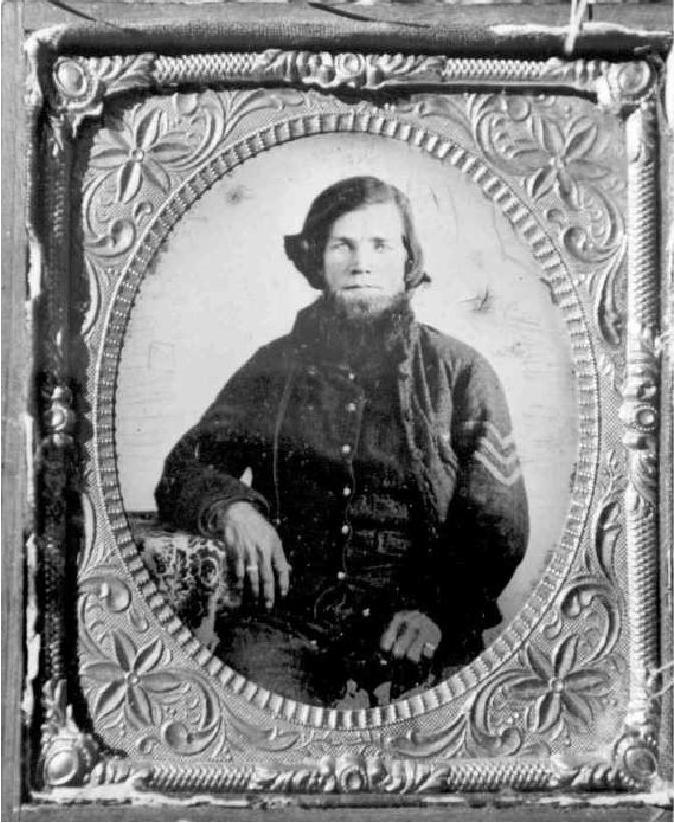
This photograph of Jesse A Cook was taken in late 1861 or early 1862 when he was a Sergeant in Company K of the 2nd Mississippi Infantry. It’s in the collection of Joseph M. Bauman, kindly provided by unit historian Michael Brasher.
Jesse was commissioned First Lieutenant in April and Captain to date from 30 August 1862, but he was mortally wounded in the left thigh and both ankles and captured in action at Sharpsburg on 17 September 1862. He died of those wounds on 26 September 1862.
Here’s a page of Frederick Winslow Grannis‘ genealogy from Frederick A. Strong’s Descendants of Edward Grannis (1927). Grannis was 2nd Lieutenant of Company B, 61st New York Infantry and was commended for “behaving in the most excellent manner” at Antietam. He was cited again for bravery at Gettysburg, promoted to Captain, and discharged in February 1864.
He was a Broadway agent by 1882 and may have been well known in the City, but not nearly as well as his second wife, who he married in 1865 and later divorced, without children.
She was Elizabeth Bartlett, pictured above, an Erie College Graduate, and an editor, publisher, and philanthropist in New York who was an early advocate for gender equality and women’s social and political rights. Notoriously, she lived with President Woodrow Wilson’s father Joseph, probably after his wife died in 1888, until about 1894. Her photograph is from The World’s Congress of Representative Women (1894), online from the Hathi Trust.
Private James Allen of Company F, 16th New York Infantry was awarded the Medal of Honor for single-handedly capturing a group of the enemy and their colors at Crampton’s Gap on 14 September 1862.
… I was met by another volley, but was only slightly wounded. Putting on a bold face, and waving my arms, I said to my imaginary company: ‘Up, men, up!’
The rebels, thinking they were cornered, stacked their arms in response to my order to surrender.
Pictured is a page with his own narration of the events from Byer & Keydel’s Deeds of Valor: How America’s Heroes Won the Medal of Honor (1901), online from the Internet Archive.
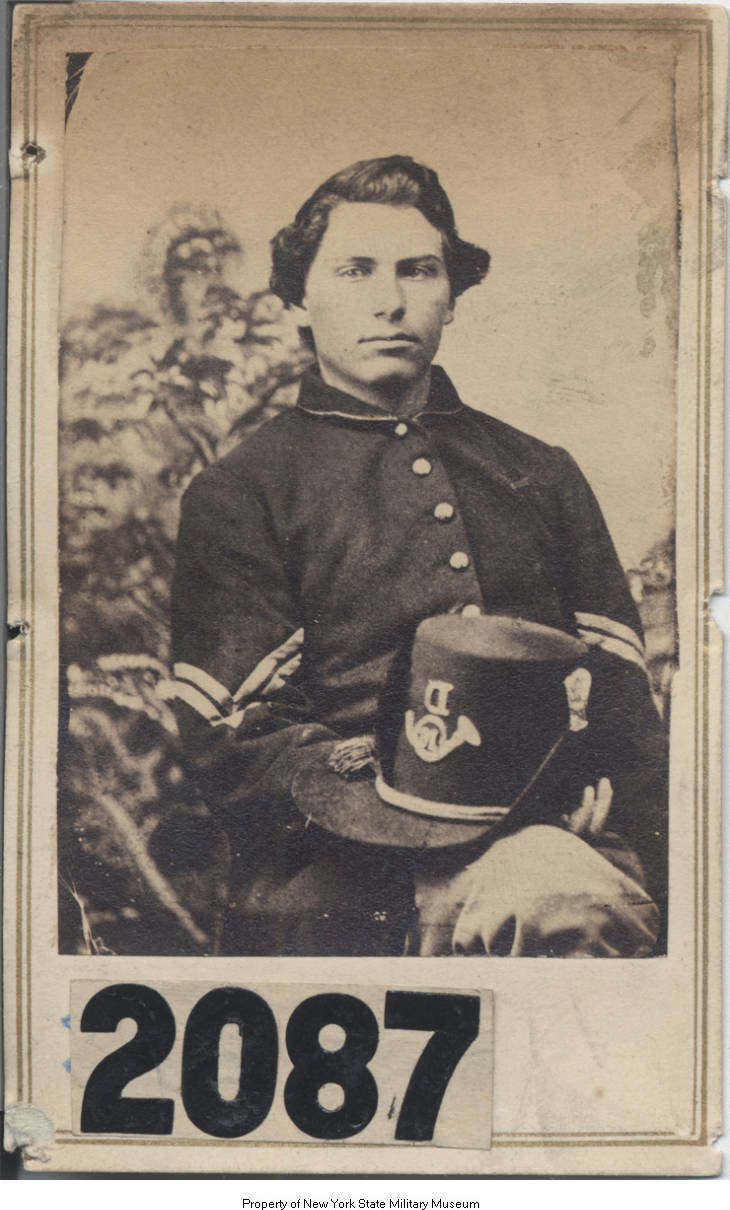
Corporal Charles M Smith, Company D, 16th New York Infantry was mortally wounded in the chest at Antietam and died at a field hospital on the Samuel Poffenberger farm nearby on 12 October 1862.
His photograph was once among many others pinned to the wall in the State Capitol in Albany, and is now in the collection of the NY State Military Museum, online through the Heritage New York portal.
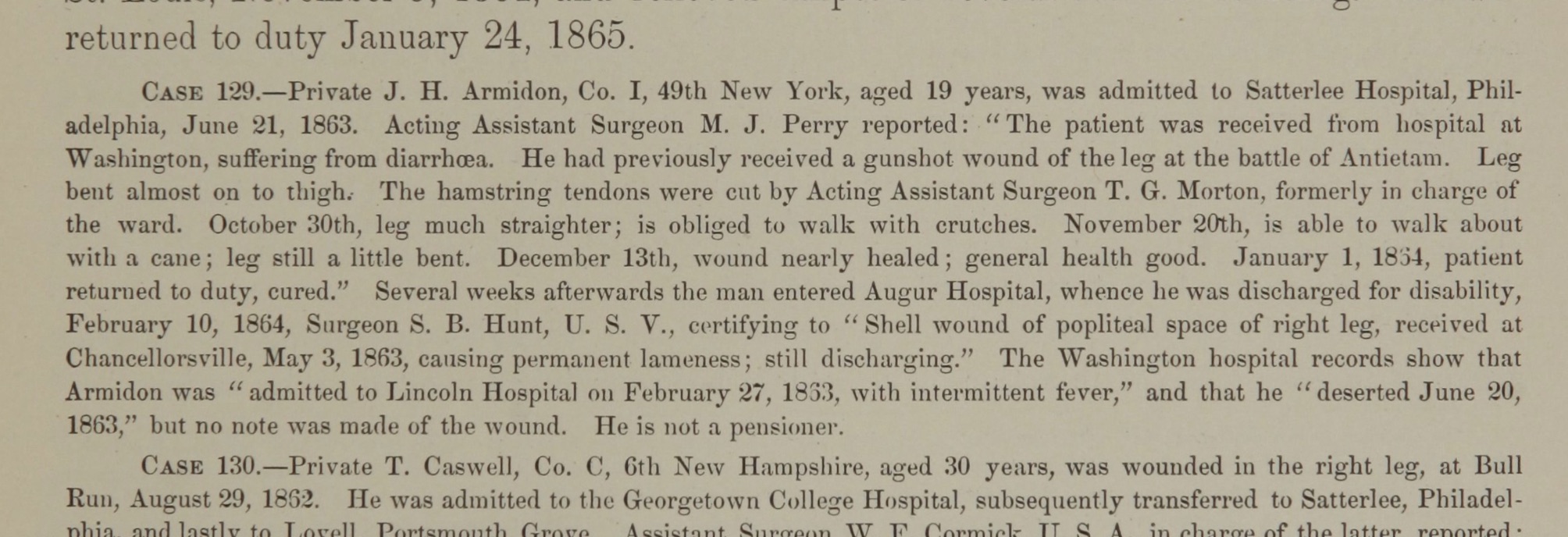
Here’s the medical case of Private John Nelson Amidon, 49th New York Infantry, from the Medical and Surgical History of the War of the Rebellion (1870). All six volumes are online from the National Library of Medicine, NIH.
On 17 September 1862, the day before his 18th birthday, he was wounded by a gunshot to his right leg in action at Antietam. He was in a field hospital on the field then sent to a General Hospital in Washington, DC. By June 1863 he was terribly crippled and transferred to a hospital in Philadelphia. He suffered one procedure after another until he was sufficiently repaired to be discharged for disability on 10 February 1864. Remarkably, he enlisted again in August 1864, in the 15th New York Engineers and served to June 1865.