
Corporal George Washington Bird of the 51st Pennsylvania Infantry was mortally wounded at Antietam and died two days later on 19 September 1862. His photograph was contributed to his Findagrave memorial by Bob Sampron.
a companion to Antietam on the Web
Corporal George Washington Bird of the 51st Pennsylvania Infantry was mortally wounded at Antietam and died two days later on 19 September 1862. His photograph was contributed to his Findagrave memorial by Bob Sampron.

William J Bolton, Captain of Company A, 51st Pennsylvania Infantry was horribly wounded in action at Antietam: a gunshot went through both cheeks, breaking his jaw and carrying away some teeth. He was back on duty in January 1863 and was appointed Major of the regiment, and he was promoted to Colonel in June 1864. He was hit in the face again, by a canister round at the Crater near Petersburg, VA on 30 July 1864. He was honored by brevet to Brigadier General of Volunteers in March and mustered out with the regiment in July 1865.
Years later, in May 1881, the Galveston Daily News reported
Since then [his wounding at the Crater] General Bolton has felt pain and oppression in his neck, especially during damp weather. Yesterday he had occasion to stoop while attending to a customer in his store, and was immediately taken with a violent fit of coughing. Placing his hand instinctively over his mouth, something dropped into his hand. On removing the blood and mucous covering of the object he found it to be the painful little ball of Confederate cast-iron. It was covered with rust, weighed 273 grains Troy, and the surface was covered with sharp ridges.
His carte-de-visite (CDV) was sold by Cowan’s Auctions in April 2014.

A bricklayer from Norristown, Private Levi Bolton, Company A, 51st Pennsylvania Infantry was wounded in combat at Antietam in September 1862 and again at Spotsylvania Court House in May 1864, but he survived both wounds and the war.
There is a story that he was on guard duty at Annapolis in 1862 and challenged General Burnside, who could not remember the password. Bolton was escorting the General to the guardhouse “under arrest” when Burnside remembered it.
In 1902 he was still living in the house in Norristown in which he was born. His photograph was contributed to his Findagrave memorial by Charles McDonald.
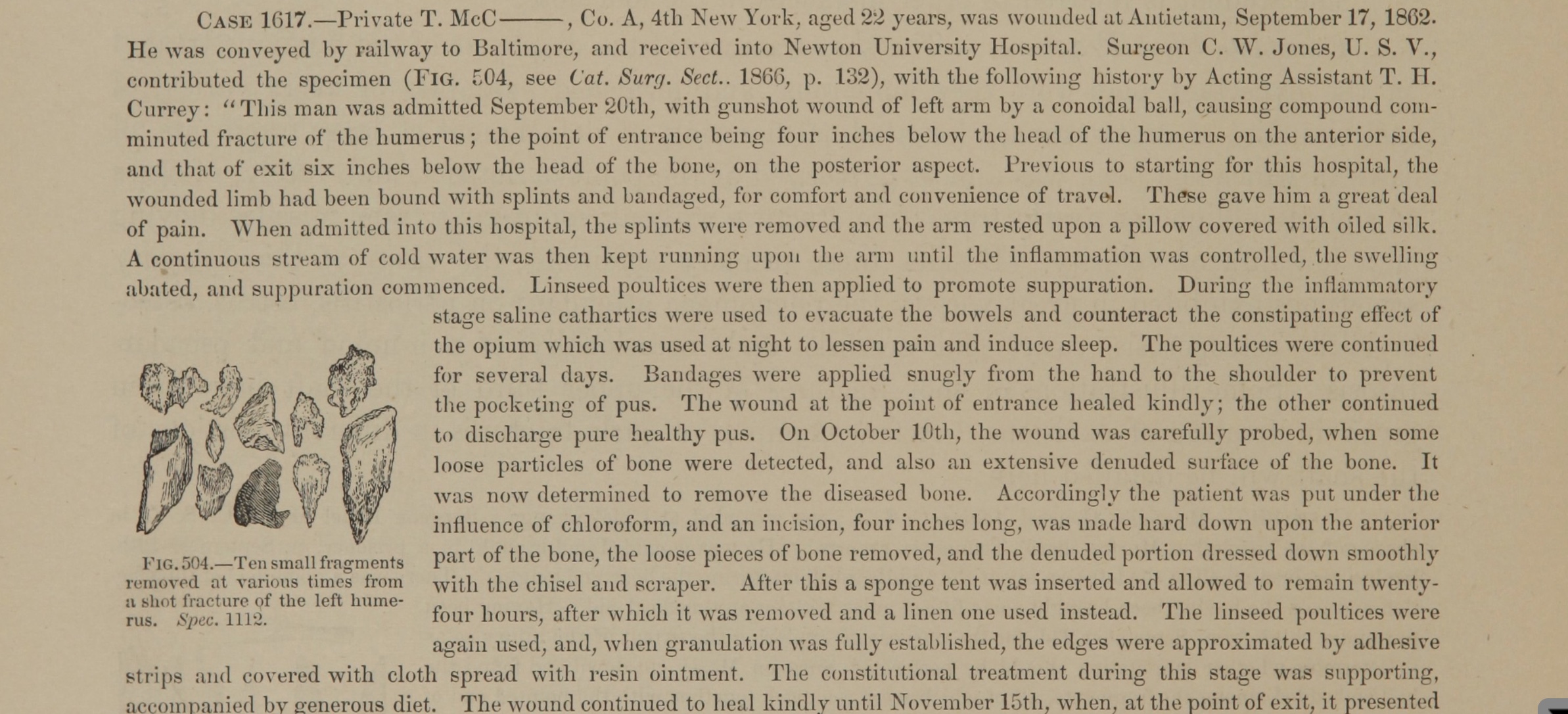
Private Thomas McCall of Company A, 4th New York Infantry was seriously wounded by a gunshot to his left arm at Antietam on 17 September 1862. He had surgical procedures to remove pieces of bone and bullet and the wounds healed enough that he was discharged for disability in December 1862. By May 1863, though, the bone was deteriorating and he had pneumonia. He died from that and his “suppurating” gunshot wound on 24 August 1863.
Private McCall’s medical treatment after Antietam is detailed in the Army Surgeon General’s Medical and Surgical History of the War of the Rebellion (1870), an extract seen here.
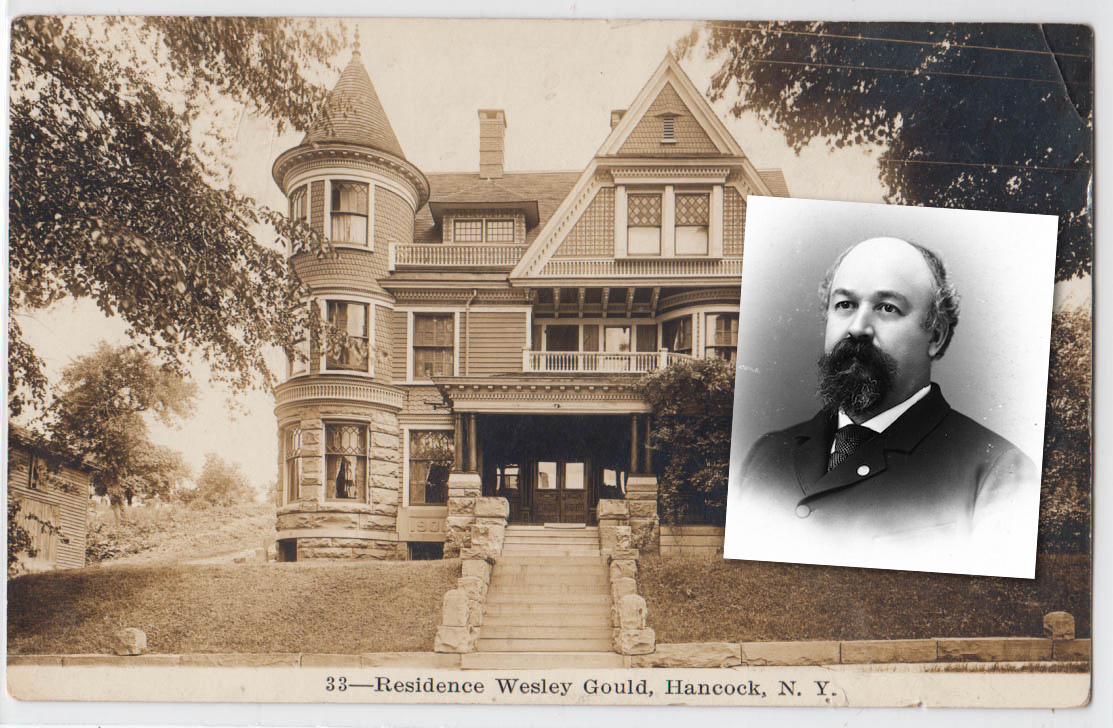
Private Wesley Gould, Company F, 45th Pennsylvania Infantry was the youngest of 6 brothers who served during the war. He had just turned 18 years old when was twice wounded in action on the Maryland Campaign of 1862: at Fox’s Gap on South Mountain and at Antietam 3 days later. He survived his wounds, as well as a stint as a prisoner of war in Libby Prison, Richmond and Salisbury, NC (1864-65), and was 2nd Lieutenant of Company F when he finally mustered out of service in July 1865.
After the war he farmed, then went to law school and was a life-long lawyer and politician in his native Delaware County, NY. He married Pamelia Brazie (1846-1921) in 1868 and they had two daughters. Pamelia’s brother Jacob had been a Sergeant in Company F and a POW with Wesley.
The photograph here is of Wesley, probably as a NY State legislator (c. 1894), contributed to the Family Search database by Frederick Neil Simms [free membership required]. It’s over a 1912 postcard view of his home in Hancock, NY. The postcard was offered for sale by HipPostcard.