Year: 2020

  • Mr. Collier, a young Englishman

    Just one of so many thousands of Antietam stories …
    The few names that are given of the commissioned officers who suffered, tell only a fragment of the story. There were brave hearts in the ranks, as well as among the officers, who went to their death fearlessly, and over whose memories loving friends have not ceased to mourn.
    Especially sorrowful was the death of Edmund Y. Collier, a private in the Seventy-Second [Pennsylvania Infantry]. Mr. Collier was a young Englishman of very respectable connections; who was visiting in this country when the Rebellion broke out. With warm sympathy for the Union, he enlisted as a private, and in this battle [of Antietam] fell mortally wounded; so near the enemy that his body was not recovered for hours afterwards.
    _______
    Quoted from Charles H Banes’ “History of the Philadelphia Brigade. Sixty-ninth, Seventy-first, Seventy-second, and One hundred and sixth Pennsylvania Volunteers” (1876).
  • Incised fractures of the cranium: Mullen, Charles

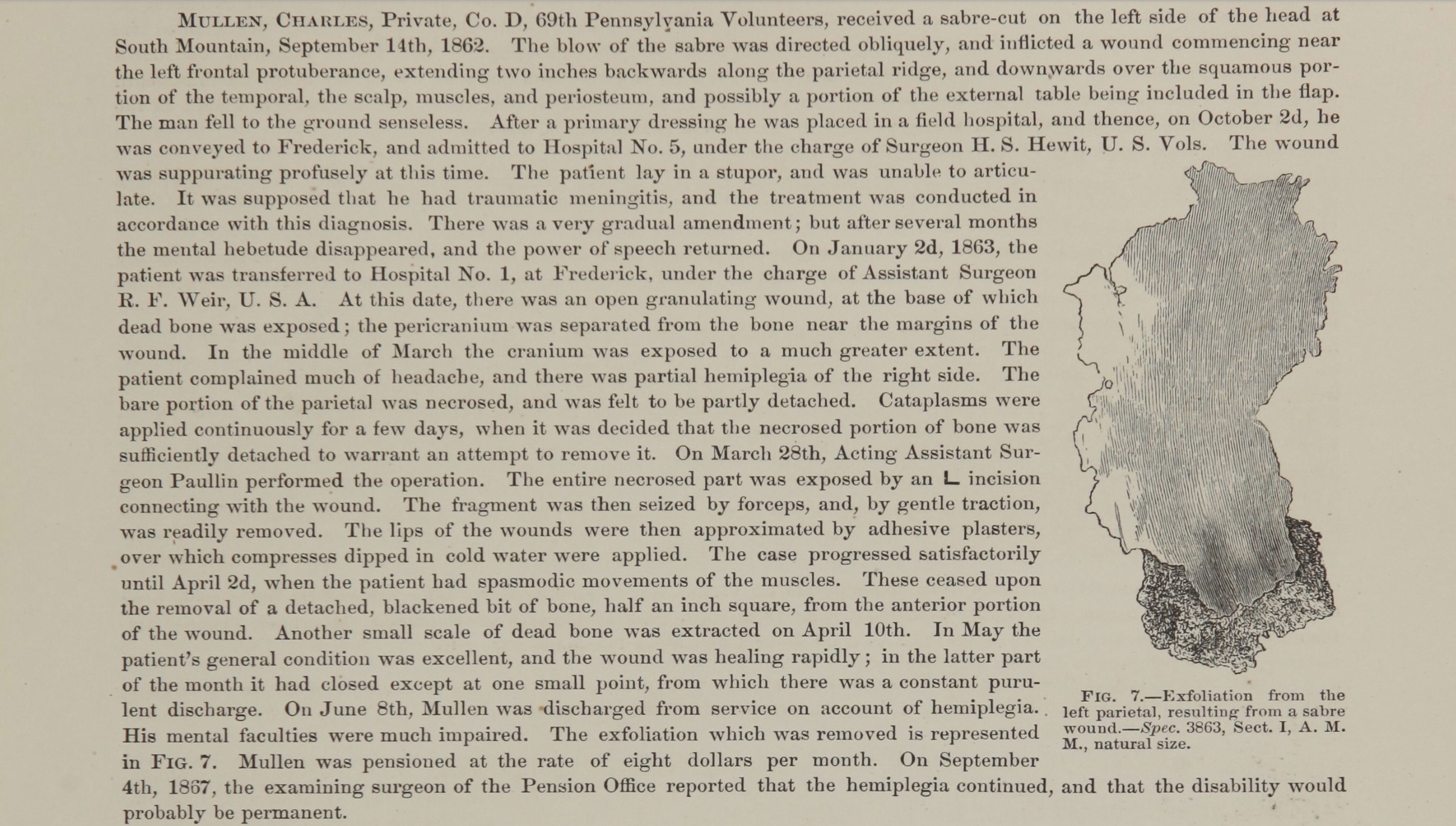
    Private Charles Mullen of the 69th Pennsylvania Infantry was born in County Antrim, Ireland, and was an ironworker in Pottsville before the war. He was wounded in an unusual way in Maryland in September 1862: by a saber cut to the left side of his head.

    This excerpt from the Medical and Surgical History of the War of the Rebellion (1870) describes his treatment and outcome and includes an illustration of a piece of his skull. He survived the wound and was sent home with a pension in June 1863. He married and had children, but his “mental faculties were much impaired” and he was permanently paralyzed on one side.

  • Capt Francis V. Bierwirth

    German-born Francis V. Bierwirth ran a beer hall and boarding house in Egg Harbor, NJ, and was elected Mayor there before the war. He enrolled as 2nd Lieutenant in the 27th Pennsylvania Infantry in May 1861 and transferred to become Captain of Company G of the 69th Pennsylvania in October. He was killed in action near the Dunker Church at Antietam on 17 September 1862.

    This retouched photograph of him is in the Egg Harbor Roundhouse Museum, contributed by collector Scott Hann.

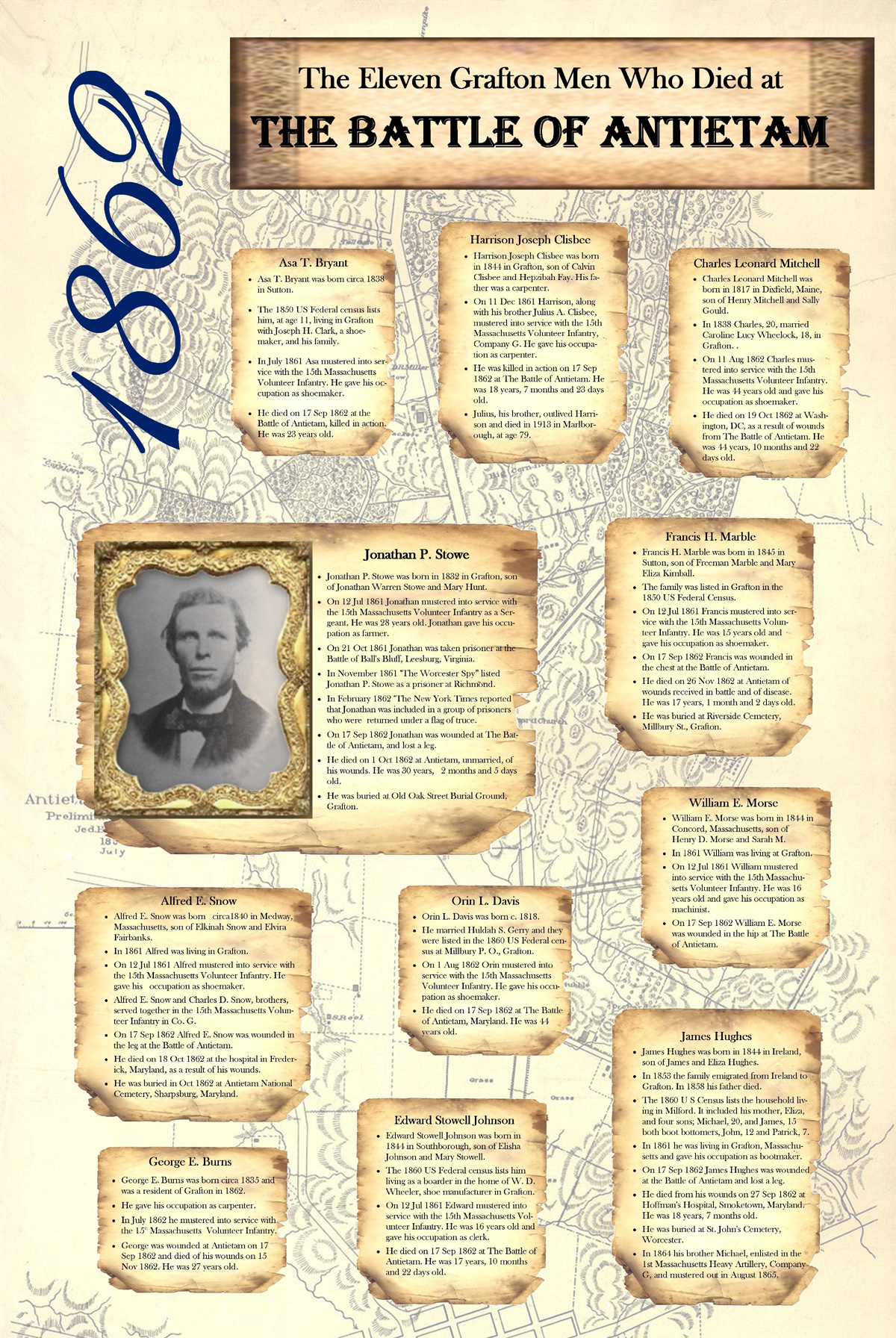
  • Jonathan P Stow

    Sergeant Jonathan P Stow of the 15th Massachusetts Infantry was wounded in his right leg at Antietam on 17 September 1862. He recorded his remaining days in his diary, beginning with …

    Sept. 18th – Thursday. Misery. Acute, painful misery. How I suffered last night. It was the most painful of anything have experienced. My leg must be broken for I cannot help myself scarcely any. I remember talking and groaning all night. Many died in calling for help … Sergt. Johnson, who lies on the other side of the log is calling for water. Carried off the field at 10 AM by the Rebs who show much kindness but devote much time to plundering dead bodies of our men … Water very short. We suffer much.

    His leg was amputated on the 20th and he seemed to improve, but he died of complications from the wound and surgery on 1 October 1862 at the field hospital on the Hoffman Farm at Keedysville, MD.

    His photograph is from the Grafton Historical Society. His diary was transcribed online by Joan Gage.

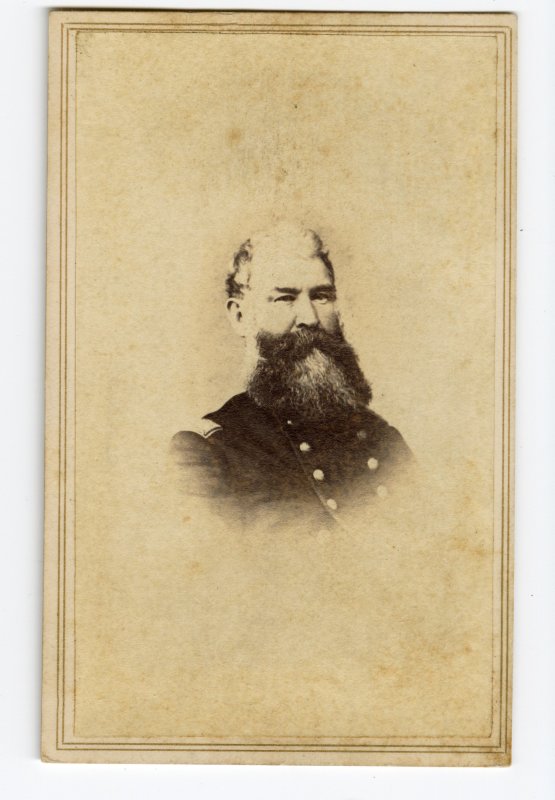
  • Lt Col Richards McMichael

    Mexican War veteran and Lieutenant Colonel Richards McMichael commanded the 53rd Pennsylvania Infantry on the Maryland Campaign of 1862 while Colonel Brooke had the Brigade. He led them again at Chancellorsville, Gettysburg, and in the Wilderness, after which (9 May 1864), a soldier later remembered,

    Hancock’s only significant casualty was Lieutenant Colonel Richards McMichael of the 53rd Pennsylvania. Well fortified with drink, he skinned his nose on a tree, complained loudly about being the only man wounded in his regiment, then unsteadily led the way several hundred yards ahead of his troops. Somehow he survived until darkness, when he attracted a crowd by beating his horse to punish it for sniffing conscripts. Such was the drama of our officers who freely indulged in that dark beverage of hell, a witness declared.

    He was relieved and discharged for disability but returned to duty as Lieutenant Colonel of the 194th Pennsylvania from June to November 1864.

    His carte-de-visite (CDV) was offered for sale by the Excelsior Brigade.